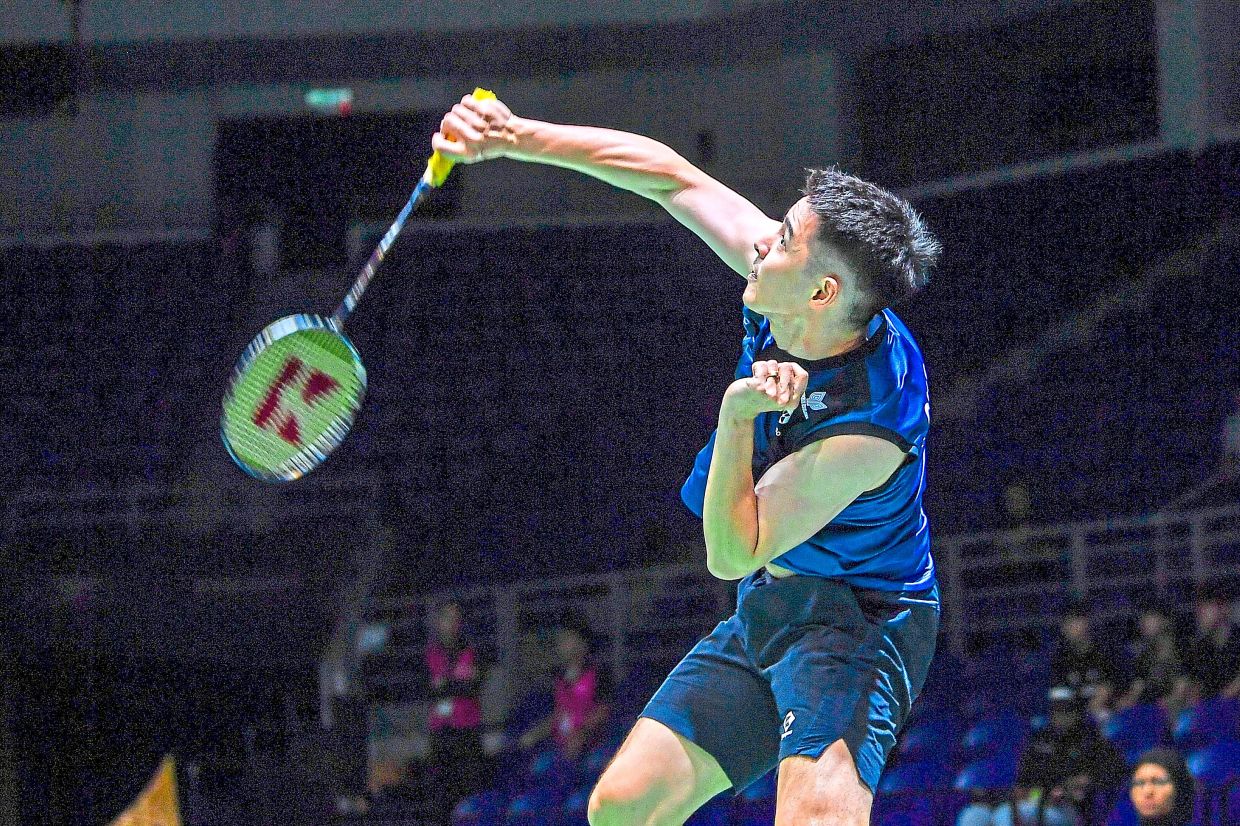
Malaysian badminton has produced another promising storyline at the Korean Masters, with independent shuttler Cheam June Wei engineering a dramatic quarter-final victory over Taiwan's Su Li-yang to secure a semi-final berth at the Asan Yi Sun-sin Gymnasium on Friday. The encounter proved fiercely competitive, with June Wei triumphing 23-21, 10-21, 21-18 after a gruelling battle against the seventh seed. The result represents yet another significant scalp for the 26-year-old, who continues to defy expectations at one of Asia's premier badminton tournaments.
June Wei's trajectory through the draw has been nothing short of remarkable for an athlete competing outside the traditional national team structure. His quarter-final victory marks the culmination of an improbable run that began with a stunning upset of world No. 29 Jason Teh in the opening round, a result that signalled his intent to challenge the tournament's established hierarchy. He subsequently navigated past China's world No. 49 Dong Tianyao in the second round, demonstrating consistency against increasingly testing opposition. Each victory has been earned through disciplined, point-by-point execution rather than flash or perceived dominance.
Reflecting on his progression, June Wei demonstrated the mental fortitude necessary to compete at the highest levels of badminton. Speaking after his victory, the shuttler acknowledged the improbability of his advancement while emphasizing his commitment to extracting maximum value from each rally. His commentary on focusing single-mindedly on individual points rather than fixating on outcomes reveals a mature competitive psychology that has evidently served him well through the tournament's various stages. For a player operating independently, such mental resilience becomes even more critical when facing seeded opponents backed by substantial team support structures.
The men's doubles pairing of Man Wei Chong and Soh Wooi Yik demonstrated similar dominance in their quarter-final encounter, dismantling India's Krishna Prasad Garaga and Pruthvi Krishnamurthy Roy with a commanding 21-7, 21-8 scoreline. The decisive margin indicates a substantial gap in match execution, with the Malaysian pair controlling pace and dictating play throughout. This advancement adds another medal prospect to Malaysia's contingent at the Korean Masters, with the doubles specialists now positioned to compete for tournament honours in their respective category.
The men's doubles quarter-finals also produced an all-Malaysian contest, with Tee Kai Wun and Yap Roy King overcoming fellow nationals Aaron Chia and Aaron Tai through a controlled performance yielding a 21-12, 21-15 victory. Such internal competition reflects the depth of Malaysia's doubles programme, though it also means only one pairing advances where theoretically the nation's combined strength could have been deployed strategically. The decisive nature of the result suggests Tee Kai Wun and Yap Roy King possessed superior court positioning and tactical awareness in crucial sequences.
The mixed doubles category proved considerably less fruitful for Malaysian representation, with all three pairings suffering first-round exits at the quarter-final stage. Jimmy Wong and Cheng Su Yin fell to South Korea's second-seeded pairing of Kim Jae-hyeon and Jang Ha-jeong in a competitive encounter ending 17-21, 18-21. The closeness of both games indicates the match could have tilted either direction, suggesting the outcome hinged on marginal differences in execution during pressure moments rather than any fundamental capability gap.
The misfortune extended to Loo Bing Kun and Noraqilah Maisarah Ramdan, whose quarter-final assignment against China's third seeds Gao Jiaxuan and Wu Mengying ended in a 14-21, 15-21 defeat. The scoreline suggests the Chinese pair dominated proceedings more decisively, potentially indicating a mismatch in experience or tactical preparation. For Malaysian mixed doubles, the result represents a missed opportunity to extend representation in a category increasingly competitive across Asia, where parity between top-tier partnerships has narrowed considerably.
Chen Tang Jie and Clarissa San similarly endured quarter-final elimination, succumbing 20-22, 17-21 to Japan's combination of Haruki Kawabe and Kokona Ishikawa. The narrow margins in both games underscore that Malaysian mixed doubles teams remain competitive with Asia's elite but frequently fall just short when facing the tournament's most polished partnerships. The consistency of close losses across multiple pairings suggests systemic factors—potentially relating to experience in high-pressure situations, tactical innovation, or mental resilience during decisive moments—rather than individual weaknesses.
Malaysia's mixed doubles struggles at the Korean Masters mirror broader challenges facing the category regionally. While nations like China, Japan, and South Korea have developed deep benches of elite mixed doubles talent through sustained investment and competitive infrastructure, Malaysia has historically struggled to generate consistent tournament-winning pairings at this level. The Korean Masters results suggest progress remains necessary in developing tactical flexibility, maintaining consistency throughout extended rallies, and executing during critical junctures when matches remain finely balanced.
June Wei's individual advancement and the success of Man Wei Chong-Soh Wooi Yik and Tee Kai Wun-Yap Roy King in doubles provide tangible positives for Malaysian badminton. These achievements vindicate the sport's competitive ecosystem, which continues producing capable athletes despite perpetual resource constraints and competition from wealthier badminton nations. However, the wholesale elimination of mixed doubles pairs underscores areas requiring strategic attention and investment. Nonetheless, with several Malaysian players advancing to semi-final positions, the Korean Masters will provide additional opportunities to gauge the nation's standing among Asia's badminton elite.

