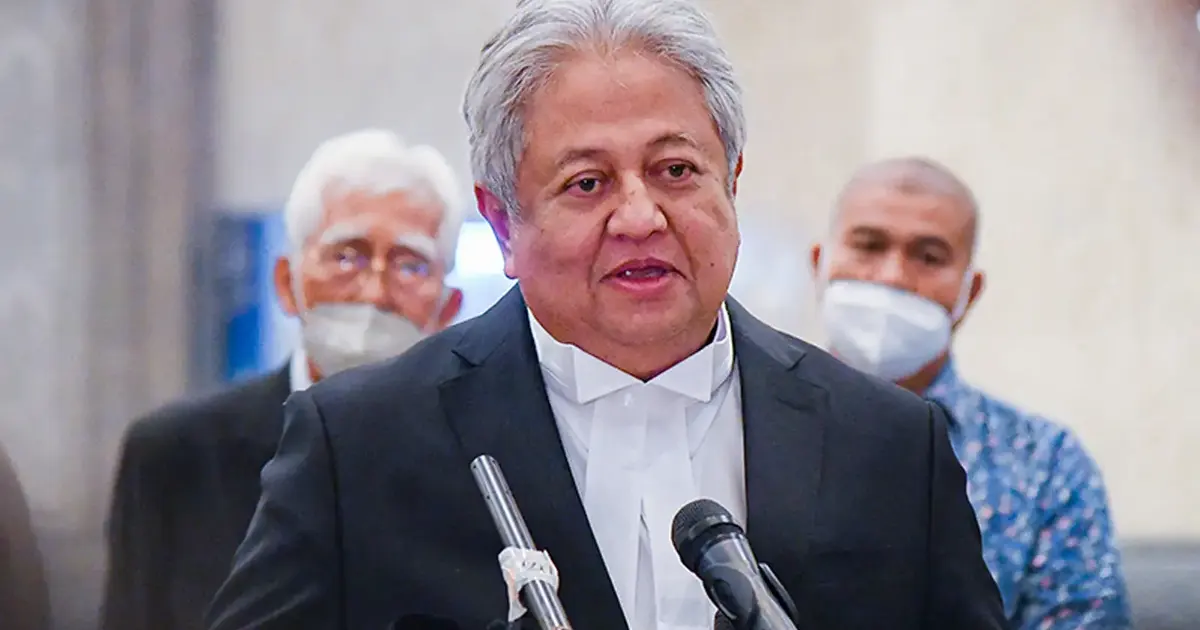
The Court of Appeal has moved to reset proceedings in the defamation appeal case involving Zaid Ibrahim and representatives of the lawyers' professional body after one of the scheduled judges withdrew from the matter. Justice Latifah Tahar has recused herself from hearing the appeal, prompting the court to fix July 13 for a case management session that will establish a fresh hearing date before an alternate judicial panel.
The withdrawal introduces a procedural pause in what has become a closely watched dispute within Malaysia's legal profession. Judicial recusals—whether voluntary or requested—are not uncommon in appellate proceedings, particularly where complex professional relationships or prior involvement may raise questions about impartiality. The recusal ensures that the appeal will be heard by judges without potential conflicts of interest, strengthening the credibility of whatever outcome eventually emerges.
Zaid Ibrahim, a former Law Minister and prominent legal figure, has been engaged in ongoing litigation with elements of the Bar Council and associated legal practitioners over statements made in professional contexts. The defamation dimensions of the case have drawn attention because they involve senior members of the judiciary and Bar, touching on issues of professional conduct, free speech within the legal community, and the boundaries of fair criticism among peers in the justice system.
The scheduled case management on July 13 will serve practical administrative purposes beyond simply fixing a new hearing date. The session offers an opportunity for both parties to clarify outstanding procedural matters, address any preliminary issues that may affect the substantive hearing, and ensure that the court and legal representatives are aligned on the scope and complexity of arguments to be presented. Such sessions frequently resolve peripheral disputes and streamline the core issues that will occupy the appellate panel's attention.
The reassignment of judges will likely add several months to the timeline for final resolution, as scheduling a fresh panel requires coordinating the availability of three judges and arranging a suitable hearing window. For parties involved in protracted litigation, such delays can represent both strategic advantages and frustrations. They extend the uncertainty period but also provide additional time for settlement negotiations or refined legal positioning.
Within Malaysia's legal ecosystem, this case carries significance beyond the immediate disputants. The Bar Council and the courts function as interdependent institutions that must maintain mutual respect and clear professional boundaries. Disputes involving senior legal figures therefore attract scrutiny from practitioners nationwide, who view such cases as setting precedents—both legal and cultural—about how disputes within their profession should be resolved and what standards of conduct are expected.
The recusal also reflects broader principles that animate judicial practice globally. Malaysian courts, like their counterparts in other Commonwealth jurisdictions, maintain strict standards regarding judge impartiality. When a judge concludes that circumstances create a reasonable apprehension of bias—whether genuine or merely perceived—the ethical and professional course is withdrawal. This practice ultimately enhances public confidence in the judiciary by demonstrating that judges prioritise institutional integrity over individual cases.
For the legal community in Malaysia and beyond, the July 13 case management will mark an important waypoint. The court's handling of procedural matters will signal how seriously the appellate system approaches its administrative responsibilities and how expeditiously it can move cases toward substantive resolution. Given the professional profile of those involved, the legal profession will be watching to see whether the appeal eventually receives scheduling priority or continues to move through the normal queue with countless other pending matters.
The defamation claim itself hinges on whether statements made about Zaid Ibrahim crossed the threshold from protected professional commentary into actionable false statements. These boundaries matter significantly because they define the space within which legal professionals can engage in robust debate without facing personal liability. Judges, when they do hear the full appeal, will need to carefully balance the importance of free discourse within the profession against protections afforded to individuals against reputational harm.
As the case enters its next procedural phase, both parties will be preparing detailed written submissions and gathering additional evidence or documentation that supports their respective positions. The months between now and any eventual hearing represent a critical period for strategic preparation. Legal teams will be evaluating strengths and vulnerabilities in their cases, assessing settlement possibilities, and developing sophisticated arguments tailored to the specific composition of the judges who will ultimately decide the matter.
The Bar Council and legal practitioners generally maintain their own dispute resolution mechanisms, but cases involving individual members inevitably proceed through the regular court system. This dual framework sometimes creates complexity, particularly when professional disciplinary standards intersect with civil liability. The appellate hearing, whenever it eventually occurs, will need to navigate these waters carefully to avoid imposing conflicting obligations or expectations on members of the legal profession.
Ultimately, the recusal and resulting delay reflect the system working as designed. Judges withdraw when circumstances warrant, new panels are assigned, and procedures advance deliberately even if not swiftly. For Malaysian legal professionals observing this case, these visible demonstrations of judicial integrity and procedural fairness constitute their own form of reassurance that the system, despite its inherent slowness, remains fundamentally committed to impartial adjudication.

