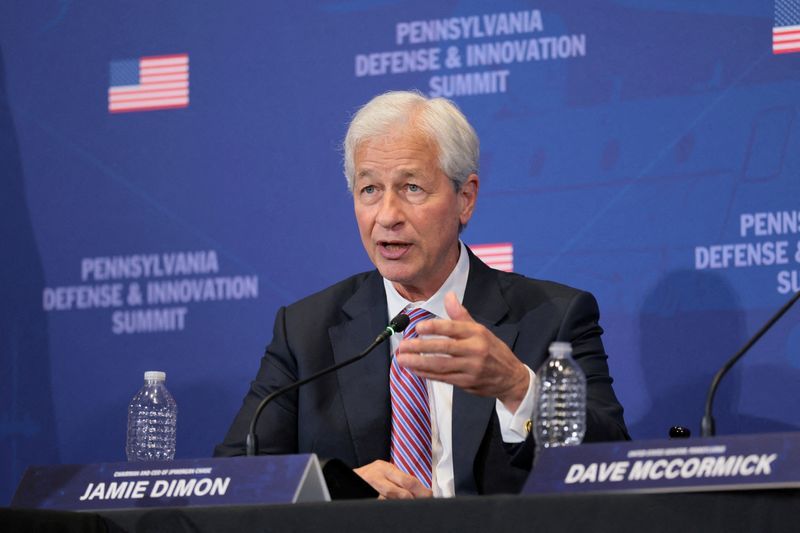
Jamie Dimon, chief executive of JPMorgan Chase, has launched a sweeping corporate initiative to tackle the mounting dangers that artificial intelligence poses to essential infrastructure sectors across the United States. The effort, which began in July and is being expanded through the Alliance for Critical Infrastructure, represents one of the most significant cross-sector attempts by American business to grapple with AI governance before the technology becomes even more embedded in critical systems that millions of citizens depend upon daily.
The JPMorgan CEO has personally contacted executives at major banks, regional financial institutions, and technology companies to participate in what he views as an urgent necessity. The scale of the recruitment effort underscores the breadth of concern within corporate America about AI deployment outpacing both regulatory frameworks and industry safeguards. More than 40 companies have already been engaged in preliminary discussions, spanning a diverse ecosystem including financial services, energy generation, water management, utilities, telecommunications infrastructure, aviation, and rail transport—sectors whose operations have become increasingly dependent on digital systems and algorithms.
The ACI, which JPMorgan helped establish alongside Mastercard and Berkshire Hathaway Energy, originally focused on coordinating resilience strategies and information-sharing to counter cyber, physical, and geopolitical threats to critical infrastructure. Dimon's initiative essentially repurposes this platform to address what many business leaders now view as an existential risk category: the uncontrolled proliferation of advanced artificial intelligence systems. The group plans to establish coordinated safeguards and develop shared protocols by the end of the year, transforming the ACI into a functional industry response mechanism and information-sharing hub before 2024 concludes.
The timing of this corporate mobilization is not coincidental. Cyberattacks against water systems in Minnesota and other states have heightened awareness among infrastructure operators that their networks face evolving threats. Industry leaders increasingly recognize that AI systems themselves could amplify attack surfaces and create novel vulnerabilities that traditional cybersecurity approaches were not designed to counter. The convergence of rapid AI adoption by corporations, demonstrated attacks on critical systems, and regulatory uncertainty has created a consensus among major executives that the private sector cannot afford to wait for government mandates before establishing protective measures.
Dimon has emerged as one of the most vocal corporate voices warning about AI dangers, positioning himself alongside a small cohort of CEOs who have publicly cautioned against unbridled deployment of advanced systems. His credibility as leader of America's largest bank gives considerable weight to his concerns, and his direct engagement with peer executives signals that this initiative carries weight beyond typical industry public relations. In a July statement, he specifically referenced Anthropic's advanced AI model, illustrating the concrete focus of his warnings by describing the situation as equivalent to "giving ballistic missiles to individuals."
The initiative intends to collaborate with the Trump administration on AI governance frameworks, reflecting an assumption that the incoming government will prioritize coordination between federal agencies and the private sector. This marks a strategic pivot by major corporations toward shaping policy before regulations harden, rather than reacting to mandates after they are imposed. The group aims to develop shared understanding of how AI systems are currently being deployed across sectors, map the specific risks each industry faces from these technologies, and identify technical and operational safeguards that can be implemented voluntarily before becoming mandatory through legislation.
The federal government has not remained passive on these concerns. In July, Washington launched the Gold Eagle initiative, which brings together AI developers, infrastructure operators, and federal agencies in a coordinated information-sharing arrangement designed to identify vulnerabilities discovered by advanced AI models and facilitate rapid remediation. The Dimon-led corporate effort operates in parallel to this governmental approach, suggesting that both the public and private sectors recognize that combating AI risks requires multi-directional coordination that transcends traditional public-private boundaries.
From a Malaysian and Southeast Asian perspective, this American corporate initiative carries important implications. As multinational technology companies and financial institutions expand operations throughout the region, the governance frameworks and risk management protocols they adopt in the United States often eventually migrate to other markets. Southeast Asian governments and financial regulators are still developing their own AI governance approaches, and the standards that emerge from American business leadership could influence regional policy development. Additionally, the success or failure of this cross-sector coordination effort may provide valuable lessons for how developing economies should structure their own critical infrastructure protection strategies as AI deployment accelerates.
The initiative also reflects broader anxieties within the global business community about maintaining control over increasingly autonomous systems. As enterprises across banking, energy, and telecommunications integrate AI into core operations, the risk that systems behave in unpredictable or harmful ways intensifies. For Malaysian financial institutions and infrastructure operators, the Dimon-led framework suggests that proactive engagement with AI governance—rather than passive adoption of whatever tools vendors provide—represents prudent management strategy.
Mastercard and Berkshire Hathaway Energy, both founding ACI members, have not publicly commented on the expanded AI focus, though their continued participation indicates industry consensus around the necessity of coordinated action. The Alliance for Critical Infrastructure itself has emphasized in statements that protecting essential systems that Americans depend upon daily "requires strong collaboration between government and critical infrastructure companies," a formulation that implicitly acknowledges that neither sector alone possesses sufficient leverage or information to address emerging AI-related threats.
The corporate effort aims to achieve full operational capacity by year-end, which suggests an aggressive timeline that reflects the perceived urgency of the AI risk challenge. This acceleration compressed into a six-month window indicates that executives in critical sectors believe the threat trajectory is rapidly steepening. As these initiatives develop, the extent to which American corporations successfully coordinate on AI governance may become a model—or cautionary tale—for how other advanced economies and developing regions approach protecting essential infrastructure from risks posed by artificial intelligence systems that continue advancing faster than regulatory frameworks can accommodate.

