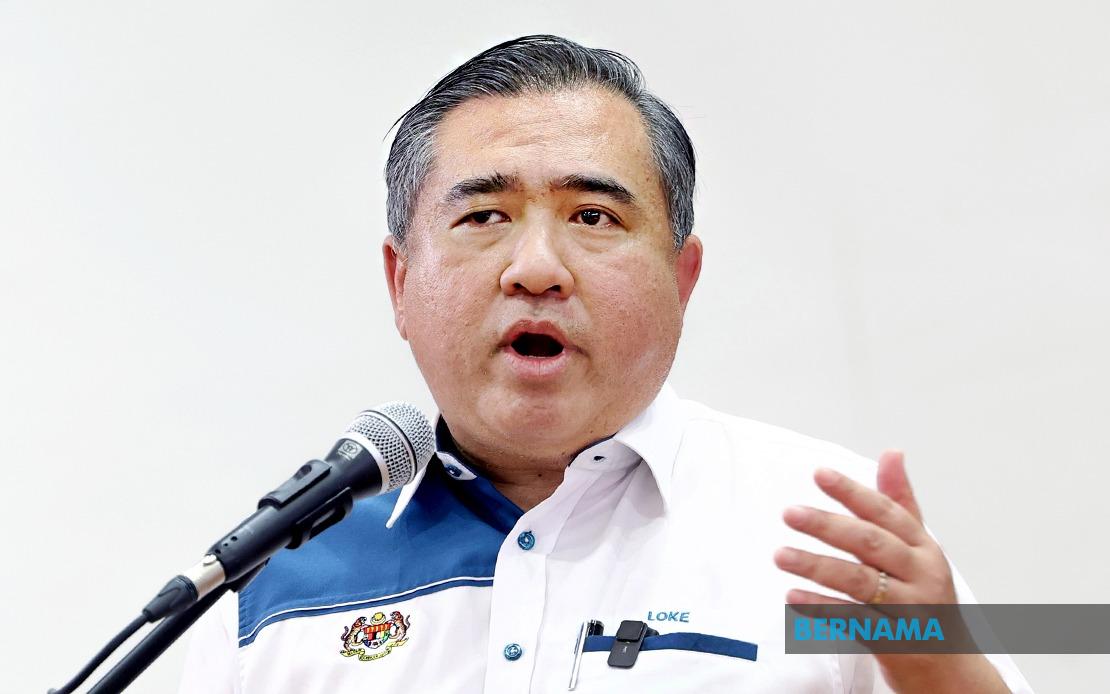
Transport Minister Anthony Loke has ordered the Road Transport Department (JPJ) to take enforcement action against motorcyclists riding without helmets during the ongoing Johor state election campaign, following the circulation of viral videos documenting the violations. The decision represents a significant intervention by the Ministry of Transport (MOT) into campaign conduct, signalling the government's willingness to apply traffic safety rules uniformly regardless of which political coalition is involved in the infractions. Loke's directive comes after evidence emerged of Pakatan Harapan campaign workers, including those from the DAP, breaching helmet regulations while participating in election activities across the state.
The minister made explicit his commitment to enforcing road safety legislation without favour or exception, declaring that this principle would apply equally to all political actors, including members of his own party and coalition. Loke stressed that motorcyclists may legitimately participate in campaign activities, but must do so in compliance with all applicable traffic laws. His statement carries particular weight given his position as DAP secretary-general, effectively placing himself in a position where his own party members could face enforcement action. This personal commitment to equitable application of the law underscores the seriousness with which the transport portfolio is treating the matter and distinguishes the current approach from previous administrations that faced criticism for selective enforcement.
The transport minister drew a parallel to his own earlier advocacy on the same issue, referencing his stance during the Slim by-election campaign nearly six years ago. At that time, Loke similarly called for consistent application of helmet requirements when Barisan Nasional leaders were observed riding without proper safety gear during campaign activities. His long-standing position demonstrates that this is not a reactive or politically motivated decision, but rather a fundamental commitment to road safety standards that should transcend electoral cycles and partisan considerations. The consistency of his messaging across different political contexts lends credibility to the current enforcement directive and suggests a principled approach to transportation regulation.
The enforcement action addresses a specific concern that has gained traction in public discourse and on social media platforms. Videos circulating online documented instances of campaign personnel failing to wear helmets while riding motorcycles in the course of their election work, creating a double problem from a public safety perspective. Beyond the immediate risk to riders themselves, such conduct sends a problematic message to the general public about the importance of safety compliance. Motorcyclists in Malaysia represent a vulnerable segment of road users, with helmet use consistently demonstrated to reduce fatality risk and prevent serious injury. When public figures and campaign workers visibly disregard these protections, it potentially undermines public health messaging and normalises non-compliance among ordinary riders.
The JPJ's role in this enforcement exercise reflects the broader responsibility of transport and road safety authorities to maintain consistent standards across all segments of society. The department has been empowered to issue summonses based on photographic or video evidence from the viral materials, streamlining the process of documentation and enforcement. This administrative approach allows authorities to proceed without requiring in-person observation of violations, making enforcement more efficient and less dependent on real-time policing resources. For Malaysian readers accustomed to selective enforcement of traffic regulations, the commitment to process violations uniformly carries significant implications for public trust in government institutions and the rule of law.
Loke's emphasis that road safety laws do not recognise political party affiliation addresses a fundamental principle of governance that extends beyond the narrow context of campaign conduct. The statement serves as a clarification that certain regulatory frameworks, particularly those protecting public health and safety, must operate independently of electoral politics. This distinction is particularly important in Malaysian governance, where concerns about political bias in law enforcement have occasionally featured in public discourse. By explicitly committing to enforcement that disregards political affiliation, the transport ministry is signalling its intention to maintain professional standards and institutional independence in areas where such neutrality is essential.
The broader context of the Johor state election campaign reveals the intersection between electoral activity and public administration. Campaign work frequently involves activities that would normally be subject to traffic and safety regulations, yet campaigns are often conducted with particular intensity and urgency that might tempt participants to cut corners with safety protocols. The transport ministry's intervention represents an effort to prevent such shortcuts and maintain standards even during the heightened activity of election season. For election commissions and political parties across Southeast Asia observing Malaysian election conduct, the emphasis on regulatory compliance during campaigns demonstrates one approach to maintaining governance standards without restricting political participation.
The potential for enforcement action against DAP and Pakatan Harapan personnel creates a political dimension that cannot be entirely overlooked, despite Loke's non-partisan framing. Opposition politicians and civil society observers will likely monitor the actual implementation of these summonses to assess whether they are applied equitably to all parties. The credibility of the enforcement effort thus depends not merely on the issuance of tickets, but on evidence that similar violations by Barisan Nasional or other coalition campaigners would be pursued with equal vigour. Transparency in enforcement statistics and consistent application across different political actors will be essential to validating the minister's commitment to impartial governance.
For motorcyclists and road safety advocates in Malaysia, the enforcement action represents a positive development in the long-running campaign to improve helmet compliance rates. Malaysia continues to experience relatively high rates of motorcycle-related fatalities and injuries, making behavioural change initiatives particularly important. When high-profile public figures and campaign workers visibly comply with safety regulations, research suggests this can have positive spillover effects on public compliance. Conversely, visible violations by prominent individuals can undermine safety messaging and create a perception that helmet requirements are not universally expected or enforced. The transport ministry's decision to address campaign-related violations thus serves dual purposes: maintaining electoral integrity and advancing public health objectives.
The enforcement approach also reflects international best practices in road safety governance, where consistency and fairness in enforcement are recognised as essential to public compliance. Countries with improved road safety records typically emphasise uniform application of traffic laws rather than selective enforcement based on individual circumstances or social status. By adopting this principled stance, Malaysia aligns itself with evidence-based approaches to reducing road trauma. The message that safety regulations apply uniformly to all members of society, including political elites and campaign workers, contributes to a culture where compliance is expected and normalised rather than viewed as optional or subject to negotiation.
Looking forward, the success of this enforcement initiative will likely influence how transport and road safety authorities approach similar issues during future electoral cycles. If implemented fairly and transparently, it could establish a precedent for maintaining regulatory standards throughout campaign periods. Alternatively, if enforcement appears selective or politically motivated, it could generate controversy and erode public confidence in the objectivity of transport regulation. The transport ministry's performance in this matter thus carries implications extending well beyond the immediate context of the Johor state election, potentially shaping expectations for governance standards and rule of law in Malaysia's electoral processes.

