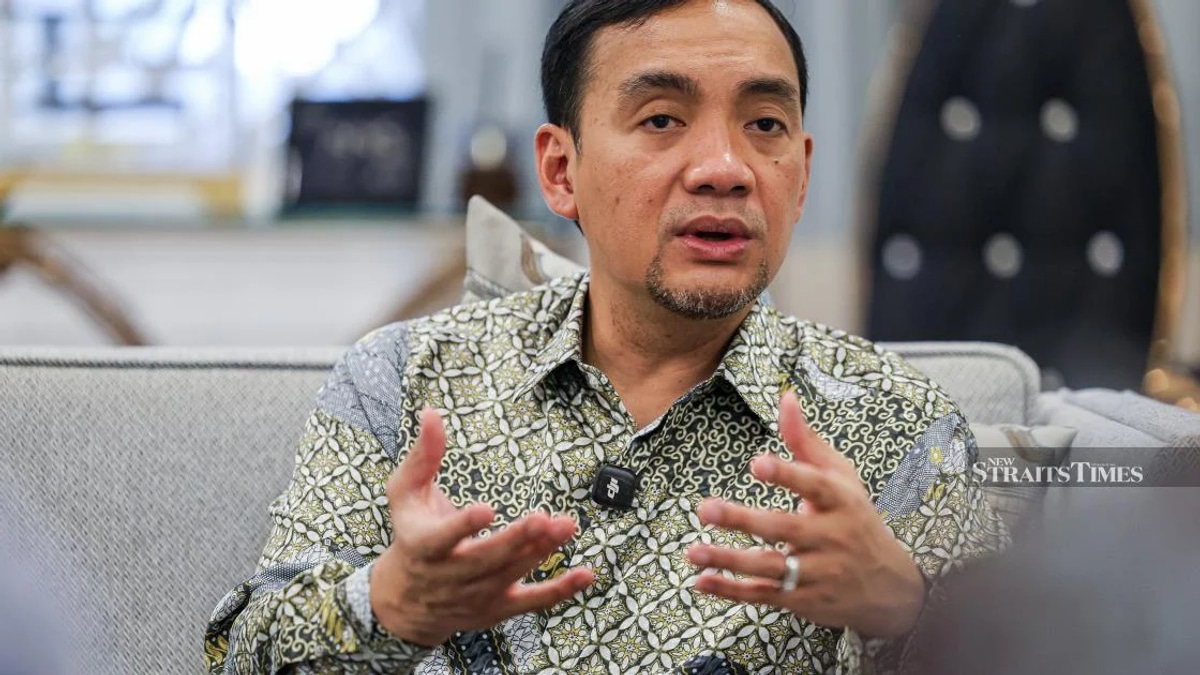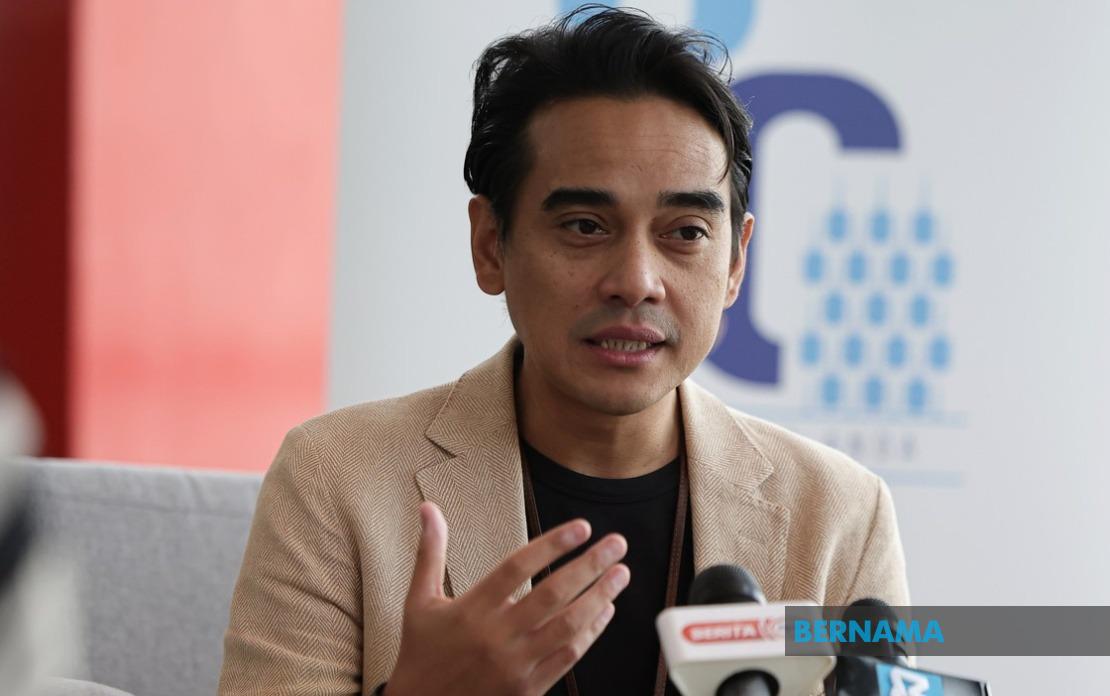
The media industry faces a critical inflection point where adoption of artificial intelligence has shifted from optional to essential for professional survival. Speaking in Kuala Lumpur this week, Broadcasting Director-General Ashwad Ismail delivered a stark message to the journalism community: mastering AI is no longer a luxury but a prerequisite for remaining competitive in an increasingly technology-driven information landscape. His remarks underscore growing anxiety within newsrooms across Malaysia and Southeast Asia about whether traditional journalism skills will suffice in an age of rapid technological disruption.
Ashwad's core argument reframes the ongoing debate about automation and employment in media. Rather than predicting wholesale replacement of journalists by machines, he positioned the real risk as competitive displacement among human practitioners. A journalist equipped with AI literacy will inevitably outperform colleagues who lack such capabilities, he cautioned, creating a two-tier profession where technical proficiency determines career trajectory. This distinction carries particular weight in Malaysia's media environment, where resources for training and upskilling remain unevenly distributed across different news organisations.
The Broadcasting chief stressed that AI should not be perceived as existential threat to journalism's core mission but rather as instrumental technology that amplifies human capabilities. When deployed thoughtfully, AI can handle labour-intensive tasks such as data processing, fact verification, and initial research compilation, freeing journalists to concentrate on investigative work, source development, and narrative construction that demands human judgment and insight. This complementary relationship between artificial and human intelligence could theoretically elevate the overall quality of journalism if properly implemented.
However, Ashwad acknowledged that realising this optimistic scenario requires institutional guardrails. He advocated for explicit guidelines governing AI deployment in newsrooms, arguing that without clear protocols, organisations risk misusing technology in ways that undermine journalistic integrity or compromise editorial standards. The establishment of such frameworks becomes increasingly urgent as AI tools proliferate and media outlets experiment with algorithmic story selection, automated content generation, and data-driven editorial decisions. In the Malaysian context, where media regulatory bodies already monitor industry practices, formal guidelines could emerge as necessary infrastructure for responsible innovation.
The concern about technological adaptation failure resonates deeply with industry observers. Ashwad highlighted the vulnerability of media practitioners who resist or struggle to incorporate new tools into their workflows. Unlike previous technological transitions where journalists could maintain employment through institutional continuity, the AI revolution threatens to accelerate career obsolescence for those unable or unwilling to upskill. Newsrooms facing budget constraints may prove unwilling to retrain older staff, potentially triggering a wave of age-based attrition that transforms journalism's demographic profile.
Parallel to technological challenges, Ashwad connected the sustainability question to journalism's credibility crisis. He argued that rebuilding public trust requires returning to foundational journalistic practices, particularly hyperlocal reporting that creates authentic community connections. This counterintuitive proposal suggests that technology adoption alone cannot solve journalism's legitimacy problems; instead, intensive local engagement and human-centred storytelling remain irreplaceable. In Malaysia's diverse, multilingual, multi-ethnic society, hyperlocal approaches that reflect specific community concerns could indeed prove more resilient than algorithmically-driven content optimisation.
The tension between technological necessity and human connection that Ashwad identified points toward a potential resolution: journalists must become bilingual professionals fluent in both traditional craft skills and emerging technical capabilities. Those who achieve this integration will possess competitive advantage, while others risk marginalisation. For journalism schools and professional development programmes across Southeast Asia, the implication is clear—curricula must evolve to teach both investigative methodology and data literacy, editorial judgment and prompt engineering, community engagement and content management systems.
Ashwad's intervention arrives as the industry navigates HAWANA 2026, a significant regional gathering that will convene over 1,200 delegates including media practitioners and ASEAN representatives when Prime Minister Datuk Seri Anwar Ibrahim officially opens the event at PICCA Convention Centre @ Arena Butterworth, Penang on June 20. This forum provides an opportunity for regional media leaders to develop coordinated approaches toward AI integration, rather than allowing each nation's outlets to experiment independently. Such collaboration could help smaller markets like Malaysia establish best practices before being overwhelmed by technological change.
The broadcasting chief's remarks also highlight asymmetric capacity within the regional media ecosystem. Larger, better-resourced news organisations can afford sophisticated AI tools and comprehensive staff training, while smaller outlets and independent journalists lack such resources. This disparity threatens to widen the gap between elite and peripheral media, potentially concentrating information power in fewer hands. For Malaysia's media diversity and journalistic pluralism, ensuring equitable access to AI training and tools becomes a policy imperative alongside individual professional development.
Ultimately, Ashwad's message articulates a version of technological determinism tempered by human agency. AI adoption is inevitable, he suggests, but journalism's future remains shaped by how professionals choose to engage with these tools. Those who view AI as threatening and resist it will find themselves displaced by competitors. Those who selectively integrate AI while maintaining commitment to accuracy, independence, and community service may navigate successfully toward a hybrid future where machines augment rather than replace human journalism. For Malaysian journalists and media organisations, the window for strategic adaptation remains open but is narrowing rapidly.