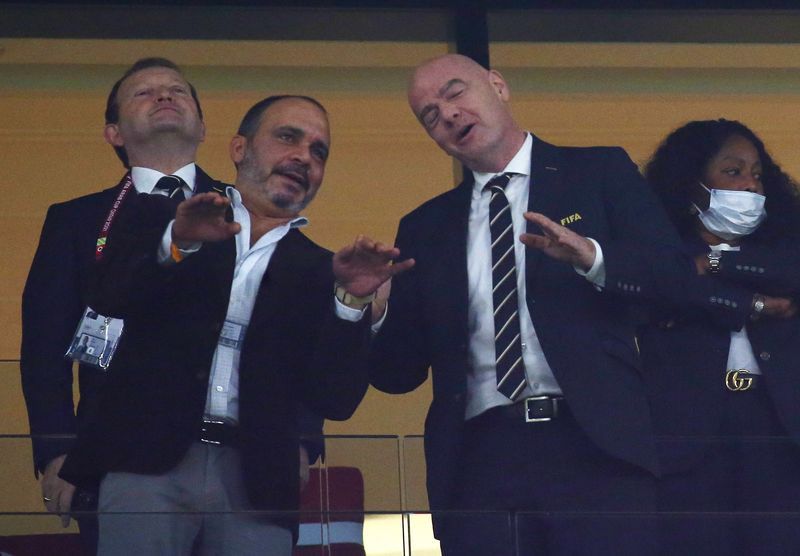
Jordan Football Association President Prince Ali bin Hussein announced on Thursday that his country's players and support staff have finally received their outstanding prize money for competing in the 2025 Arab Cup tournament, resolving a financial dispute that had festered since December. The announcement came just two days after the prince levelled serious accusations against FIFA, claiming the world football governing body had effectively held the payments hostage in exchange for political support.
The financial wrangle stems from Jordan's run to the final of the Arab Cup in Qatar last December, an achievement that entitled the association to prize money that, under normal circumstances, should have arrived promptly. Instead, the Jordan Football Association waited through January, February, March, April, May, June, and July—a full eight months—without receiving the funds. This extended delay during the middle of the year forced the association to manage its operations and player compensation without monies it had legitimately earned.
Prince Ali's frustration boiled over when he alleged that FIFA had leveraged these payments as part of a broader negotiation. During discussions at the World Cup, he claimed, FIFA representatives suggested verbally that supporting FIFA President Gianni Infantino "would go a long way to helping our FA out." The insinuation was unmistakable: backing the FIFA president could unlock the trapped prize money. This allegation frames the delayed payments not as bureaucratic oversight but as a calculated tool of institutional pressure.
The timing of Prince Ali's accusations is significant because they emerged amid considerable turbulence within FIFA's upper echelons. President Infantino had recently backtracked from a controversial proposal to sell commercial rights to the World Cup tournament, a scheme that had generated substantial opposition from football confederations and national associations worldwide. As resistance mounted from multiple stakeholders, FIFA faced what observers characterised as a leadership crisis that threatened Infantino's political standing within the organisation.
Prince Ali specifically identified the delayed Arab Cup prize money as exemplary of the broader systemic problems plaguing FIFA's governance. By withholding legitimate tournament earnings, the organisation appeared to be operating in a way that prioritised political objectives over financial transparency and timely settlement of contractual obligations. This behaviour, in his view, reflected poorly on the management of international football and demonstrated why reform of FIFA's leadership was urgently needed.
Following the prince's public statements, FIFA moved with unusual speed to transfer the outstanding funds to Jordan. The sudden resolution suggests that the governing body recognised both the reputational damage of the allegations and the pressure being applied through media scrutiny. However, Prince Ali was careful not to frame the payment as vindication of FIFA's conduct or as reason for reconciliation. He characterised the delayed resolution as symptomatic of deeper institutional dysfunction that consistently resurfaces during periods of FIFA presidential elections.
The prince's response to receiving the money demonstrates a calculated political stance. While acknowledging that the financial delivery was positive for his association and its players, he explicitly rejected any suggestion that this outcome would soften his criticism of FIFA's leadership or influence his position in the coming presidential election context. He reiterated that neither he nor his federation would endorse or vote for Infantino, cementing Jordan's opposition regardless of whether individual grievances were resolved.
FIFA's official response proved notably limited. The organisation declined to comment directly on Prince Ali's allegations of conditional funding or blackmail-like tactics. Instead, the body focused on broader institutional matters, issuing an apology to member associations for the mishandled World Cup commercial rights proposal. Senior FIFA leadership reaffirmed their confidence in President Infantino during a crisis meeting held in Morocco on Wednesday, signalling an attempt to present unity despite the internal dissent.
For Malaysian football observers, this episode illustrates the fragile relationship between FIFA's centralised power structures and member associations that depend on timely financial distribution. The Arab Cup incident reveals how tournament prize money—funds that legitimate stakeholders have earned through competitive participation—can become entangled with political negotiations and leadership contests. This dynamic carries implications for Southeast Asian football as well, where regional associations similarly depend on FIFA distributions and could face comparable pressures during periods of organisational instability.
The incident also highlights the broader credibility challenges facing FIFA as it attempts to position itself as a transparent, professional international governing body. When flagship tournaments award prize money that takes months to reach recipients, and when that delay appears coordinated with requests for political support, the organisation undermines its own claims to institutional integrity. For national football associations across Asia and beyond, the episode reinforces the importance of maintaining independent voices and refusing to allow financial leverage to dictate their positions on governance issues.
Prince Ali's stance reflects a growing willingness among some federation leaders to challenge FIFA authority openly rather than navigate disputes through confidential channels. This shift toward public accountability could reshape how the organisation manages relationships with member associations, particularly as the next presidential election approaches. The resolution of Jordan's payment case may be complete in financial terms, but the broader questions about FIFA's institutional practices and leadership credibility remain decidedly unresolved.

