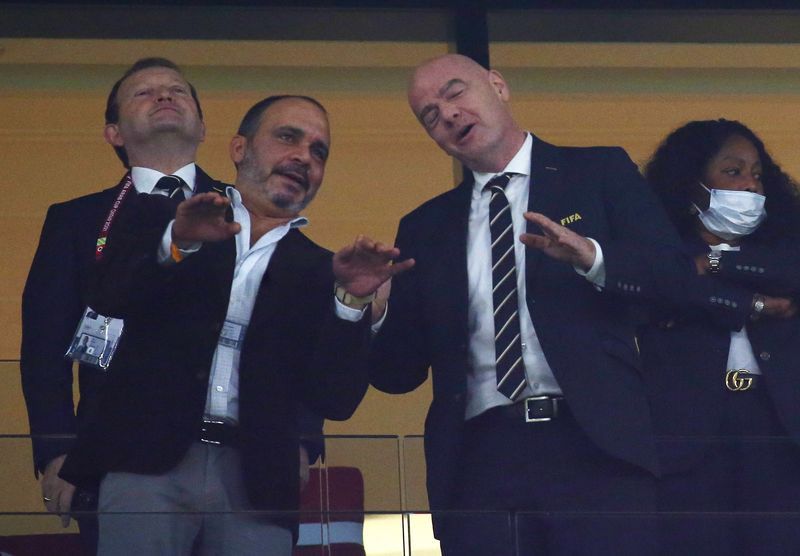
The President of the Jordan Football Association has escalated tensions within global soccer governance by levelling serious allegations against FIFA's leadership. Ali bin Hussein took to social media on Tuesday to publicly accuse FIFA President Gianni Infantino of deploying "blackmail" tactics, claiming the world soccer body had explicitly linked potential assistance to the association's longstanding problems with a formal endorsement of Infantino's continued leadership. According to bin Hussein, FIFA officials conveyed this conditional offer verbally during the recent World Cup tournament, suggesting that backing Infantino "would go a long way to helping our FA out" after the governing body had previously declined to provide support on multiple matters affecting the Jordanian federation.
The Jordan FA chief's statement represents a rare public airing of grievances from within soccer's institutional hierarchy, coming at a moment when Infantino's position faces mounting internal scrutiny. In his X post, bin Hussein emphasised that Jordan has consistently refused to endorse Infantino in the past and would continue to resist such pressure, stating that the association remains committed to upholding ethical standards in its decision-making processes. The accusation carries particular weight given Jordan's relatively modest standing within international football structures, positioning this as not merely a personal dispute but a reflection of how larger organisations may exercise disproportionate leverage over smaller national associations.
Infantino's authority within FIFA has become increasingly fragile in recent weeks following his unsuccessful attempt to restructure the organisation's commercial operations. The FIFA president had proposed selling a minority stake in the federation's commercial rights to raise billions of dollars that would theoretically benefit grassroots sports development programmes globally. This controversial plan faced coordinated rejection from confederations and national associations around the world, with a firm September 19 deadline imposed by Infantino ultimately failing to generate the required support. Several prominent FIFA executives, including Secretary General Mattias Grafstrom and renowned football strategist Arsene Wenger, publicly distanced themselves from the proposal, signalling deep divisions within the governing body's leadership structure.
Bin Hussein's intervention extends beyond personalised criticism to articulate substantive complaints about how FIFA's policies have disadvantaged smaller football nations like Jordan. The association operates under severe budgetary constraints typical of smaller confederations, yet faces pressures comparable to wealthier federations. Among the recurring difficulties he highlighted is the prohibitive cost of match tickets for supporters, which remains beyond the financial reach of many fans while simultaneously failing to guarantee attendance at major tournaments. Jordan supporters attempting to travel to the World Cup in the United States encountered additional barriers in the form of visa denials, creating a situation where fans willing and able to purchase expensive tickets faced bureaucratic obstacles preventing their attendance.
Financial compensation for player participation in FIFA-organised tournaments represents another persistent grievance. Jordan's squad reached the final of the 2025 Arab Cup, a competition overseen by FIFA, yet the association has been awaiting the promised prize money since December without resolution. This delay contradicts the public image FIFA cultivates regarding its financial abundance, with the organisation regularly announcing enormous reserve funds and revenues from commercial partnerships. For a smaller association with minimal operating budgets, such delays create genuine hardship affecting players and coaching staff who depend on these payments, yet FIFA's central office appears to prioritise other expenditure priorities despite maintaining substantial financial reserves.
An additional layer of grievance concerns tax obligations imposed on participating nations during World Cup tournaments. When the World Cup was held in the United States, Jordan faced significant tax liabilities through FIFA as the host nation's government asserted tax claims on participating teams. This arrangement created a financial burden that did not apply to teams based in or operating primarily from Canada and Mexico, effectively creating unequal cost structures for different participating nations based on geographical location rather than competitive status. These tax obligations diverted resources that could otherwise have supported player compensation or staff development, effectively transferring wealth from smaller football associations to host nation governments.
Jordan's qualification for the World Cup represented a historic milestone for the nation's football programme, marking the first occasion the country had reached this prestigious tournament. However, the team's exit during the group stage combined with unresolved financial matters has created a narrative of institutional disappointment rather than celebratory achievement. The association's experiences highlight structural inequities within international football governance where smaller nations lack the financial buffers and political leverage to navigate FIFA's administrative and commercial frameworks effectively.
Bin Hussein's public statement signals broader institutional frustration with FIFA's governance model, particularly regarding how the organisation balances its role as a neutral governing body with what critics characterise as transactional approaches to member support. The timing of his comments, coinciding with Infantino's weakened political position following the failed commercial restructuring, suggests that various stakeholders within football have detected vulnerability within the FIFA presidency and are positioning themselves to advance their particular interests and grievances.
The incident underscores structural tensions within global sports governance where large organisations exercise disproportionate power over smaller constituent members. For Southeast Asian football associations monitoring developments within FIFA, the Jordan FA's experience offers cautionary lessons about the vulnerability of smaller confederations when facing pressure from centralised governing bodies. The unresolved dispute also raises questions about FIFA's accountability mechanisms and whether existing governance structures adequately protect member associations from potentially coercive conduct. FIFA's statement through Reuters acknowledging these allegations remains pending, though the organisation's silence to date may itself communicate something about the credibility of bin Hussein's claims within the broader football community.

