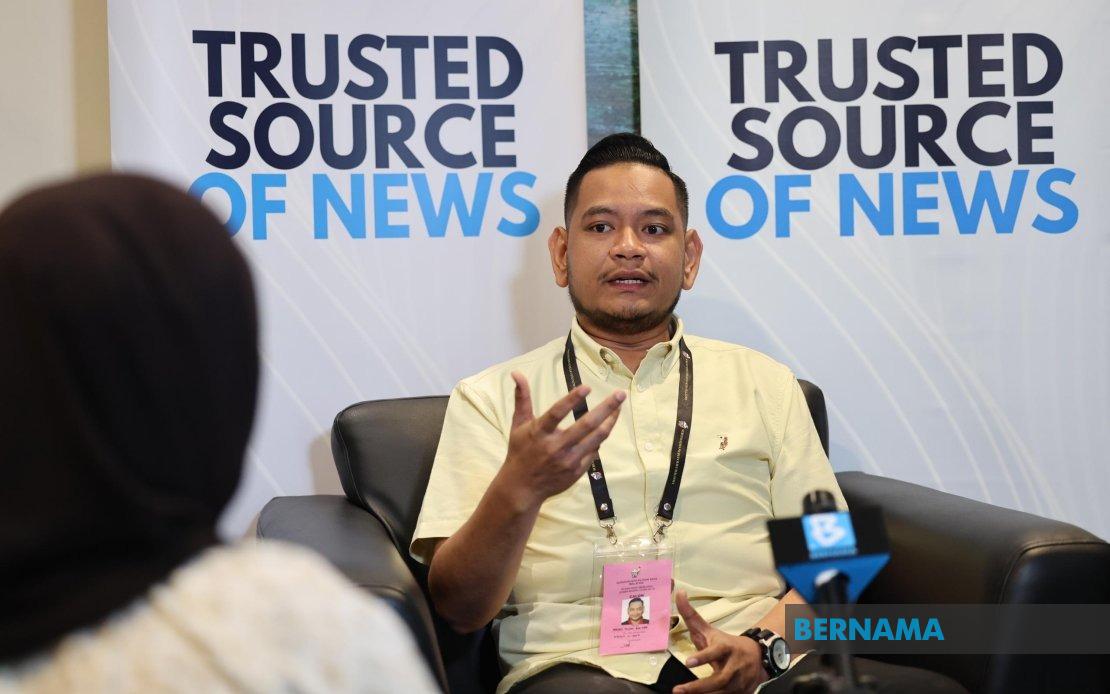
The Sedili state seat contest in Johor's upcoming election is shaping up as a three-way battle between established political figures and a young upstart determined to reshape the conversation around generational leadership. Amirul Huzni Onn, the 29-year-old Amanah Youth chief and Pakatan Harapan candidate, is stepping into a Barisan Nasional-dominated constituency to face incumbent Muszaide Makmor and former three-term assemblyman Rasman Ithnain representing Perikatan Nasional. Rather than viewing his inexperience as a liability, Amirul Huzni has framed his relative newness to electoral politics as a fundamental strength—one that mirrors broader demographic shifts occurring throughout Malaysia.
The candidature reflects a broader pattern taking shape within PH as the coalition seeks to inject new energy into constituencies where traditional approaches have repeatedly faltered. Amirul Huzni's argument cuts to a central tension in Malaysian politics: whether voters prioritise the accumulated networks and track records of seasoned politicians or prefer candidates unburdened by the accumulated compromises and perceived failures of their predecessors. In his conversation with Bernama, the Sedili candidate articulated this positioning with unusual clarity, describing himself and his generation as a "blank canvas" lacking the "blemishes or past shortcomings" that voters might associate with longer-serving officials. This rhetorical strategy acknowledges the disadvantage younger candidates face in terms of institutional connections and political muscle while simultaneously converting that weakness into a moral and symbolic advantage.
Sedili's political geography has historically favored Barisan Nasional, making this contest particularly instructive for understanding how electoral dynamics are shifting in the state. The constituency's reliance on fishing and maritime industries has traditionally reinforced conservative voting patterns, yet the emergence of multiple candidates suggests growing fluidity in local political alignments. Muszaide Makmor's position as the sitting BN representative carries the institutional weight of the current administration, while Rasman Ithnain's previous experience as a three-term assemblyman provides PN with a candidate capable of mobilising his established constituency base. Against this backdrop, Amirul Huzni's candidacy represents a gamble on whether younger voters and those dissatisfied with traditional politics might overcome their demographic minority in the electorate.
The substance of Amirul Huzni's campaign strategy deserves attention for what it reveals about emerging trends in Malaysian electoral messaging. Rather than promising expansive, difficult-to-deliver commitments, he has opted for a granular focus on a single, concrete objective: the completion of a fuel station in Sedili. According to his account, the site has already been identified and the land cleared more than a year ago, yet the facility remains unbuilt. This focus on tangible, achievable outcomes rather than rhetorical flourishes distinguishes his approach from the broader campaign culture, where candidates often compete in making ever-larger promises. For local fishermen and recreational anglers—core constituencies within Sedili—a functional fuel station represents practical necessity rather than luxury. By concentrating on this specific deliverable, Amirul Huzni signals both realism about what a state assemblyman can accomplish and attentiveness to the daily material needs of his potential constituents.
The candidacy also illuminates generational attitudes toward campaign conduct and political civility within Malaysian electoral contexts. Amirul Huzni has explicitly emphasized the importance of conducting his campaign in a manner that preserves community harmony and treats opponents with respect. During nomination day, he reportedly communicated to his rivals that he viewed the contest as a learning experience conducted in a spirit of healthy competition rather than personal enmity. This rhetorical emphasis on magnanimity and maturity could be read as performative—a young candidate distinguishing himself by adopting the language of statesmanship. Alternatively, it might reflect genuine concerns among younger voters and activists about the deteriorating civility of Malaysian political discourse, particularly at the state and local level where factional conflicts sometimes take on intensely personal dimensions.
The structural advantages held by his opponents merit careful consideration in assessing the viability of Amirul Huzni's candidacy. Muszaide Makmor benefits from the organizational machinery and resource advantages that accrue to the sitting BN representative, including the capacity to distribute patronage and point to completed projects. Rasman Ithnain brings the distinct asset of prior electoral success in the same constituency, suggesting name recognition and a demonstrated capacity to mobilize voters. These are not trivial advantages in a first-past-the-post electoral system where marginal shifts in voter turnout and coalition strength can determine outcomes. Amirul Huzni's relative inexperience means he lacks the granular knowledge of local factions, personal relationships, and institutional networks that typically take years to cultivate. Yet his very status as a relative outsider potentially provides insulation from the accumulated grievances and personal rivalries that voters may associate with longer-serving politicians.
The broader context of the 16th Johor state election adds another layer of complexity to the Sedili contest. State elections in Malaysia's most industrialized state frequently serve as early indicators of national sentiment and factional strength within major political coalitions. The performance of younger candidates like Amirul Huzni could provide valuable intelligence about whether demographic and generational factors are reshaping electoral calculations in ways that benefit PH's revival strategy or whether traditional mechanisms of party loyalty and patronage remain decisive. The contest also occurs against a backdrop of sustained factional tensions within Johor's political establishment, where contests between BN, PN, and PH candidates often reflect not just national coalition positioning but intense local disputes over resource distribution and factional influence.
Amirul Huzni's campaign represents a calculated wager that Malaysian voters, or at least a sufficient segment of them, are willing to experiment with political newcomers who offer recognizable competence and clarity about limited, achievable objectives. Whether this approach succeeds in a constituency where Barisan Nasional has traditionally held sway will depend on factors extending well beyond his individual campaign strategy: the strength of PH's broader get-out-the-vote efforts, the degree to which PN's presence fragments anti-BN sentiment, and shifts in voter sentiment regarding which criteria matter most in selecting representatives. The polling scheduled for July 11, with early voting on July 7, will provide an early verdict on whether youthful energy and fresh perspectives can overcome the institutional weight of established political machinery in a traditional BN stronghold.

