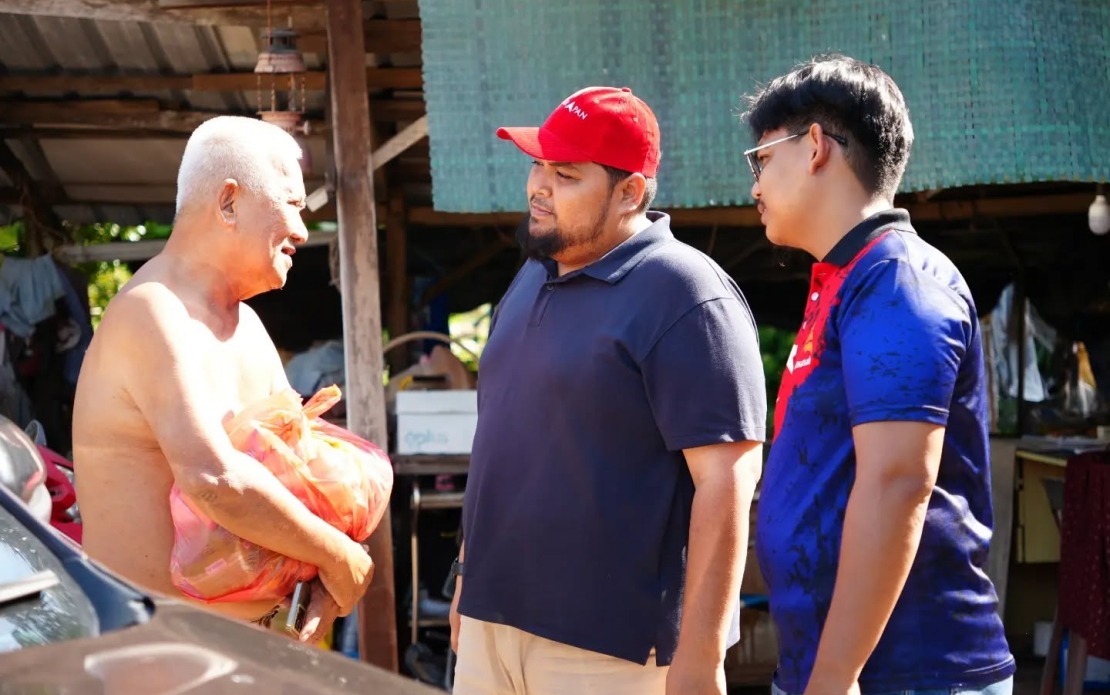
The battle for Johor's Maharani state seat is entering its final stretch, with Pakatan Harapan candidate Muhammad Taqiuddin Cheman accelerating his push to mobilise younger voters just days before the 16th Johor State Election scheduled for Saturday, July 11. Operating under the nickname Taqi, the former Pulai Sebatang assemblyman is restructuring his campaign narrative to emphasise concerns that resonate most acutely with first-time and young voters—chiefly the scarcity of meaningful employment, the challenge of launching new ventures, and access to quality training pathways that can equip them for modern industries.
The strategic pivot towards youth engagement reflects a broader recognition within the PH machinery that Johor's electoral landscape has shifted. Taqi has committed the remainder of his campaign cycle to a grassroots engagement strategy, organising a series of discussions and consultations with youth groups throughout the Muar district. These interactive sessions are designed not merely as photo opportunities but as listening forums where younger constituents can articulate the structural barriers they perceive in building stable careers and sustainable livelihoods within their own district.
Muar itself carries a demographic challenge that looms over local political discourse. The town has acquired an informal reputation as a "retirement destination," a characterisation rooted in the observable reality that young adults frequently relocate elsewhere in pursuit of employment prospects. Those who remain often find themselves channelled into the semiconductor manufacturing sector, which, while providing income, may constrain their sense of diverse career pathways. This outward migration of youth talent represents both an economic concern for district development and a political vulnerability for candidates claiming to champion local interests.
During recent engagement activities, Taqi encountered a cluster of young entrepreneurs operating within District 84 who articulated a surprisingly specific grievance: approximately 70 traders operate in the area, but insufficient commercial space forces them into an inefficient rotation system where vendors cannot maintain consistent presence. These entrepreneurs have already identified alternative locations within Muar where they might establish operations, yet lack the institutional patronage necessary to navigate site acquisition processes. Taqi has positioned himself as the champion willing to facilitate these applications and advocate for the release of available commercial real estate.
The employment opportunity narrative connects directly to PH's "Johor For All" manifesto, which allocates RM500 million specifically toward young entrepreneurship expansion schemes. This funding commitment provides Taqi with a tangible policy anchor for his campaign messaging—a way to translate broader party promises into concrete district-level implications. The proposition is that improved access to capital and business development support can fundamentally alter Muar's demographic trajectory by creating conditions that retain entrepreneurial energy within the locality rather than forcing talented individuals toward Kuala Lumpur, Singapore, or other economic centres.
Beyond entrepreneurship, Taqi has emphasised the development of Technical and Vocational Education and Training institutions within the Maharani constituency itself. The rationale underlying this position is straightforward yet compelling: local TVET capacity would enable school-leavers to acquire industry-relevant qualifications without requiring migration to urban centres, while simultaneously creating a skilled workforce aligned with regional industrial needs. Significantly, Taqi has highlighted the fisheries sector, proposing that second-generation fishing families could leverage improved vocational pathways to modernise their operations and enhance income stability—an acknowledgment of Muar's coastal heritage and the economic vulnerabilities within traditional maritime communities.
The broader infrastructure context shapes these aspirations considerably. The Maharani Energy Gateway project, anticipated for near-term completion, carries potential to catalyse fresh economic activity in the vicinity. Should this development proceed as scheduled, it could generate employment openings and supply-chain opportunities that align with Taqi's youth-focused messaging. However, the project's exact scope and timing remain somewhat opaque to ordinary constituents, creating space for candidates to shape interpretations of its significance.
Practical infrastructure challenges also feature prominently in Taqi's campaign analysis. Inadequate drainage affecting oil palm cultivation zones and the shallow river mouth at Parit Raja Laut—which restricts fishing vessel movement and undermines the viability of commercial fishing operations—represent unglamorous but consequential issues affecting both rural livelihoods and future investment confidence. Addressing these technical deficiencies speaks to a constituency-building approach that moves beyond rhetorical appeals to young voters' aspirations and acknowledges material constraints on economic activity.
Taqi confronts a genuinely competitive electoral environment. His rivals include Mohamad Anuar Hayan representing Perikatan Nasional, Datuk Ashari Md Sarip contesting for Barisan Nasional, and Muhammad Amir Fiqri fielding a Parti Ikatan Demokratik Malaysia challenge. This four-way contest prevents any candidate from assuming a default advantage, making the granular work of persuading specific voter segments potentially decisive. Within this competitive landscape, Taqi's selection of youth-focused messaging appears calculated to identify and mobilise a constituency segment that other candidates might overlook or underestimate.
The Maharani election encapsulates broader transformations underway within Johor's political economy. The state has historically leaned toward Barisan Nasional, yet recent electoral cycles have demonstrated genuine contestation. Demographic shifts, economic pressures on traditional sectors, and younger voters' different policy priorities from their parents' generation create opportunities for alternative coalition messaging to gain traction. Taqi's campaign represents an attempt to position PH as the coalition most attuned to the structural economic anxieties animating Muar's younger population—those confronting a labour market transition, entrepreneurial bottlenecks, and the persistent possibility that their future prosperity lies elsewhere unless deliberate political choices redirect local development trajectories.
For Malaysian observers tracking Johor's political evolution and the broader regional dynamics of state-level competition, the Maharani contest functions as a microcosm of how traditional geographic strongholds are being contested through appeals to demographic constituencies previously assumed as committed. The emphasis on skills development, entrepreneurial support, and infrastructure modernisation suggests that winning coalitions in emerging electoral cycles may require authenticity in addressing material constraints on economic opportunity—not merely patriotic rhetoric or patronage networks. As Taqi intensifies his final campaign phase, his success or failure in mobilising younger voters will offer meaningful signals about whether demographic-targeted, issue-specific messaging can reshape Johor's political geography.

