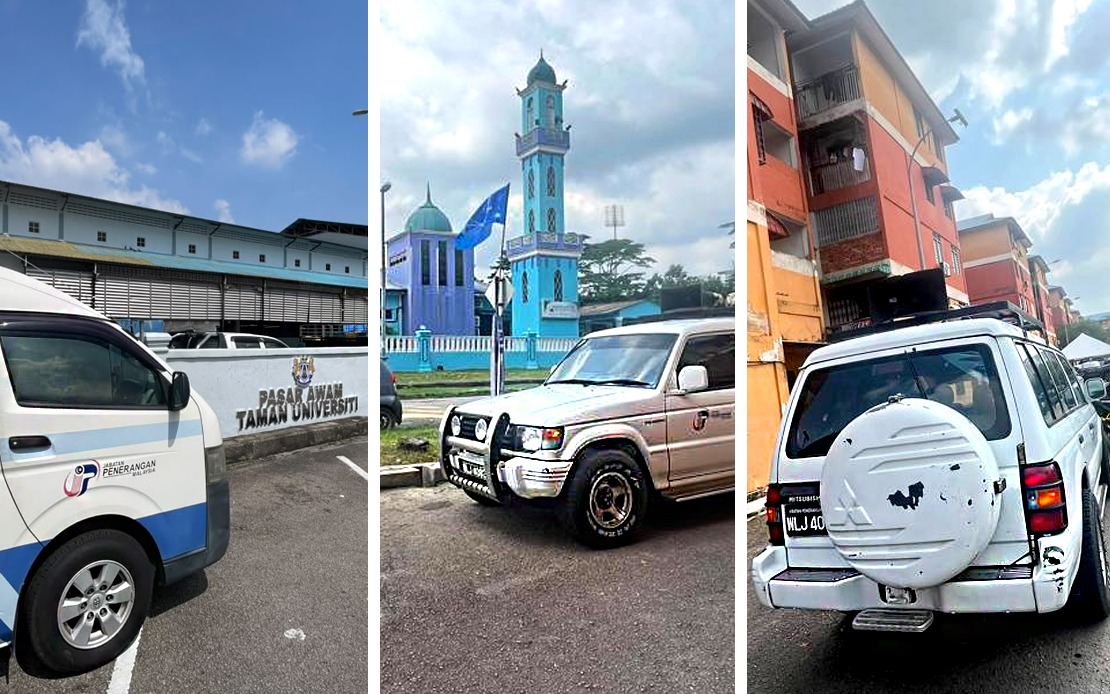
The Johor Department of Information (JAPEN) has strategically positioned 26 Info On Wheels (IOW) mobile units throughout the state to ensure voters have direct access to official election materials and messaging ahead of Saturday's 16th Johor state election. According to Johor JAPEN director Mohd Rizal Hashim, this comprehensive ground operation represents a significant logistical commitment designed to reach citizens in every corner of the state, from bustling urban centres to remote Orang Asli settlements. The deployment spans all 10 districts and 56 state constituencies, reflecting an effort to eliminate geographical barriers that might otherwise prevent voters from accessing verified election information.
The timing of this initiative underscores the importance authorities place on the final countdown to polling day. Mohd Rizal explained that announcement frequency will substantially increase during the three days immediately preceding the election, with particular emphasis on morning and evening broadcasts when audiences are most likely to encounter public messaging. This scheduling strategy reflects data-driven thinking about media consumption patterns and voter awareness cycles. The core messaging will focus on practical electoral logistics, including reminders for citizens to verify their voter status and plan their journeys to polling stations, positioning voting not as an abstract civic concept but as a concrete task requiring advance planning.
JAPEN's operational philosophy diverges from conventional information dissemination models. Rather than maintaining static information centres that require citizens to seek out materials, the department has adopted a proactive field-based approach. Mobile units stationed in densely populated residential areas, commercial districts, rural communities, Felda settlements, and Orang Asli villages represent an intentional strategy to meet voters where they already congregate. This methodology recognises demographic realities in Johor, where significant population segments live in areas that might lack convenient access to traditional information infrastructure.
The campaign functions on two interconnected levels. The primary objective involves ensuring that authoritative election data originating from the Election Commission reaches the broader public efficiently and accurately. Information regarding polling dates, voter list verification procedures, and voting reminders constitute the substantive core of this messaging. However, JAPEN personnel simultaneously operate as frontline defenders against election-period misinformation, conducting face-to-face advocacy programmes designed to counter false narratives and unsubstantiated claims that predictably flourish during electoral campaigns. This dual mandate reflects contemporary governance challenges where official communicators must simultaneously provide information and combat disinformation.
The proliferation of unverified content during election periods represents a recognised threat to electoral integrity across Southeast Asia, and Malaysia has experienced its share of viral false claims in previous cycles. By embedding personnel in communities and engaging citizens directly, JAPEN aims to establish trusted local information sources that can credibly address false narratives before they gain substantial traction. Face-to-face engagement provides opportunities for dialogue that social media interactions typically cannot facilitate, allowing officials to address specific concerns and provide contextualised explanations rather than simply broadcasting standardised messaging.
Mohd Rizal characterised voting as transcending mere legal entitlement to constitute a civic responsibility carrying significant weight. His framing emphasises that electoral participation directly influences the trajectory of state development, economic policy orientation, and overall public welfare across the ensuing five-year term. This rhetorical approach attempts to elevate voting from instrumental choice-making to a more profound conception of democratic citizenship. For Malaysian readers, particularly in Johor, this messaging aligns with broader national efforts to strengthen electoral participation rates and reinforce democratic engagement, especially among demographics traditionally exhibiting lower turnout levels.
The stakes of Saturday's election extend beyond Johor's immediate political dynamics. As Malaysia's second-most populous state and a significant economic contributor, Johor's electoral outcome carries ramifications for national political calculations and coalition dynamics at federal level. Strong voter turnout could be interpreted as endorsement of particular policy directions or rejection of competing visions, sending signals that reverberate through Malaysia's complex multiethnic political landscape. JAPEN's mobilisation efforts thus serve not merely local administrative purposes but contribute to shaping broader political narratives.
The campaign against social media misinformation warrants particular attention given the documented effectiveness of false claims in shaping voter perceptions. During election periods, unverified information regarding polling procedures, voter eligibility, or candidate allegations can suppress turnout among confused or discouraged voters, distort political discourse, and undermine institutional legitimacy. JAPEN's explicit acknowledgement of this risk and commitment to combating it through community-level engagement demonstrates recognition that information quality directly affects democratic functioning. Malaysian observers should note that this defensive posture against misinformation has become virtually standard across government communication agencies during electoral campaigns.
Mohd Rizal's emphasis on creating a "peaceful and harmonious environment" for voting reflects awareness of communal sensitivities in Johor's multiethnic context. Election periods occasionally precipitate interethnic tensions or invoke divisive rhetoric, particularly when campaigns invoke identity-based appeals. By framing the election as fundamentally about verified facts rather than identity categories or inflammatory narratives, JAPEN attempts to establish norms of civil electoral conduct. This positioning matters for Malaysian and broader Southeast Asian contexts where electoral campaigns occasionally inflame existing communal fault lines.
The practical advice to voters—planning journeys early and avoiding last-minute scrambles—reflects logistical realities often overlooked in political discourse. Polling day logistics can present genuine challenges for citizens with mobility constraints, employment obligations, or transportation difficulties. By encouraging advance planning and emphasising the importance of fulfilling one's voting responsibility, JAPEN attempts to reduce practical barriers to participation. For demographic groups including elderly citizens, people with disabilities, and workers in sectors with limited polling day flexibility, such messaging can meaningfully affect participation rates.
Looking beyond Saturday's election, JAPEN's mobilisation approach suggests evolving standards for government communication during electoral periods. Rather than limiting information roles to distributing official documents or responding to specific public inquiries, state information agencies increasingly view themselves as active participants in shaping the electoral environment through strategic messaging and community engagement. This expanded conception of information management reflects global trends in government communication while raising questions about appropriate boundaries between official information provision and political advocacy.
The 26-unit deployment represents substantial commitment of resources and personnel during a compressed timeframe. Maintaining this operational tempo through polling day requires coordination across multiple agencies, vehicle maintenance systems, and personnel scheduling. The logistics themselves constitute an implicit statement about the importance the Johor state government places on election participation and information quality. For voters and observers, the visible presence of these mobile units serves as both practical resource and symbolic reminder that state institutions actively support electoral processes.
As Saturday approaches, JAPEN's ground campaign will test whether proactive, community-embedded information strategies can effectively encourage turnout while countering misinformation in an era of pervasive social media. The outcomes may provide valuable insights for future Malaysian elections regarding optimal approaches to voter mobilisation and information management during electorally consequential periods. For Johor citizens, the opportunity to engage with official information directly through these mobile units before casting ballots represents a tangible manifestation of state efforts to support informed democratic participation.

