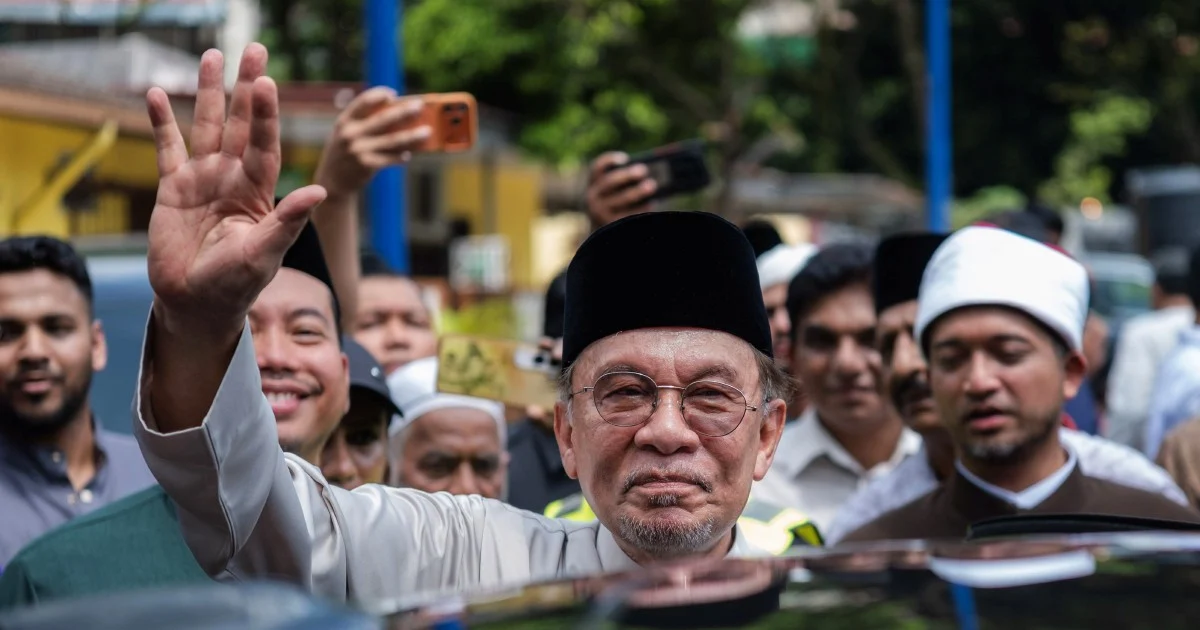
The Johor state election is entering a critical phase as Prime Minister Anwar Ibrahim, Deputy Prime Minister Zahid Hamidi, and other prominent national figures touch down across the state this weekend to mobilise supporters and deliver campaign addresses. The arrival of top-tier leadership signals that the contest has moved beyond local concerns to become a major battleground in Malaysia's broader political struggle, with implications extending far beyond Johor's borders.
Anwar's participation in the weekend campaign events marks his direct intervention in what is shaping as one of the most contested electoral contests in recent years. As the architect of the current federal coalition, his presence underscores the government's determination to consolidate control in a strategically important state. Zahid's counteroffensive, meanwhile, reflects the opposition's assessment that Johor represents a genuine opportunity to reclaim territory and rebuild momentum after electoral setbacks elsewhere.
The scheduling of multiple ceramahs and campaign rallies across the state reflects intensifying competition for the floating vote. Both coalitions recognise that traditional voting patterns no longer guarantee outcomes—the state's increasingly diverse electorate, younger demographic profile, and growing urban-rural divide mean that ground-level organisation and persuasive messaging have become decisive. The decision to deploy frontline leadership rather than rely on state-level figures suggests neither side is taking anything for granted.
Johor's significance in Malaysian politics extends beyond its parliamentary seats and state representatives. The state remains the heartland of Malay-Muslim political sentiment, and controlling its government would provide any coalition with substantial symbolic authority. Control of Johor's state machinery, resources, and administrative apparatus would also shift the balance of patronage networks that remain crucial to Malaysian political survival. For the ruling coalition, losing Johor would constitute a serious blow to Anwar's consolidation project. For the opposition, capturing it would demonstrate that the federal government's dominance remains contestable.
The weekend campaign activities will likely focus on bread-and-butter economic issues alongside the identity and governance concerns that dominate Malaysian electoral discourse. Voters in Johor, particularly in urban centres like Johor Baru and Kota Tinggi, have expressed concerns about cost of living, employment opportunities for younger demographics, and infrastructure development. Both coalitions will frame their competing visions of economic management and sectoral priorities as fundamental differences in governing philosophy and capability.
The presence of multiple senior leaders also suggests behind-the-scenes calculations about resource allocation and strategic positioning within each coalition. For Anwar's alliance, the weekend provides an opportunity to demonstrate unity and coordinated messaging across component parties. Any signs of discord or unclear messaging could undermine the coalition's broader claim to competent governance. For the opposition camp, synchronising Zahid's activities with other party leaders will test the strength of their alliance mechanics and whether they can overcome historical fractures and personality clashes.
Johor's electoral dynamics also intersect with broader demographic shifts reshaping Malaysian politics. The state continues to receive significant migration flows from other states seeking employment and lower living costs, diversifying the traditional composition of electorates. These newcomers often vote on pragmatic grounds—assessing which administration delivers better services and economic opportunities—rather than following inherited political loyalties. This realignment has made campaign intensity and visible leadership commitment matters of genuine consequence.
The weekend campaign blitz also occurs against a backdrop of administrative preparations and regulatory frameworks governing the conduct of electioneering. Political parties must navigate complex rules around ceramah scheduling, rally sizes, and campaign messaging while attempting to generate maximum media coverage and grassroots momentum. The scale of leadership deployment suggests both sides have committed substantial resources to dominating the news cycle and controlling the narrative around Johor's election contest.
Media engagement represents another crucial dimension of the weekend activities. Campaign events involving senior national figures inevitably attract coverage from major news outlets and social media platforms, amplifying messages far beyond the immediate venues. Both coalitions will seek to frame the narrative around their respective strengths while highlighting perceived weaknesses in their opponents' records and proposals. The ability to dominate headlines and shape public discourse during this critical campaign period could prove decisive in influencing voter sentiment.
For Southeast Asian observers, Johor's election exemplifies broader patterns of electoral competition across the region. In Malaysia as elsewhere, incumbency carries advantages but also creates vulnerabilities, particularly when economic performance disappoints or governance failures accumulate. The coalition-building dynamics evident in Johor campaign strategies reflect similar patterns in Thailand, Indonesia, and the Philippines, where narrow victories and fragile governing coalitions have become the norm rather than exception.
The concentration of senior leadership in Johor this weekend underscores how thoroughly electoral outcomes have become nationalised in Malaysian politics. Few state elections function purely as contests about local issues and state-level governance anymore. Instead, they serve as referendum votes on federal governments and proxies for calculating broader shifts in underlying political sentiment. This weekend's campaign intensity thus represents more than campaign rhetoric and rally addresses—it constitutes a bellwether moment for assessing whether Anwar's coalition maintains the political momentum necessary to govern effectively through 2025 and beyond.

