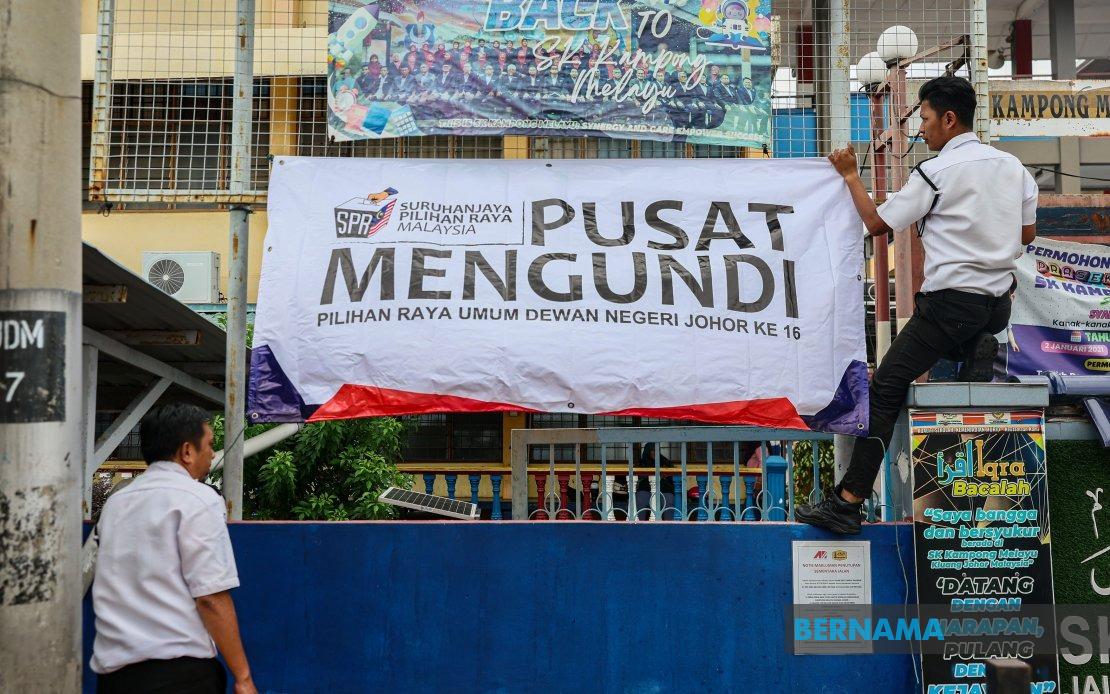
Johor entered a crucial political moment today as more than 2.7 million registered voters participated in the 16th state election to determine the composition of the 56-seat State Legislative Assembly. The election represented a significant democratic exercise for the state, with the outcome potentially reshaping the political landscape of Malaysia's southernmost peninsula state and carrying implications for federal stability.
Voting commenced promptly at 8 am across 1,076 polling centres dotted throughout Johor, employing 4,889 separate voting streams to accommodate the large electorate. This logistical infrastructure underscored the scale of the operation, with the Election Commission strategically distributing resources to minimise queuing and ensure orderly voting. The opening of such numerous facilities reflected lessons learned from previous elections and demonstrated commitment to facilitating voter participation across urban and rural areas alike.
The polling process stretched throughout the day, with voting stations closing in staggered intervals between 11 am and 6 pm depending on their geographical locations. Island-based constituencies required earlier closure times, with Pulau Besar shutting at 11 am, followed by Pulau Aur and Pulau Pemanggil at noon, necessitating adjusted schedules for residents in these more remote areas. This staged closure meant that vote-counting would commence at different times, potentially extending the timeline before final results emerged.
To execute this electoral exercise, the Election Commission marshalled 43,036 election workers across the state, a substantial deployment representing thousands of trained personnel managing everything from voter verification to ballot distribution and counting. These officials operated under strict protocols ensuring electoral integrity and maintaining public confidence in the democratic process. The magnitude of this workforce illustrated the complexity of administering elections in a state as geographically diverse as Johor.
Postal voting had already commenced, with 20,607 early ballots cast by security personnel and their spouses on Tuesday, encompassing members of the police and armed forces who required flexibility due to operational commitments. An additional 24,677 postal ballots issued to qualified voters needed to be returned by the 6 pm deadline, expanding the overall turnout calculations beyond in-person voting figures. This accommodation recognised the service obligations of these communities while maintaining electoral accessibility.
Weather presented a variable factor across the state, with the Malaysian Meteorological Department forecasting morning rainfall in several districts including Johor Bahru, Batu Pahat, Kulai, Muar, Pontian and Tangkak, though conditions were expected to clear during afternoon hours. More significant thunderstorm warnings applied to Kluang, Kota Tinggi, and Segamat in the afternoon, with Mersing experiencing similar disturbances from afternoon into evening. These meteorological patterns necessitated contingency planning at certain polling stations, though experienced organisers anticipated managing such disruptions.
The Election Commission targeted a 70 per cent voter turnout, representing an ambitious goal that would constitute a marked improvement over the 2022 state election, which achieved 54.92 per cent participation. This increase would suggest enhanced public engagement and interest in determining state representation, potentially reflecting heightened political consciousness or unresolved issues from the previous administration. Reaching this target would require sustained voter momentum throughout the day and effective communication encouraging participation.
A diverse field of 172 candidates competed for the 56 available seats, reflecting the expanded political spectrum in Malaysian electoral contests. The two major coalitions—Pakatan Harapan and Barisan Nasional—each fielded complete slates of 56 candidates, representing their commitment to capturing the entire state assembly. Perikatan Nasional presented 33 candidates, indicating substantial organisational capacity, while Parti Bersama Malaysia contributed 15 candidates, establishing itself as a secondary player in Johor politics. Smaller participants included MUDA with four candidates and single representatives from Parti Orang Asli Malaysia and Parti Sosialis Malaysia, alongside six independent aspirants seeking representation.
The election occurred against the backdrop of the previous assembly composition, where Barisan Nasional held 40 of 56 seats, substantially dominating the chamber. Pakatan Harapan held 12 seats, Perikatan Nasional controlled three, and MUDA claimed one position before the legislature's dissolution on June 1. This distribution meant that Barisan Nasional entered the campaign as the incumbent governing coalition with considerable incumbency advantages, though voters demonstrated ability to deliver unexpected verdicts in recent electoral cycles across Malaysia.
The campaign period had concluded at midnight the previous evening after running for the mandated 14 days, during which political parties saturated Johor with messaging, rallies, and grassroots engagement. This condensed timeframe required efficient deployment of campaign resources and forced parties to prioritise messaging and targeting of persuadable voters. The intensity of such campaigns shaped public discourse and voter sentiment in the final hours before ballots were cast.
Employers across Johor received reminders to grant employees reasonable time off for voting, recognising the necessity of facilitating participation without imposing excessive burdens on economic activity. This accommodation balanced democratic imperatives with business continuity, acknowledging that widespread voter participation represented a shared societal responsibility rather than purely individual choice. Such coordination between election management and the private sector reflected institutional maturity in supporting democratic processes.
The Election Commission anticipated releasing complete results as early as 10 pm, assuming efficient counting procedures and timely submission of all voting documents. This timeline suggested confidence in the logistical arrangements and the capacity of counting personnel to process ballots systematically. The rapid results framework would satisfy public demand for timely information while maintaining accuracy, though complex races or recounts in individual constituencies might extend conclusions for specific seats into the following day.
Johor's election carried significance beyond the state itself, as Barisan Nasional's performance would influence perceptions of its political momentum ahead of potential federal contests and signal whether its federal coalition government retained genuine grassroots support. Conversely, Pakatan Harapan and Perikatan Nasional regarded the contest as a platform to demonstrate their appeal and capacity for state-level governance. The outcome would shape not only Johor's political trajectory but reverberate through Malaysia's broader electoral and parliamentary dynamics.

