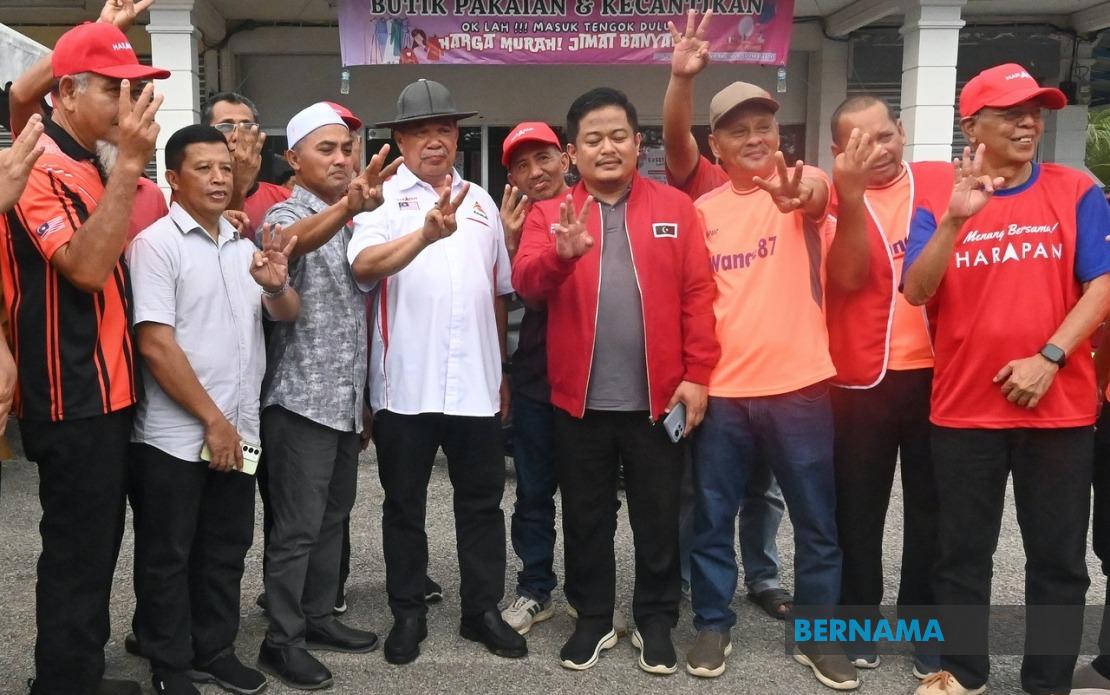
Pakatan Harapan is making a final push to convince Johor voters that its election manifesto represents substantive change rather than hollow campaign rhetoric, with party leaders arguing the coalition deserves a mandate to demonstrate it can deliver on its promises. The message comes from Amanah president Datuk Seri Mohamad Sabu, who has positioned the upcoming state election as a referendum on the opposition's ability to implement concrete solutions addressing longstanding issues raised during extensive grassroots engagement across the southern state.
Speaking in Batu Pahat on Saturday, Mohamad Sabu dismissed suggestions from rival parties that Pakatan Harapan's campaign platform amounts to recycled policy commitments lacking originality or substance. Instead, he characterised the manifesto as emerging directly from sustained dialogue with constituents, shaped by months of fieldwork in Johor's towns, markets, and rural communities. This framing reflects Pakatan Harapan's broader strategy of positioning itself as responsive to voters' actual grievances rather than advancing a predetermined ideological agenda.
The Amanah president emphasised that election manifestos, by definition, remain theoretical documents until a winning party takes office and must navigate the practical constraints of governance. However, he suggested that what distinguishes Pakatan Harapan is not the novelty of individual policy proposals but rather the coalition's track record and commitment to implementation. Mohamad Sabu, who also serves as Agriculture and Food Security Minister, indicated that if voters grant the coalition control of Johor's state government, practical action would commence immediately following the election.
The timeline matters politically. With polling scheduled for Saturday, July 11, and early voting for security personnel already underway, the campaign enters its final phase. Mohamad Sabu's statement that implementation would begin by July 12 underscores Pakatan Harapan's attempt to establish clear accountability measures, signalling to voters that victory would translate into tangible policy changes rather than prolonged planning periods. This approach addresses a persistent criticism that Malaysian opposition parties sometimes struggle to shift seamlessly from campaign mode to administrative execution.
For Malaysian and broader Southeast Asian observers, Johor represents a particularly significant battleground because the state has historically served as a laboratory for political competition and governance models. The state's economic importance, demographics, and proximity to Singapore make electoral outcomes there closely watched by investors, policymakers, and regional analysts. Pakatan Harapan's performance in Johor could influence perceptions regarding the coalition's viability as a governing force in future national elections.
Modamad Sabu's observations regarding changing perceptions of Pakatan Harapan in rural Johor areas highlight an important dynamic in Malaysian electoral politics. He noted that in 2018, when Pakatan Harapan achieved a historic national victory, the coalition remained relatively unfamiliar in Johor's kampungs and market towns, despite the broader electoral shift. However, he indicated that subsequent years of active political engagement have enhanced the coalition's brand recognition and reception in these traditionally more conservative areas, where personal interaction and community-level politics often outweigh national campaign narratives.
The minister's anecdotal observations about increased public receptiveness, including supporters requesting photographs with party leaders, suggest that Pakatan Harapan perceives momentum in its campaign efforts. Such grassroots enthusiasm, while difficult to quantify precisely, matters significantly in Malaysian electoral contests where word-of-mouth communication and local networks remain influential. The contrast he drew between current reception and 2018 circumstances suggests the coalition believes it has substantially improved its standing in regions where it historically faced structural disadvantages.
Yet the manifesto remains Pakatan Harapan's central campaign asset in a context where voters increasingly demand specificity regarding how political parties will address economic pressures, service delivery deficiencies, and development priorities affecting daily life. By framing the manifesto as authentically rooted in constituency concerns rather than as generic opposition messaging, Mohamad Sabu attempts to elevate the election beyond a referendum on incumbency toward a forward-looking choice regarding governance direction. This rhetorical strategy requires that voters believe Pakatan Harapan's claims about manifesto derivation and implementation capacity.
The coalition faces inherent scepticism regarding such promises, particularly among voters who question whether opposition parties can credibly govern or who have become cynical about electoral pledges generally. Mohamad Sabu's emphasis on implementation rather than merely promise-making acknowledges this credibility gap and suggests Pakatan Harapan understands it must differentiate itself through demonstrated competence rather than ambitious rhetoric alone. Whether Johor voters find this argument persuasive will become apparent when ballot results are tallied following Saturday's polling.
From a regional perspective, the Johor election reflects broader patterns across Southeast Asia where electoral competition increasingly focuses on governance capacity and service delivery rather than purely ideological or communal appeals. Voters across the region demand tangible improvements in economic opportunity, infrastructure quality, healthcare access, and education outcomes. Political parties that can credibly convince electorates they understand these concerns and possess viable implementation strategies gain significant electoral advantages over competitors relying primarily on partisan rhetoric or traditional mobilisation methods.
Pakatan Harapan's campaign in Johor exemplifies this broader shift toward performance-oriented electoral politics. The coalition's decision to highlight its grassroots engagement process and to emphasise rapid implementation timelines represents recognition that modern voters evaluate political parties based increasingly on their perceived ability to deliver measurable results. Success or failure in Johor will likely influence how Malaysian political parties approach future campaigns and how they position themselves relative to governance expectations.

