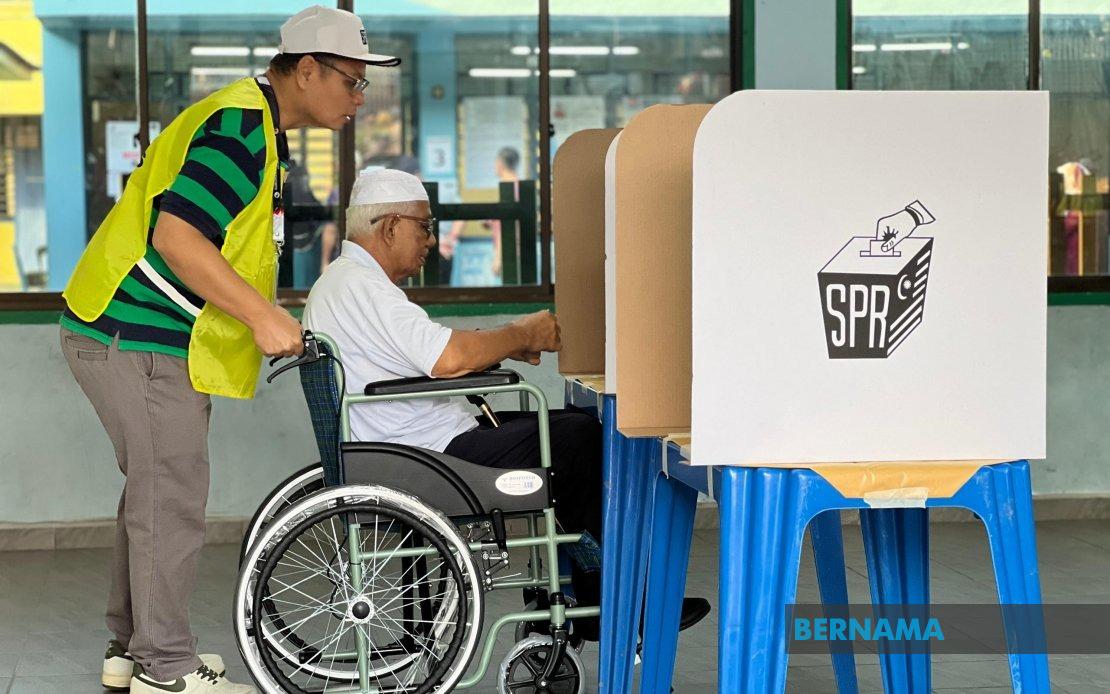
The Johor state election got underway this morning as polling centres across the state simultaneously opened their doors at 8am, marking the beginning of what promises to be a decisive day for the southern peninsula's political landscape. Encompassing 1,076 separate voting locations operating 4,889 polling streams in total, the exercise reflects the substantial logistical undertaking required to manage participation across Malaysia's second-largest state by population.
Voters heading to the polls today represent a crucial cross-section of Johor's 2.7 million registered electorate, tasked with determining representation in the State Legislative Assembly for the next term. The entire voting process is scheduled to run through until 6pm, providing a ten-hour window for citizens to exercise their democratic franchise. However, authorities have planned for staggered closing times, with certain polling centres in constituencies featuring smaller voter populations anticipated to shut down as early as 11am, allowing election workers to begin the counting process without undue delay.
The contest itself involves considerable complexity, with 172 candidates competing across 56 state seats. This fragmentation of candidacies manifests in varied contest formats: twelve constituencies will see four-cornered battles between competing parties and independent candidates, twenty-seven will feature three-way contests, whilst fourteen seats represent straight fights between two contenders. Such electoral arithmetic underscores the competitive nature of this particular contest and the genuine uncertainty surrounding potential outcomes across different regions.
The Election Commission has set its sights on achieving a voter turnout of approximately 70 per cent, a benchmark that would indicate strong public engagement with the electoral process. Should this target materialise, it would provide a healthy mandate for whichever coalition or party emerges victorious. Preliminary results are expected to be announced as early as 10pm, though the final tallies may take longer to verify given the number of polling streams requiring consolidation.
Today's poll represents the culmination of an intensive fourteen-day campaigning period that concluded at midnight yesterday. During this fortnight, candidates and their supporting party machinery traversed constituencies, delivering manifestos and attempting to persuade undecided voters. The compressed timeline reflects established electoral procedures designed to minimise campaign spending whilst maintaining sufficient public engagement periods.
On the ground, election authorities took comprehensive security measures to ensure voting proceeded without disruption or irregularity. Personnel from relevant agencies were strategically positioned across polling centres, a presence corroborated by Bernama's observations at multiple voting locations. Media contingents had begun assembling as early as 7am, intent on capturing developments as they unfolded and providing real-time coverage to audiences monitoring the election's progression throughout the day.
Weather conditions favoured most constituencies, with clear skies predominating across the state. The notable exception was Muar, which experienced rainfall during the morning hours. Whilst such meteorological variations might marginally impact voter mobility in affected areas, they were unlikely to substantially depress overall participation given the ten-hour polling window.
For Malaysian observers, the Johor election carries significance extending beyond the state's boundaries. As a state long considered a political bellwether for national trends, outcomes here frequently presage shifts in broader peninsular politics. The current contest, featuring multiple three and four-way contests, suggests voters are genuinely considering alternative political options rather than automatically reverting to established voting patterns. This fluidity creates genuine uncertainty about which coalition might ultimately command the largest assembly representation.
The geographic and demographic diversity within Johor also means that different regions face distinct electoral dynamics. Urban constituencies may prioritize distinct issues from rural areas, and kampung voters' concerns potentially diverge significantly from those in developed township centres. Candidates' campaign messaging has necessarily reflected such localized considerations, potentially fragmenting the overall state narrative into multiple micro-contests determined by community-specific factors.
As voters submitted their ballot papers throughout the day, the democratic exercise continued unfolding according to established procedures refined through decades of electoral practice. Regardless of which party or coalition emerges victorious, today's participation represents the fundamental mechanism through which Johor's populace exercises sovereign authority over their governance for the coming electoral cycle.

