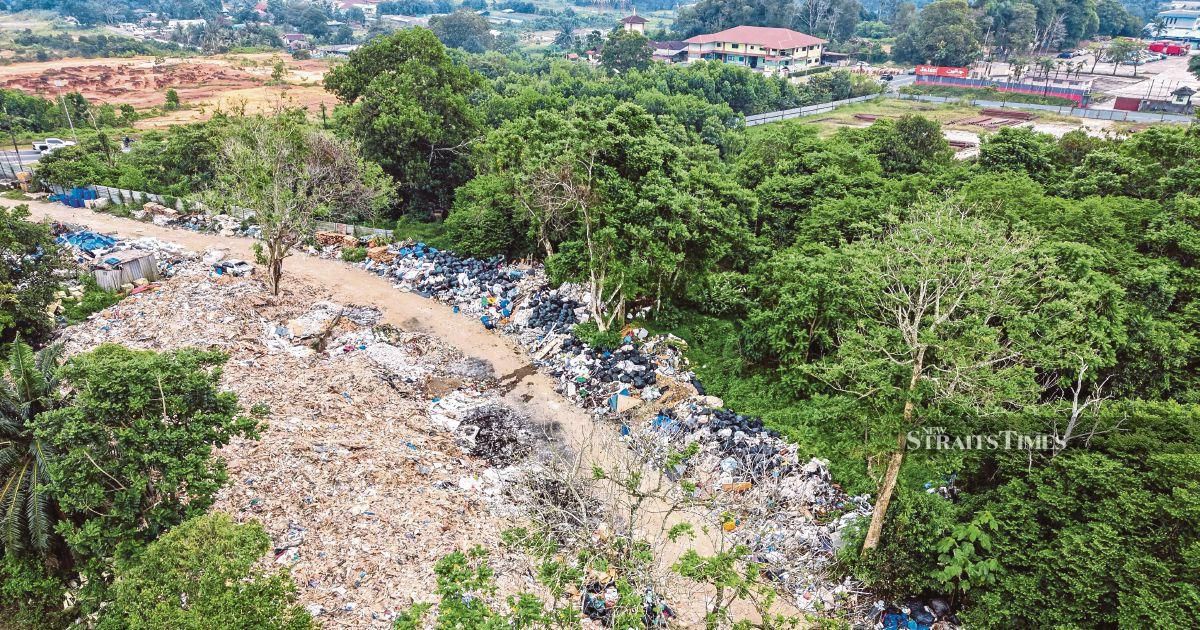
Johor state authorities are mounting a formal investigation into allegations that construction waste originating from Singapore has been illegally disposed of at various locations throughout Pontian district, marking a significant escalation in cross-border environmental enforcement along the northern straits of the state. The state's Solid Waste and Public Cleansing Corporation, commonly known as SWCorp, will lead a coordinated multi-agency task force established specifically to examine the scope, origins, and handling of the suspected dumping incidents reported across the Pontian area.
The decision to form a task force reflects mounting concern among Johor administrators about potential illegal transboundary waste trafficking, a phenomenon that has plagued Southeast Asia as wealthier urban economies seek cost-effective disposal solutions across less regulated borders. Pontian, positioned directly across from Singapore's western industrial zones, presents a geographically convenient location for unscrupulous operators seeking to circumvent both Singapore's strict waste management regulations and Johor's environmental safeguards. The proximity and established transportation networks between the two jurisdictions create vulnerabilities that have apparently been exploited by parties willing to breach regulations.
The scope of the investigation signals that authorities suspect a pattern rather than isolated incidents. Multiple locations across Pontian allegedly received dumping, suggesting either a coordinated operation or repeated instances by the same perpetrators. This distinction carries significant implications for enforcement strategy, as organised dumping networks require different investigative approaches and legal interventions compared to opportunistic violations. The concentration of allegations in a single district also points to possible complicity among local players who may have facilitated access to dumping sites.
Singapore's construction sector generates substantial volumes of waste materials annually, creating ongoing pressure to find disposal outlets. While Singapore maintains sophisticated waste-to-energy facilities and recycling infrastructure, construction debris disposal capacity remains finite and costly. These economic realities have historically motivated the export of waste across regional borders, where disposal costs are significantly lower and enforcement mechanisms weaker. The allegation of Singapore construction waste in Pontian suggests that despite bilateral agreements and environmental commitments, enforcement gaps persist at the state level.
For Malaysian stakeholders, this situation underscores the environmental and public health dimensions of living adjacent to a densely developed city-state. Construction waste contains materials ranging from relatively benign concrete and timber to potentially hazardous substances including asbestos, paint residues, and contaminated soil. Uncontrolled dumping threatens groundwater quality, soil integrity, and local ecosystems—concerns particularly acute in Pontian, where agricultural and aquaculture activities depend on environmental stability. Communities near dumping sites face potential health risks and property value depreciation.
The multi-agency approach indicates that Johor authorities recognise the complexity of transboundary waste enforcement. Participation from state environmental agencies, local councils, police, customs authorities, and potentially Peninsular Malaysia's central enforcement bodies becomes necessary to establish supply chains, identify transport routes, locate dump sites with precision, and gather evidence suitable for prosecution. International coordination with Singapore's National Environment Agency may also become essential, as determining waste origins requires tracing through Singapore's waste management documentation and transport records.
This investigation also reflects broader regional challenges with illegal waste trafficking. Despite ASEAN cooperation frameworks and bilateral environmental agreements, enforcement remains inconsistent. Transboundary waste dumping typically exploits jurisdictional ambiguities, inadequate monitoring at borders, and corruption within authorities. The Pontian case, if substantiated, would add to a growing body of evidence that Southeast Asian countries must strengthen cross-border environmental enforcement through technological monitoring, shared intelligence systems, and meaningful penalties that deter operators.
For businesses engaged in legitimate construction and waste management across both jurisdictions, the investigation may necessitate stricter documentation practices and enhanced compliance regimes. Companies operating dual operations in Singapore and Johor will likely face heightened scrutiny regarding waste origin certification and disposal chain-of-custody records. While compliance costs may increase initially, established operators benefit from reputational protection and reduced exposure to criminal liability arising from waste trafficking.
The investigation timeline and methodology remain unclear, but successful outcomes require not only identifying dumped materials and their origins but also apprehending responsible parties—whether unscrupulous waste contractors, corrupt facilitators, or transport operators. Prosecution will depend on gathering sufficient forensic evidence linking waste to specific Singapore sources and establishing intent or negligence among those involved. Legal frameworks in both jurisdictions must align sufficiently to enable coordinated action.
Looking forward, this situation may catalyse Johor to pursue stronger bilateral agreements with Singapore regarding waste management, potentially including mandatory tracking systems, approved disposal routes, and enhanced penalties for violations. Regional harmonisation of construction waste standards and disposal protocols could reduce incentives for illegal trafficking. The investigation's findings will likely inform policy adjustments that affect not only Pontian but the broader Malaysia-Singapore commercial and environmental relationship, serving as a test case for how two neighbouring economies address transboundary environmental challenges in an increasingly integrated region.

