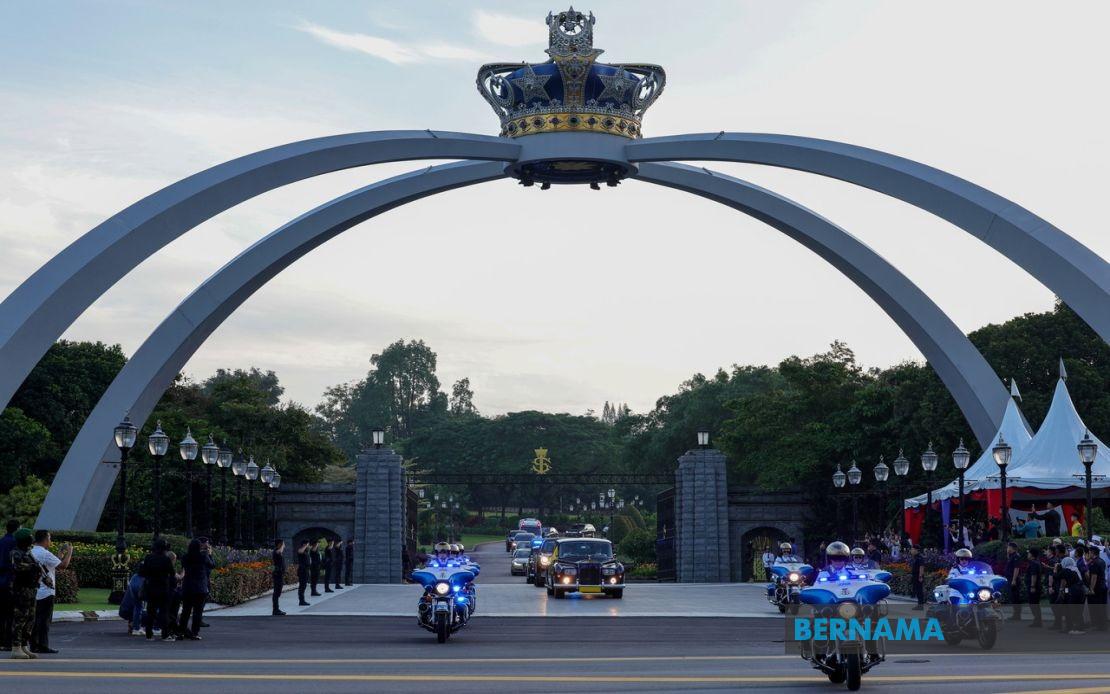
The swearing-in ceremony for Johor's State Executive Council, originally planned for Friday at Istana Bukit Serene in Johor Bahru, has been rescheduled to Saturday. Media outlets received notification early in the morning of the postponement, though no explanation was offered for the one-day delay in formalising the state's leadership structure.
The ceremony marks a significant administrative step following the decisive electoral victory that swept Barisan Nasional back into control of Johor's legislature. The event was set to occur before Tunku Mahkota Ismail, the Regent of Johor, with the attendance of Menteri Besar Datuk Onn Hafiz Ghazi alongside senior officials including Johor Royal Council president Datuk Dr Rahim Ramli and State Secretary Datuk Mohammed Ridha Abd Kadir.
Menteri Besar Onn Hafiz, who represents the Machap constituency, recently concluded his swearing-in for a second consecutive term as head of Johor's executive branch. His reappointment came just days after Barisan Nasional's commanding performance in the state elections, where the coalition secured 48 of the 56 available seats in the Johor State Legislative Assembly.
The postponement, while brief, interrupts the momentum typically associated with rapid governmental transitions in Malaysia's states. Such ceremonies usually follow elections within days, allowing new administrations to formally begin their work and signal stability to investors and the public. The absence of any official statement regarding the delay creates uncertainty about whether the change reflects scheduling conflicts, ceremonial adjustments, or other administrative considerations.
For Malaysian observers, the rescheduling underscores the intricate protocols surrounding state-level governance, particularly when dealing with the institution of the Regent. Such high-level ceremonies require careful coordination between multiple government departments and royal household offices, making last-minute adjustments not uncommon despite appearing unusual to external observers.
The Barisan Nasional victory represents a significant political realignment in Johor, one of Malaysia's most economically important states. The 48-seat majority provides Onn Hafiz with a comfortable working majority and a mandate that extends beyond the typical pressures of fractious coalition governance. With such strong parliamentary backing, the Menteri Besar enters his second term in considerably stronger position than many of his counterparts in other states.
The State Executive Council comprises cabinet ministers who handle portfolios ranging from agriculture and education to infrastructure and economic development. The formal swearing-in of these officials represents not merely ceremonial significance but the legal foundation for their authority to make administrative decisions affecting millions of Johoreans. Until formally sworn in, the previous administration typically retains certain powers, making the timing of such ceremonies operationally important.
For businesses operating in Johor, the delay in formalising the new executive structure has minimal practical impact, though it does prolong the transition period. Most key administrative functions continue under existing frameworks, and critical decisions are typically deferred until the new government is formally installed. The Saturday ceremony will finally solidify the chain of command and allow the new administration to issue binding directives and implement campaign promises.
The election results themselves demonstrated strong public endorsement of Barisan Nasional's governance platform in the state. The coalition's performance in Johor, a crucial political bellwether for national politics, carried implications beyond the state itself. Johor remains a testing ground for political strategies and administrative approaches that often influence national-level policy discussions and inter-party negotiations.
Onn Hafiz's second term reflects continuity in executive leadership paired with electoral validation. His previous tenure evidently satisfied a majority of voters, who returned him and his coalition partners with enhanced margins in many constituencies. This stability could facilitate longer-term policy implementation, particularly regarding infrastructure projects and economic initiatives that require sustained political commitment across multiple budget cycles.
The rescheduled ceremony will formally mark the beginning of Johor's administration for the 2023-2028 term, though the practical machinery of government has continued functioning throughout the transition period. The Saturday date provides all participating officials and the royal household with adequate preparation time, suggesting the postponement may have been driven by scheduling optimisation rather than any substantive delay in governmental readiness.
As Johor moves forward under its renewed leadership, the state's economic performance and governance quality will be closely monitored by both federal authorities and other state governments. The state's role as a major economic contributor and its strategic location near Kuala Lumpur make its administrative effectiveness a matter of broader Malaysian interest. The Saturday swearing-in ceremony, despite its brief delay, will officially commence a new chapter in Johor's post-election governance.

