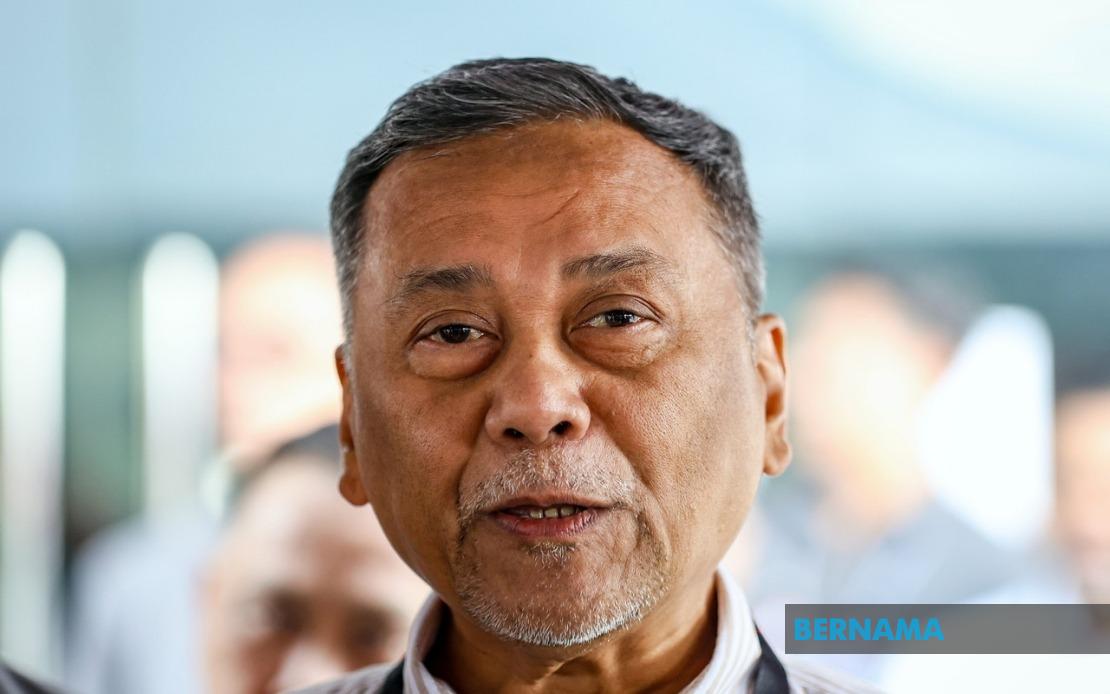
The Election Commission has projected voter participation in the Johor state election to reach approximately 70 per cent, signalling considerable enthusiasm among the electorate for the democratic exercise. Election Commission chairman Datuk Seri Ramlan Harun attributed this optimistic forecast to observable trends during the campaign period, noting that public responsiveness and genuine interest in fulfilling voting duties had been notably pronounced throughout the mobilisation process.
Ramlan's projection draws from concrete observations made during the campaign phase, when organisers and electoral officials gauged the intensity of public engagement across constituencies. The heightened enthusiasm reflects not merely passive interest but active participation in campaign events, discussions, and community engagement activities that have characterised this electoral cycle. This level of engagement typically translates into higher polling day attendance, as voters who follow campaigns closely tend to prioritise casting their ballots.
Beyond campaigning vigour, the EC chairman pointed to growing awareness among Malaysians regarding the significance of electoral participation in determining state-level representation and governance. This consciousness of civic responsibility appears to have permeated across different demographic groups, suggesting that voters increasingly understand the tangible impact their ballot choices exert on local policy, development priorities, and resource allocation affecting their communities.
The Johor state election encompasses approximately 2.7 million registered voters who are entitled to participate in tomorrow's polling. This substantial electorate base, spread across diverse geographical and demographic contexts within the state, presents considerable logistical requirements for election administration. The scale of participation anticipated by the EC necessitates meticulous planning to ensure voting processes function smoothly across all designated polling locations.
Voting arrangements have been structured to accommodate the state's geographic diversity, particularly acknowledging that several constituencies include island and remote areas requiring specialised transportation and timing considerations. Polling stations will open at 8 am state-wide, though closing times vary significantly based on location accessibility. Island locations such as Pulau Besar near Mersing will close as early as 11 am, reflecting the logistical requirements for transporting ballot materials and boxes back to mainland counting centres. Pulau Aur and Pulau Pemanggil will cease voting at noon, while the majority of the 1,114 polling centres operating across more accessible areas will remain open until 6 pm. An intermediate tier of 42 centres closes at 4 pm, and 17 facilities at 2 pm, creating a cascading closure schedule that manages the ballot retrieval and vote-counting timeline.
The EC has mobilised 43,036 election workers to manage the voting process across all polling stations, ensuring adequate staffing for voter verification, ballot distribution, and administrative oversight. This substantial workforce reflects the commission's commitment to maintaining procedural integrity and voter service quality throughout polling day. The deployment of personnel has been calculated to match anticipated voter flows and to handle contingencies that may arise in any constituency.
Postal voting, an option utilised primarily by citizens unable to attend in-person polling locations, has generated 24,677 applications. These postal ballot papers must reach EC offices by 6 pm on election day to be counted as valid votes. The postal voting mechanism accommodates those with legitimate reasons—such as travel, health constraints, or essential work—for not attending physical polling stations, thereby enabling broader participation among eligible voters who might otherwise be unable to exercise their franchise.
Logistical arrangements have received particular attention from the EC, given the challenge of managing voting materials and completed ballots across Johor's sprawling geography, including transport from island constituencies. The commission has coordinated extensively with the Royal Malaysian Police and Malaysian Armed Forces to establish contingency protocols addressing potential unforeseen circumstances—weather disruptions, transport delays, or emergency situations—that could impact voting or ballot retrieval operations. This inter-agency collaboration ensures that security, transportation, and administrative coordination remain seamless throughout the electoral process.
For Malaysian voters, the 70 per cent turnout projection carries significance beyond mere statistics. Higher voter participation strengthens the legitimacy of electoral outcomes and ensures that chosen representatives enjoy broader mandates reflecting genuine public choice. In Johor's context, particularly given the state's economic importance and political significance within the broader Malaysian federation, robust electoral engagement demonstrates citizen commitment to democratic governance and state-level decision-making.
The projection also reflects broader trends in Malaysian electoral participation following recent democratic exercises. States witnessing high turnout typically experience vigorous electoral campaigns, competitive candidacies, and policy-focused discourse that engage voters' substantive interests rather than merely ceremonial voting patterns. Johor's anticipated 70 per cent participation suggests voters view this election as consequential for state development and governance priorities.
For regional observers and electoral analysts, Johor's engagement metrics offer insights into contemporary democratic participation patterns across Southeast Asia. Malaysia's experience demonstrates that despite global trends toward declining electoral participation in established democracies, voter enthusiasm can remain robust when electoral contests are perceived as genuinely competitive and consequential for local governance and resource distribution.

