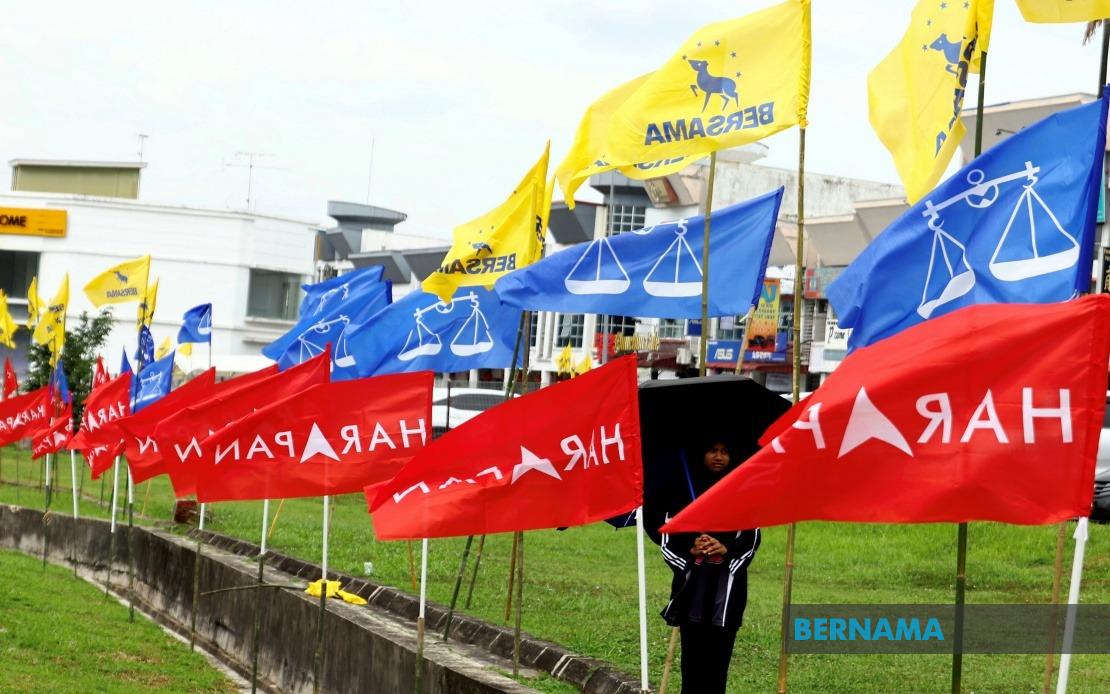
Johor's political landscape will reach a critical juncture tomorrow as voters across the state cast their ballots to elect 56 representatives who will shape the region's governance for the next half-decade. The intensive two-week campaign cycle officially ends at 11.59 pm tonight, marking the transition from partisan advocacy to the democratic process itself. With polls opening at 8 am tomorrow, the 1,076 polling centres scattered throughout the state will host 2.7 million eligible voters deciding the fate of 172 candidates—a notably smaller field than the 239 hopefuls who contested the previous election. The Election Commission projects that results will be fully determined by 10 pm tomorrow evening, potentially providing decisive clarity on which coalition will steer Johor's development agenda.
The campaign that commenced on June 27 has witnessed competing visions for the state's future articulated through political party manifestos, grassroots engagement, and high-profile appearances from national leadership. Prime Minister Datuk Seri Anwar Ibrahim, serving as Pakatan Harapan chairman, and Deputy Prime Minister Datuk Seri Dr Ahmad Zahid Hamidi, leading Barisan Nasional, both mobilised their coalitions in recent days as candidates made final appeals to voters. Throughout the fortnight, political messaging crystallised around several consistent themes: the mounting pressure of living costs affecting household budgets, the imperative for sustained economic recovery following pandemic impacts, employment generation particularly for younger demographics, and comprehensive welfare provisions. These resonant issues reflected genuine voter concerns that transcend partisan boundaries, creating a contest fundamentally centred on which coalition voters trust more to deliver tangible improvements to daily life.
Early voting mechanisms already concluded successfully, with 20,607 members of the Malaysian Armed Forces, the Royal Malaysia Police, the General Operations Force, and their spouses having exercised their franchise last Tuesday. This preliminary voting segment provides security sector participation while accommodating their operational schedules, representing a time-honoured component of Malaysia's electoral administration. The completion of advance voting without significant incident underscores the Election Commission's organisational capacity, though tomorrow's mass participation at regular polling centres will present a substantially greater logistical undertaking requiring coordination across hundreds of locations.
Political analysts have identified voter turnout as perhaps the most revealing metric for interpreting the election outcome and understanding the broader political climate. Dr Nazreena Mohammed Yasin from Universiti Tun Hussein Onn Malaysia emphasises that turnout variations across constituencies and demographic groups resist simple generalisations about electoral significance. In certain areas, elevated participation may substantially advantage particular parties through mobilising supportive constituencies, while identical turnout levels elsewhere might produce negligible differential impact. Rather than functioning as an absolute predictor, turnout operates as a variable that can reshape dynamics especially within marginal seats where winning margins historically remain narrow. The previous 2022 Johor election achieved 54.92 per cent overall voter participation, providing a baseline for assessing whether tomorrow's engagement exceeds or falls beneath that threshold.
Beyond aggregate turnout figures, analysts emphasise the critical importance of party organisational capacity on polling day itself. The machinery responsible for voter mobilisation, candidate positioning at polling centres, and operational management directly influences whether campaign momentum converts into actual votes cast. This organisational dimension proves particularly consequential in closely competitive constituencies where election day efficiency can determine outcomes. Additionally, the so-called fence-sitters—voters who remain genuinely undecided until the final moment—occupy an outsized importance in determining results across seats with historically tight contests. Their last-minute decisions frequently prove decisive in these marginal battlegrounds, rendering their preferences throughout the final campaign hours strategically significant.
Assoc Prof Dr Mazlan Ali from Universiti Teknologi Malaysia observes that both major coalitions have structured their campaign messaging around political stability narratives, reflecting their respective positions within Malaysia's federal governance architecture. Barisan Nasional and Pakatan Harapan, as the dominant coalition forces at national level and participants in the Unity Government arrangement, have emphasised their track records and governmental performance. However, voters increasingly evaluate such claims through the lens of demonstrated delivery on previous electoral pledges rather than merely rhetorical promises. Candidate credibility and the historical ability of respective parties to address concrete policy challenges—particularly the cost of living crisis that dominates household considerations—substantially influence voter decision-making beyond abstract appeals to stability.
Election results will yield meaningful interpretation across multiple analytical dimensions. Changes in victory margins compared to the previous election indicate whether particular parties have strengthened their bases, suffered erosion, or experienced voter migration to competitors. Electoral shifts also reflect the broader calculation voters make regarding governmental performance, with results functioning as a referendum on whether BN, PH, or alternative coalitions inspire sufficient confidence in their capacity to govern effectively. The Johor outcome carries implications extending beyond state-level administration, given that state governments influence implementation of federal policies and occasionally provide political leverage within national coalition dynamics.
The competing coalition mathematics reflect Johor's emerging political complexity. Before dissolution on June 1, Barisan Nasional held 40 seats, positioning the coalition as the incumbent dominant force, while Pakatan Harapan occupied 12 seats, Perikatan Nasional held three seats, and MUDA claimed one. In this election, both BN and PH field 56 candidates each, maximising their competitive reach across all available seats, while Perikatan Nasional contests 33 positions, Parti Bersama Malaysia fields 15 candidates, MUDA presents four aspirants, and smaller parties including Parti Orang Asli Malaysia, Parti Sosialis Malaysia, and six independent candidates round out the 172-candidate field. This configuration suggests a genuine three-way contest between the major coalitions rather than a predetermined conclusion.
The reduced overall candidate numbers compared to 2022 reflect tighter party gate-keeping, potentially indicating more disciplined campaign focus and resource concentration by established political organisations. Smaller parties and independent candidates occupy proportionally diminished positions, though they may influence specific constituencies through vote-splitting dynamics or targeted appeals to particular voter segments underserved by larger coalitions. The election outcome will signal whether voter preferences have shifted toward consolidation around established coalitions or whether fragmentation persists, with significant implications for post-election coalition-building mathematics should no single party command a clear majority of the 56 available seats.
For Malaysian observers and Southeast Asian analysts monitoring regional democratic practices, tomorrow's Johor election represents a substantial electoral exercise testing the health of the country's democratic institutions at state level. The scale of participation across 2.7 million voters, the competitive intensity between multiple organised political forces, and the stakes involved in determining five years of state governance make this contest significant for understanding contemporary Malaysian political dynamics. The apparent public interest in the election, according to Mazlan's observations, suggests heightened voter engagement that could translate into turnout exceeding the 54.92 per cent baseline, potentially magnifying the significance of individual votes in closely contested seats. Johor's outcome will provide crucial empirical data regarding which policy messages and political narratives resonate most powerfully with voters, offering insights into voter priorities and coalition strategies applicable across Malaysia's broader political landscape.

