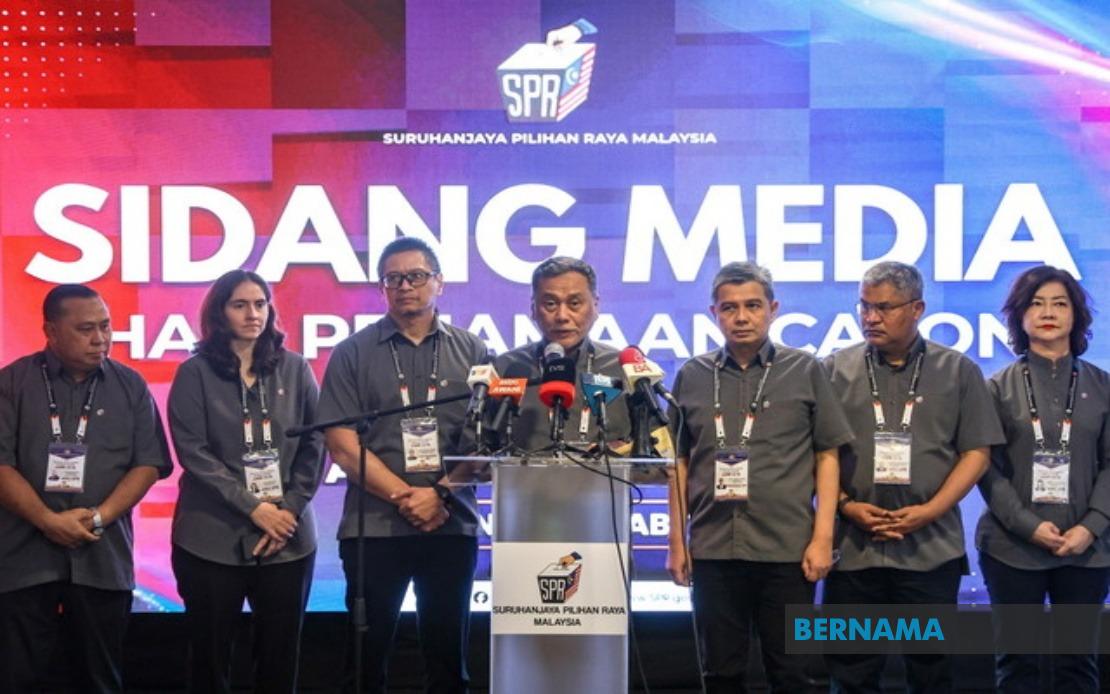
The 16th Johor state election will proceed with a full slate of 172 candidates vying for 56 assembly seats, the Election Commission announced on June 27 after the nomination period ended without incident. Datuk Seri Ramlan Harun, the EC chairman, confirmed at a press conference in Johor Bahru that all submitted nomination papers had been accepted following the close of nominations at 10 am across all 56 nomination centres. The seamless completion of the filing process, with zero disqualifications, sets the stage for what promises to be a competitive multiphase contest reflecting Malaysia's evolving political landscape.
The gender composition of the candidate pool reveals a persistent gender imbalance in Malaysian electoral politics, with 138 male candidates outweighing 34 female contenders by a ratio of approximately four to one. This disparity underscores ongoing questions about women's representation in state-level politics within Southeast Asia's most developed economy, even as federal and state governments have periodically emphasised inclusivity. The figures suggest that despite national commitments to gender parity in some spheres, grassroots nomination processes at the state level continue to favour male candidacy, a pattern observed across multiple election cycles in the peninsula.
The two major coalitions have fielded identical strength: Barisan Nasional and Pakatan Harapan each put forward 56 candidates, effectively contesting every seat in the state assembly. This parity reflects the close competitive balance between these two blocs in Johor, a strategically important state that has shifted politically in recent years and continues to be a bellwether for national trends. The equal field strength indicates neither coalition expects an easy victory and both are preparing for a hard-fought, seat-by-seat struggle across the diverse constituencies spanning urban centres, suburban townships, and rural areas.
Perikatan Nasional, positioned as the third significant force in Malaysian politics, nominated 33 candidates, falling short of complete state coverage but signalling a serious attempt to capture swing seats and consolidate support in regions where it has demonstrated electoral strength. The shortfall compared to the two-coalition model reflects PN's resource constraints and strategic focus on winnable constituencies rather than a blanket candidacy approach. Smaller parties and newer political entries round out the field, with Parti Bersama Malaysia fielding 15 candidates, MUDA contributing four, and both Parti Orang Asli Malaysia and Parti Sosialis Malaysia each putting forward a single nominee.
Independent candidates, numbering six, represent voters seeking alternatives beyond established party structures, a phenomenon that has gained traction in recent Malaysian elections as citizens explore options outside traditional political hierarchies. These unaffiliated contestants often appeal to local grievances or personality-driven support bases and can occasionally influence outcomes in tightly contested districts by fragmenting votes across the political spectrum.
The configuration of contests across the 56 seats reveals a fragmented electoral battlefield with varying levels of competition intensity. Straight fights between just two candidates will occur in only 14 seats, reflecting the dominance of the major coalitions in most areas. The plurality of contests will be three-cornered affairs involving three candidates each across 27 seats, where vote splitting could prove decisive. More complex electoral mathematics will characterise 12 seats featuring four-way contests and three seats attracting five candidates, scenarios that heighten unpredictability and create opportunities for parties to secure victories with relatively modest vote shares.
This fragmentation across Johor's electoral landscape mirrors broader trends in Malaysian democracy, where coalition-building has become essential for governance despite the splintering of vote shares. The Johor election thus serves as a microcosm of how Malaysia's political system is evolving, with established power structures facing pressure from newer entrants and independent movements while traditional rivalries persist within and between coalitions.
For regional observers, the Johor contest holds significance beyond state boundaries. The state's economic importance—as a manufacturing hub and logistics centre linking to Singapore—means that governance decisions made here influence broader Southeast Asian supply chains and investment patterns. Moreover, Johor has historically been a testing ground for political experimentation in Malaysia, with shifts here often preceding national-level changes.
The Election Commission's successful management of the nomination process without disqualifications suggests procedural regularity, though this does not preclude legal challenges during the campaign or voting phases. Malaysian electoral contests have occasionally witnessed court interventions regarding candidate eligibility, campaign financing, or voting procedures, and stakeholders will monitor developments closely.
With campaigning now set to commence, the 172 candidates will compete across the 56 constituencies during what is likely to be an intensive period of rallies, door-to-door canvassing, and social media engagement. Johor's voters—spanning diverse ethnic communities, income levels, and geographic contexts—will evaluate these candidates' manifestos and track records as the state prepares for polling day, which the Election Commission will announce shortly. The outcome will shape Johor's governance trajectory for the next term and potentially influence perceptions of coalition viability heading into future national elections.

