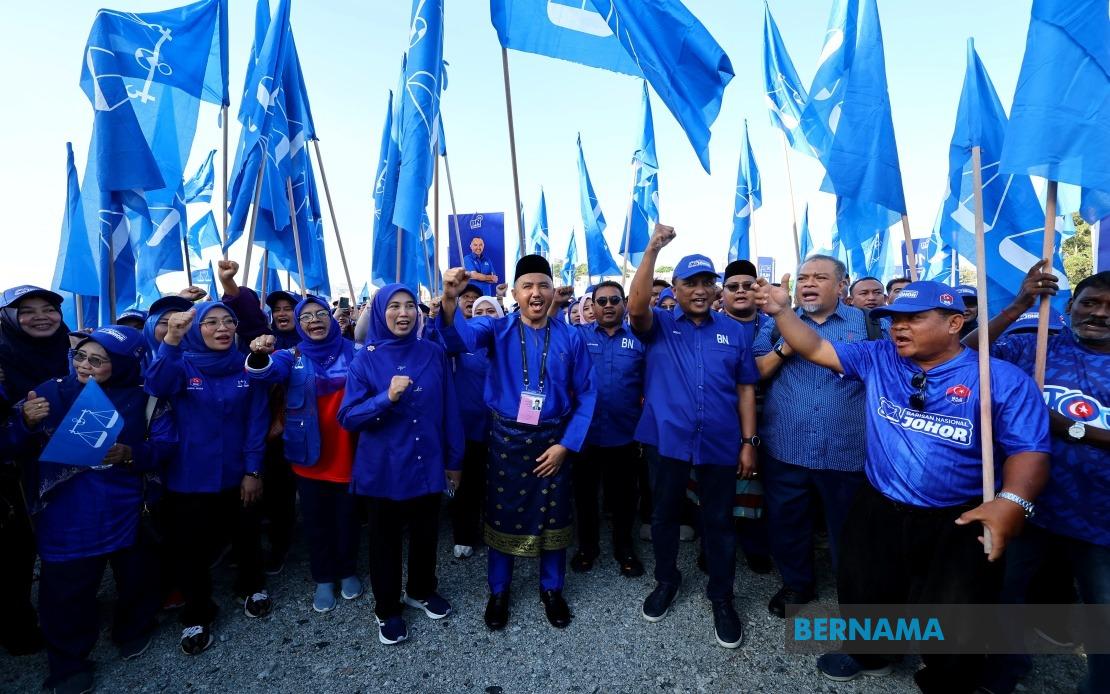
The 16th Johor State Election entered a new phase today as the nomination window slammed shut at 10am, with all 56 designation centres across the state ceasing to accept nomination papers. The one-hour submission window, which ran from 9am, saw returning officers formally announce closures at their respective venues, marking the end of candidate registration and the transition towards the intensifying campaign period that will dominate the political landscape for the next fortnight.
With nominations now sealed, the Election Commission will proceed to compile and release the official roster of eligible candidates, providing clarity on the competitive landscape across Johor's state seats. This roster will be crucial for voters and political observers seeking to understand the full range of candidates vying for representation, particularly in contests where multiple challengers have emerged to challenge incumbents or fill vacancies.
The campaign trail is set to begin immediately, with the 14-day electioneering period commencing and extending until 11.59pm on July 10 under Election Commission guidelines. This compressed timeframe means political parties will need to accelerate their ground activities, media engagements, and voter outreach efforts to maximise exposure before the polls. The intensity of campaigning during this period typically shapes voter sentiment and can significantly influence electoral outcomes, particularly in marginal seats where campaigns often prove decisive.
Throughout the nomination process, party supporters gathered at various centres to accompany their respective candidates, demonstrating the grassroots engagement characteristic of Malaysian electoral contests. The turnout of supporters at these venues underscores the importance both parties and candidates place on the symbolic and practical aspects of nomination day, with accompanying supporters serving both as a show of strength and a platform for initial campaign messaging.
Security arrangements and election management remained a priority throughout the day. Police personnel and members of the People's Volunteer Corps maintained tight oversight at all 56 nomination centres, ensuring the process unfolded without disruption. The absence of any reported incidents of provocation or disorder reflects effective security coordination and the overall civility with which the nomination process transpired, maintaining public confidence in the electoral framework.
The electoral landscape encompasses an enormous electorate. A total of 2,727,926 voters are eligible to participate, comprising 2,703,175 ordinary voters alongside 12,041 military personnel and their spouses and 12,710 police personnel and their spouses. This diverse voter base spanning civilian, military, and law enforcement communities presents both opportunities and challenges for candidates seeking to build winning coalitions across different demographic segments.
The Election Commission has structured the remaining timeline to provide adequate opportunity for campaigning while maintaining administrative efficiency. Early voting has been scheduled for July 7, a provision particularly relevant for military and police voters who require flexibility given their operational commitments. The main polling day is set for July 11, providing a ten-day interval between early voting and general polling to allow for final campaign pushes and last-minute voter engagement.
For Malaysian observers and regional analysts, the Johor election carries broader significance beyond the state level. Johor remains a strategically important state politically, and election results here often carry implications for national political dynamics. The performance of competing coalitions and individual parties will be closely monitored as indicators of shifting voter preferences and the effectiveness of different political narratives and campaign strategies in a crucial peninsular state.
The transition from nomination to campaign phase marks a critical juncture where the theoretical becomes practical. Candidates and parties must now translate their nomination day momentum into tangible voter engagement, converting supporter enthusiasm into actual electoral support. The next two weeks will determine which candidates successfully connect with voters, which campaign messages resonate, and ultimately which political forces will shape Johor's governance for the coming electoral cycle.

