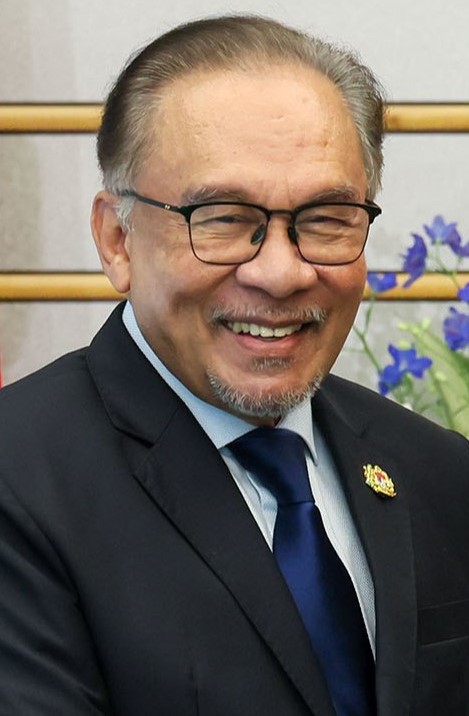
Pakatan Harapan has pushed back against suggestions that Johor has been sidelined by Kuala Lumpur, asserting that the southern state has actually benefited from increased development funding under Prime Minister Datuk Seri Anwar Ibrahim's administration. The coalition party made this argument whilst addressing concerns about resource distribution across Malaysia's peninsular states, a recurring point of contention in regional politics.
The RM14.6 billion in allocations directed to Johor represents a significant commitment of federal resources to infrastructure, social programmes, and economic initiatives across the state. This figure encompasses investments spanning multiple fiscal years under the current administration, reflecting both recurrent spending and capital expenditure aimed at addressing developmental gaps. For context, Johor—as Malaysia's second-largest state by population and a major economic contributor through its manufacturing, petrochemical, and tourism sectors—has historically competed with other states for federal attention and resources.
Packatan Harapan's intervention in this debate reflects ongoing political dynamics in Johor, where governance has alternated between different coalitions and where federal-state relations remain a sensitive issue. The ruling coalition appears determined to demonstrate that it is investing adequately in Johor's future, particularly given that the state's political complexion has shifted multiple times in recent years. By quantifying the financial commitment, PH seeks to provide concrete evidence against what it characterizes as unfounded criticism.
The allocation announcement carries significance beyond mere statistics. It signals the federal government's prioritization of economic development in a state that serves as a crucial link in the broader corridor spanning from Kuala Lumpur southward to Singapore. Investment in Johor's infrastructure and services directly affects the viability of regional trade routes, industrial competitiveness, and quality of life for approximately two million residents. Enhanced connectivity and economic opportunities in the state also have spillover effects across Southeast Asia's supply chains and logistics networks.
States' access to federal funding remains a politically charged topic in Malaysia's federal system, where resource distribution has long been contested. Johor's position as both a significant economic engine and a state with substantial development requirements places it at the centre of debates about equitable national spending. The RM14.6 billion figure suggests that federal planners have acknowledged these needs, though political opponents may argue the quantum remains insufficient relative to the state's contributions to national revenue.
Packatan Harapan's communication strategy here reveals an attempt to reframe narratives around federal spending priorities. By releasing specific allocation figures, the coalition aims to counter perceptions of regional neglect that might gain traction with Johor voters. Such fiscal transparency, when accompanied by visible project delivery, can influence how citizens assess their government's performance and responsiveness to their concerns. The timing of such announcements often coincides with heightened political competition or when specific constituencies require reassurance about government commitment.
The disbursement of funds to Johor under the Anwar administration reflects broader budgetary constraints and national priorities that shape annual federal spending. Malaysia's fiscal position, influenced by global economic conditions and domestic revenue collection, necessarily limits the total pool of development money available for distribution. Within these constraints, the Johor allocation demonstrates an intention to balance investment across multiple competing demands—defence, education, healthcare, infrastructure, and poverty alleviation—that consume the federal budget.
For Malaysian businesses and investors, particularly those operating in Johor's manufacturing and logistics sectors, expanded federal allocations suggest potential improvements in port facilities, road networks, and business infrastructure. Enhanced investment may translate into better transportation corridors, improved digital connectivity, and more efficient utilities—factors that directly influence operational costs and productivity. Small and medium enterprises throughout the state may benefit from improved business environments if allocations are channelled toward relevant enabling infrastructure.
The announcement also reflects Johor's strategic importance within Malaysia's longer-term economic positioning. As a state adjacent to Singapore and containing Malaysia's busiest port in Tanjung Pelepas, Johor functions as a critical node in regional trade architecture. Federal investments in the state thus serve not only local development objectives but also national competitiveness within the broader Southeast Asian economic landscape. Improved infrastructure and services in Johor strengthen Malaysia's capacity to engage effectively with regional neighbours and international trading partners.
Debates over state allocations invariably intersect with questions of political accountability and governance effectiveness. Beyond receiving funds, citizens and elected representatives judge administrations by how efficiently those resources are deployed and whether resulting projects deliver promised benefits. Johor residents will ultimately assess the Anwar administration's commitment not merely through the headline RM14.6 billion figure but through tangible improvements in roads, schools, hospitals, and economic opportunities visible in their communities. The credibility of Pakatan Harapan's development narrative depends on successful project execution and demonstrated impact, not allocation announcements alone.