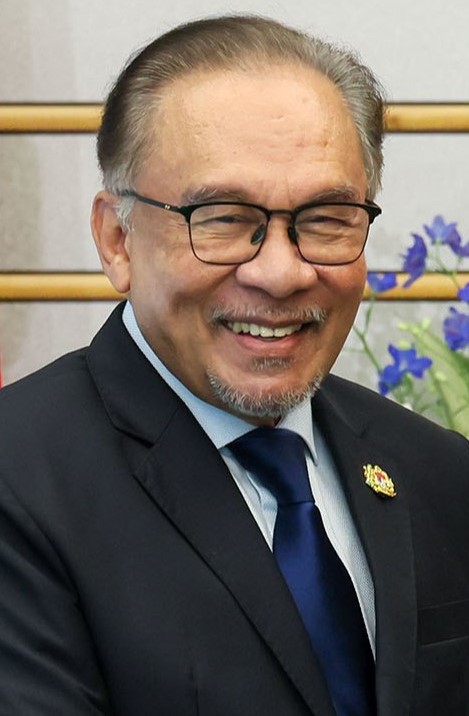
Prime Minister Datuk Seri Anwar Ibrahim has provided clarity on the fiscal relationship between Johor and the federal government, revealing that the state has been a net beneficiary of federal allocations over the past three years. Speaking in Tangkak, Anwar disclosed that while Johor contributed approximately RM14 billion in revenue to the federal coffers during this period, it received RM16 billion in federal government allocations in return, indicating a positive fiscal transfer of around RM2 billion to the state.
The Prime Minister's statement carries significant implications for understanding Malaysia's federal fiscal architecture and the principles guiding resource distribution across the country. The disclosure addresses common misconceptions about which states subsidise the federal government and which states benefit from it, a politically sensitive topic that often dominates state-level political discourse. By presenting concrete figures, Anwar sought to demonstrate that the federal government's approach to budget allocation prioritises inclusive development rather than extractive fiscal relationships that might disadvantage smaller or less industrialised states.
Johor's position as a significant economic contributor cannot be understated. The southern state hosts major manufacturing hubs, petrochemical industries, and port facilities that generate substantial tax revenue and form the backbone of several federal revenue streams. The fact that the state received allocations exceeding its contributions suggests a deliberate policy framework where the federal government reinvests returns into development projects, infrastructure, and public services across all regions, including those with lower immediate revenue-generating capacity.
The timing of Anwar's statement reflects an ongoing effort by the federal administration to address concerns about equitable resource distribution, a matter that resonates deeply across Southeast Asia where inter-regional fiscal disparities often fuel political tensions. In Malaysia's context, states frequently debate their fiscal relationship with the federal government, particularly during election cycles or when new administrations take office. By providing specific figures for Johor, a state of considerable economic and political importance, Anwar signalled transparency in federal financial management and indicated willingness to engage in data-driven discourse about state-federal fiscal ties.
The three-year period referenced in the disclosure spans a critical phase of Malaysia's post-pandemic economic recovery and the implementation of medium-term development strategies. During this timeframe, the federal government pursued infrastructure projects, healthcare improvements, and educational investments across states. The allocation to Johor would have encompassed contributions to transport networks, port modernisation, industrial park development, and social services that feed into broader national competitiveness objectives.
For Malaysian policymakers and analysts, such fiscal disclosures serve multiple functions. They provide empirical grounding for debates about federal-state resource management, offer benchmarks against which other states might evaluate their own fiscal relationships with Kuala Lumpur, and demonstrate commitment to transparent governance mechanisms. Regional readers should note that these figures form part of a broader Southeast Asian pattern where centralised governments attempt to balance revenue extraction with development redistribution, particularly in federal systems like those in Malaysia, India, and Australia.
Johor's RM2 billion net allocation advantage reflects calculations likely extending beyond simple revenue-expenditure accounting. The federal government's contribution encompasses capital projects with long-term economic multiplier effects, recurrent expenditures on federal institutions and services, and strategic investments in sectors like renewable energy and digital infrastructure. These elements typically justify fiscal transfers that exceed immediate tax contributions when viewed through a development and equity lens rather than a pure accounting framework.
The disclosure also contextualises federal government priorities during Anwar's premiership, which has emphasised inclusive growth and regional development as central themes. By highlighting positive fiscal transfers to economically significant states like Johor, the Prime Minister reinforced messaging that federal resources serve the entire nation's development agenda rather than concentrating exclusively in specific areas. This approach addresses longstanding grievances from states that perceive themselves as net contributors while simultaneously requiring political acceptance of the fiscal system from resource-receiving regions.
For business communities and investors operating across Malaysia, understanding federal-state fiscal relationships informs expectations about infrastructure investment, regulatory frameworks, and development timelines. States receiving net allocations typically experience increased capital spending, which translates into opportunities for construction, technology, and service sectors. Johor's position as both a significant revenue generator and a net beneficiary of allocations suggests continued federal investment in the state's economic infrastructure and competitiveness.
Looking forward, such fiscal transparency becomes increasingly important as Malaysia navigates competing demands for resources across regions experiencing varying growth trajectories. The disclosure from Anwar provides a foundation for evidence-based policy discussions about resource allocation principles, whether states should receive allocations proportional to revenue contribution or whether equity considerations should guide distribution patterns differently. These remain open questions in Malaysian federalism, and periodic disclosure of fiscal data contributes to more informed public debate about national priorities and regional development strategies.