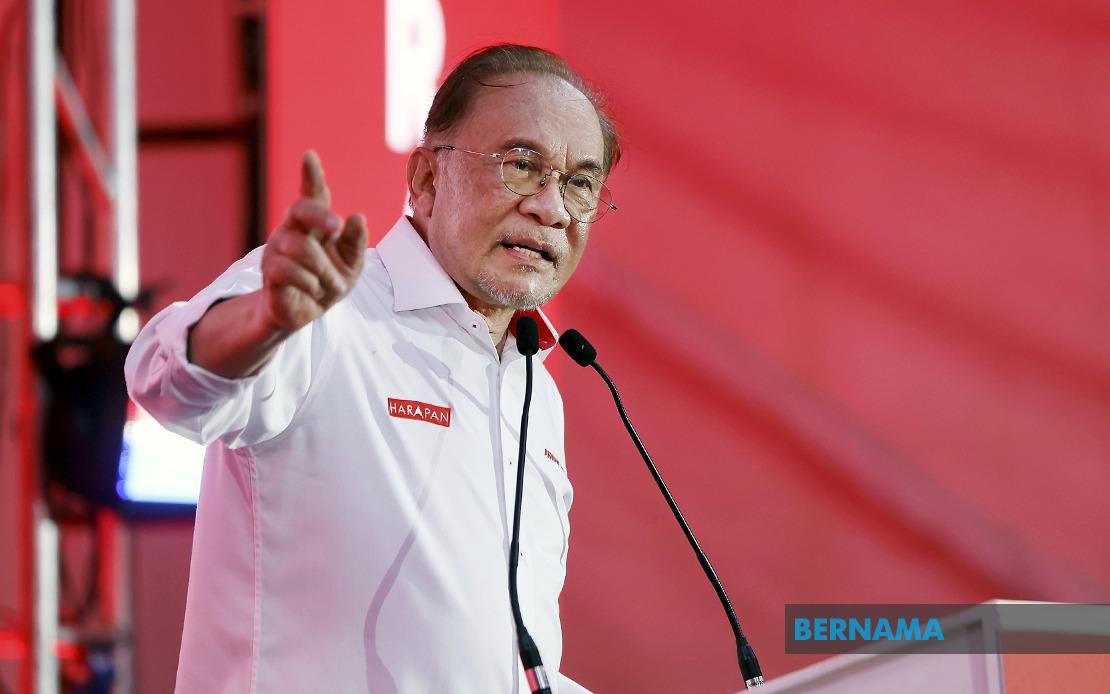
Prime Minister Datuk Seri Anwar Ibrahim has highlighted that the Federal government's investment in Johor substantially exceeds the state's tax contributions to the national exchequer, underlining the administration's commitment to regional development. Speaking at a Pakatan Harapan candidate announcement ceremony in Tangkak on June 22, Anwar noted that while Johor contributed approximately RM14 billion in revenue to federal coffers over the three-year period from 2023 to 2025, the government has channelled RM16 billion back to the state through a combination of development initiatives, operating allocations, and targeted programmes. This net transfer of RM2 billion forms part of the government's broader fiscal strategy to ensure equitable distribution of resources across Malaysia's economic zones.
The Prime Minister, who simultaneously holds the Finance Ministry portfolio, presented these figures to provide context for federal support during a period of significant fiscal management challenges. The comparison serves a dual purpose: it addresses concerns about regional disparities in development funding whilst simultaneously demonstrating tangible investment in Johor's growth trajectory. By placing the numbers side-by-side, Anwar sought to illustrate that the central government's commitment extends beyond rhetoric to measurable capital allocation, a particularly important message during the run-up to state elections where resource distribution frequently becomes a contentious political issue.
Examining the operating expenditure allocations reveals a notable upward trend under the current administration. According to Anwar's presentation, Johor received between RM6 billion and RM7 billion annually in operating expenditure during the previous government's tenure. Under the MADANI Government, this allocation has increased to RM8.7 billion annually, representing an increase of approximately RM1.7 billion to RM2.7 billion per year depending on the baseline comparison. This substantial expansion in operational funding has direct implications for the maintenance and delivery of government services across the state, from healthcare and education to transportation and municipal administration.
The growth trajectory becomes even more pronounced when examining development expenditure allocations, which represent capital investment in infrastructure and long-term projects. Data presented for 2026 indicates that Johor's development expenditure allocation has expanded from RM2.3 billion in 2022 to RM4.8 billion in 2026, representing more than a doubling of capital investment capacity over a four-year period. Combined with operating expenditure, Johor's total allocation of RM13.5 billion for 2026 positions the state as a major beneficiary of federal resources, ranking third nationally after the larger East Malaysian states of Sabah and Sarawak, which command higher allocations reflecting their geographical size and dispersed population centres.
Johor's position as the third-largest recipient of combined operating and development expenditure allocations reflects its economic significance and demographic weight within the Malaysian federation. The state's population, industrial base, and strategic location as a gateway to Singapore make it integral to national economic planning. The increased allocation trajectory suggests federal recognition of Johor's development needs and growth potential, particularly as the state continues to position itself as a secondary economic hub beyond the Klang Valley region. This investment philosophy aligns with broader policy initiatives aimed at decentralising economic activity and reducing regional disparities.
Beyond standard operating and development allocations, Johor has also benefited substantially from federal assistance programmes targeted at household welfare. The state ranks as the second-largest recipient of funding under the Sumbangan Tunai Rahmah (STR) and Sumbangan Asas Rahmah (SARA) programmes following Selangor. These cash assistance initiatives, designed to provide direct relief to lower-income households, underscore the government's commitment to social welfare distribution. The concentration of assistance funds in Johor and Selangor reflects both the substantial lower-income populations in these states and the political sensitivity surrounding welfare provision in economically significant regions.
The presentation of these figures carries particular significance within the context of Malaysia's federal system, where state governments frequently contest central government resource allocation decisions. By providing detailed breakdowns of federal investment, Anwar sought to preempt criticism that the Selangor-dominated federal government prioritises the western corridor at the expense of other economically important states. Johor's positioning as a major allocation recipient addresses long-standing concerns amongst Johor's political establishment and business community regarding access to federal resources and development opportunities.
The emphasis on increased funding also reflects the complex relationship between the Federal government and state administrations following the 2022 general election. While Pakatan Harapan controls the federal government, Johor remains governed by a different political coalition, creating potential friction over resource allocation and development priorities. By demonstrating tangible financial commitment, the Prime Minister attempts to build goodwill and counter narratives suggesting political discrimination in fund distribution. This strategic communication is particularly important given the Johor State Election context in which the announcement was made.
The RM8.7 billion operating expenditure allocation for 2026 and the RM4.8 billion development expenditure component represent commitments that will shape Johor's development trajectory over the coming years. These funds translate into concrete outcomes ranging from improved transportation networks and healthcare facilities to educational infrastructure and urban development projects. For Malaysian readers, particularly those in Johor, understanding these allocation patterns provides insight into how federal fiscal policy translates into visible improvements in their living environment and access to government services.
Moving forward, the sustainability of these allocation increases will depend on Malaysia's overall fiscal position and the government's ability to maintain revenue growth despite economic uncertainties. The commitment to increasing Johor's development expenditure from RM2.3 billion to RM4.8 billion represents an ambitious expansion that must be funded through either increased tax revenues, improved collection efficiency, or reallocation from other budget areas. The government's ability to deliver on this commitment will significantly influence perceptions of federal credibility and may impact electoral support in forthcoming state elections.
The broader implication of this federal investment approach is that resource distribution increasingly reflects economic and demographic significance rather than purely political considerations, though the timing of such announcements during electoral campaigns suggests political messaging remains relevant. For Southeast Asian observers, Malaysia's approach to regional resource allocation within a federal structure offers insights into how larger nations balance central government prerogatives with state-level demands for equitable investment.