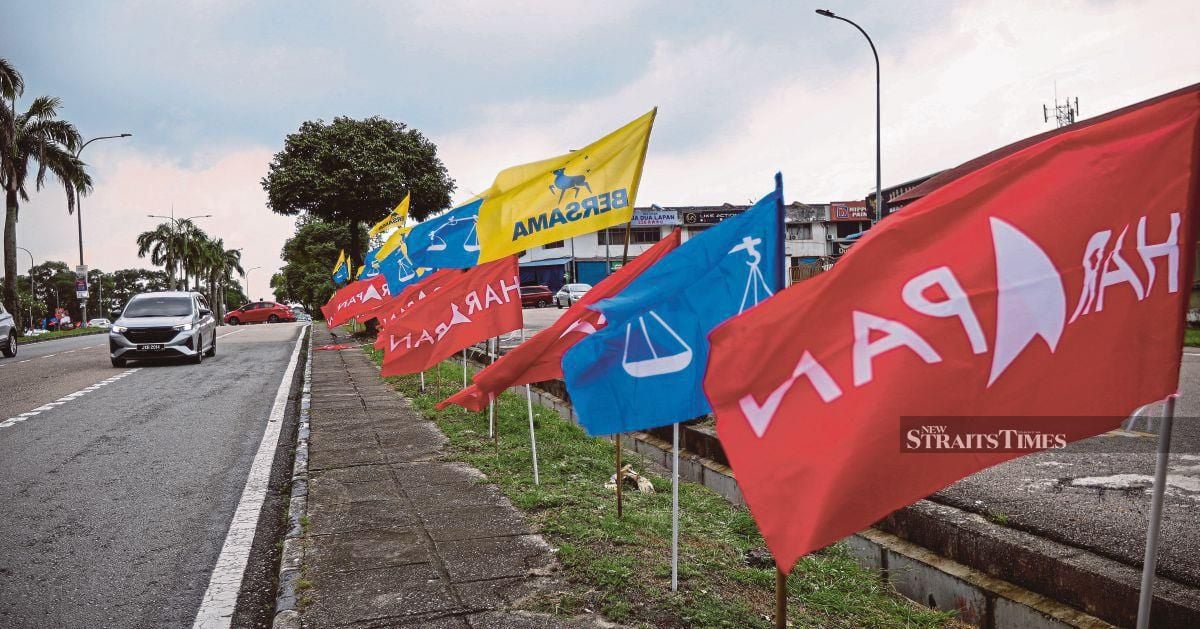
The Royal Malaysia Police's Johor contingent has escalated its scrutiny of the electoral process by launching 18 formal investigations into suspected violations of election law, working through a substantial backlog of 56 total reports filed by members of the public during the compressed campaign window for the 16th Johor state election.
The investigation papers emerged from complaints lodged throughout the campaign period spanning from July 27 through to the completion of the polling day, a timeframe that represents the intensive phase when political parties and candidates mobilise their machinery most vigorously. This transition from general reports to formal investigations indicates that preliminary assessments by police determined sufficient grounds existed to pursue certain matters with dedicated investigative resources and formal case files.
Election offences encompass a wide spectrum of potential violations under Malaysian electoral law, ranging from campaign finance irregularities and improper spending declarations to issues surrounding the use of state resources for political advantage, bribery attempts, and dissemination of false information to influence voters. The scale of reports received—56 in total—suggests public vigilance during the polling period, though the conversion of just 32 percent of complaints into formal investigations indicates that many allegations did not meet the evidentiary threshold required to justify full-scale police inquiries.
For Malaysian voters and political observers, the opening of these investigation papers serves as a barometer of electoral integrity during what has become an increasingly contentious political landscape. Johor, as the nation's second-largest state by population and a traditional bastion of political stability, carries particular significance in assessing whether electoral frameworks are functioning to maintain public confidence in democratic processes. The volume of complaints—whether they ultimately yield prosecutions or not—reflects heightened scrutiny from citizens determined to hold candidates and parties accountable to legal standards.
The compressed timeline of the campaign itself warrants consideration when evaluating these figures. Unlike federal elections where campaigning may extend over longer periods, state elections often feature intensive activity concentrated over days or weeks. This compression means that enforcement agencies must operate with particular vigilance to monitor compliance with electoral rules during high-velocity political activity, when the temptation to cut corners may be greatest and enforcement capacity is stretched most thin.
Southeast Asian democracies face ongoing challenges in maintaining electoral integrity amid rising political competition and the proliferation of digital campaigning tools that can spread information or misinformation rapidly across population clusters. Malaysia's approach—combining public reporting mechanisms with police investigation capacity—represents one model for addressing these concerns, though questions persist about whether investigation capacity keeps pace with technological evolution and the sophistication of potential violations.
The nature of complaints typically filed during election campaigns reflects broader concerns about power asymmetries in democratic competition. Incumbents often face accusations of leveraging state machinery and resources, while opposition parties may be alleged to have violated campaign spending limits or engaged in inflammatory rhetoric. The distribution of the 18 investigation papers across these categories remains unreported, but understanding whether violations cluster around particular actors or issue areas would provide important context for evaluating electoral fairness.
For political parties contesting in Johor and those preparing for future state elections across Malaysia, these investigations underscore the operational reality that electoral authorities and law enforcement remain vigilant regarding compliance. Whether investigations proceed toward prosecution or ultimately reach conclusions without charges, the very act of opening formal investigation papers communicates that violations will not be dismissed as minor infractions, potentially serving as a deterrent to candidates and party operatives who might otherwise calculate that electoral corners can be safely cut.
The investigation process itself typically unfolds over weeks or months following the completion of polls, meaning that final outcomes and any resulting prosecutions would emerge well after the Johor government has formed and settled into governing routines. This temporal gap between alleged violations and potential legal consequences creates a peculiar dynamic in electoral politics, where voters cannot factor adjudicated violations into their electoral calculus, and winning parties take office despite ongoing questions about campaign conduct.
Moving forward, the Johor results will likely inform discussions at state and federal levels about whether existing election laws and enforcement mechanisms adequately address contemporary challenges to electoral integrity. If patterns emerge showing particular types of violations—such as social media misuse, undisclosed funding sources, or coordinated disinformation campaigns—these findings could catalyse legislative reform or enforcement priority-setting for future elections. Conversely, if most investigations ultimately yield no charges or minor penalties, that too carries implications for public perception of electoral rule enforcement and deterrent effects.
The balance between robust investigation of alleged electoral misconduct and avoiding the appearance of politically motivated prosecutions represents an ongoing tension in Malaysian electoral politics. Police conduct in handling these 18 cases will be scrutinised by opposition parties, civil society observers, and international election monitors, each assessing whether investigations operate impartially or reflect institutional biases. Maintaining public confidence in electoral integrity requires not only that legitimate violations be pursued, but also that enforcement appears divorced from partisan considerations.

