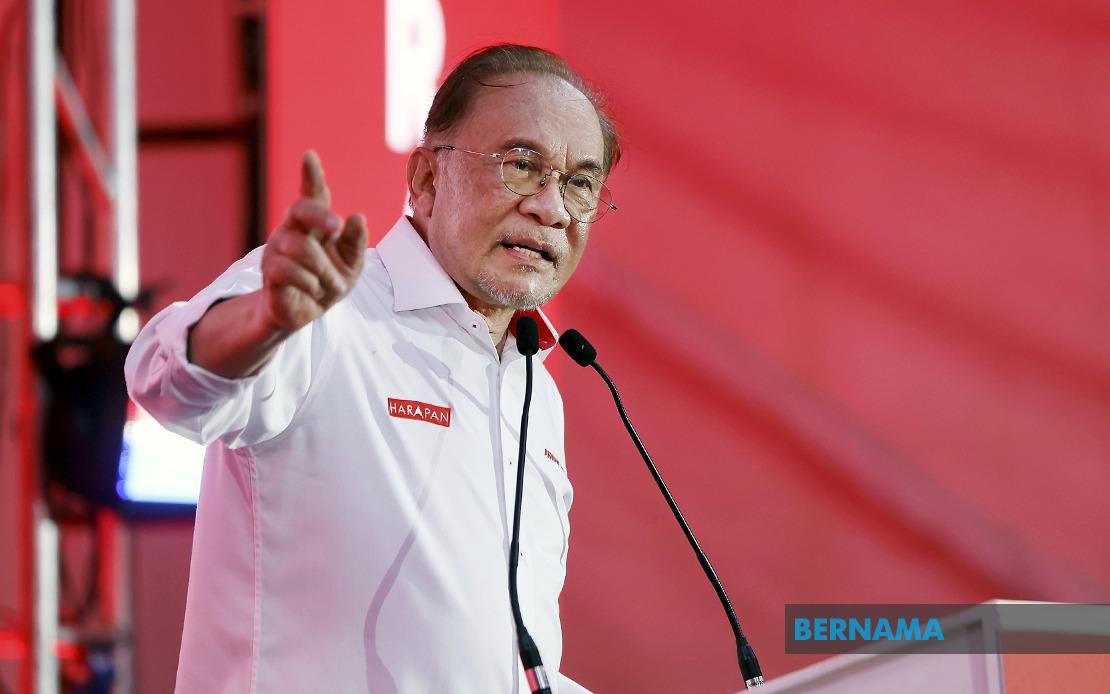
Prime Minister Anwar Ibrahim has set the tone for Pakatan Harapan's push in Johor's forthcoming state election, appealing to voters to elect representatives who combine strategic thinking with decisive leadership. Speaking during the coalition's opening campaign day in Johor Bahru on July 4, Anwar stressed that the state's electorate deserves leaders with the acumen to identify what truly matters, the resolve to act on difficult choices, and a genuine connection to public sentiment. His remarks signal PH's intention to position itself as the custodian of substantive change rather than merely a caretaker of existing systems.
The Pakatan Harapan chairman framed the election as a choice between continuity and progressive development, pledging that his coalition would amplify ordinary citizens' concerns whilst safeguarding Johor's economic and social interests. This messaging reflects broader anxieties in Malaysia's most populous state about whether local government is responsive enough to ground-level realities. Anwar's emphasis on leaders who "truly understand the pulse of the people" suggests PH believes there is dissatisfaction with perceived disconnection between elected officials and constituents—a perception that extends across much of Southeast Asia as urbanization and economic change outpace institutional adaptation.
For the 16th Johor state election, Pakatan Harapan has committed significant organisational resources by fielding candidates across all 56 state constituencies. The coalition's candidate distribution reflects its internal power-sharing arrangement: PKR has nominated 20 hopefuls, Amanah has put forward 19, and DAP has fielded 17 candidates. This comprehensive slate demonstrates the coalition's confidence in contesting every available seat rather than ceding ground strategically. The decision to contest fully across the state underscores how Johor, as the economic heartland outside the Klang Valley and a historic bastion of political influence, remains central to PH's national ambitions. Control of the state assembly could significantly reshape factional dynamics within the coalition itself.
Anwar's call during the campaign's inaugural day reflected an understanding that Johor voters are increasingly pragmatic in their electoral calculus. He explicitly invoked cross-community cooperation, stating that Pakatan Harapan exists to bring together Malays, Chinese, Indians and other communities to build the nation collectively and elevate Johor's standing. This framing attempts to reposition PH as the force for inclusive development in contrast to potentially divisive alternatives. In a state where economic grievances—particularly among Chinese-dominated business sectors and younger Indian voters—have shifted political allegiances in recent years, appeals to multiethnic solidarity carry practical significance.
The Prime Minister's personal engagement with multiple campaign stops on opening day signals the stakes PH attaches to this election. By attending seven separate programmes involving town halls, discussions and community gatherings across different areas, Anwar aimed to energise the party machinery whilst demonstrating his willingness to engage directly with voters. This ground-level approach reflects lessons from Malaysia's recent electoral history, where whirlwind campaigns by top leaders can shift momentum, particularly when they project accessibility and authentic interest in local concerns rather than delivering scripted addresses from stages.
Johor's 16th state election has attracted 172 candidates overall competing for the 56 assembly seats—a candidate-to-seat ratio of approximately three to one. This density of competition indicates fierce three-way contests in many constituencies, likely between PH, Barisan Nasional, and potentially Perikatan Nasional or independent challengers. The intensity of competition means that victory margins could be thin, making ground organisation and voter turnout critical determinants of the outcome. For Malaysian political observers, this election will serve as a barometer of whether PH's coalition unity holds across multiple parties and whether the government's message on development and inclusivity resonates beyond urban centres.
Polling day is scheduled for July 11, with early voting to take place on July 7. This compressed campaign period—between Anwar's July 4 remarks and the July 11 poll—concentrates campaigning into just one week of intensive public engagement. Shorter electoral cycles place a premium on name recognition, existing grassroots infrastructure, and the ability to rapidly mobilise supporters. For Pakatan Harapan, which governs at federal level and controls several state governments, Johor represents both an opportunity to reinforce its legitimacy through victory and a test of whether national-level popularity translates into state-level success.
The broader context for Johor's election extends beyond state administration. Johor's economic importance as a manufacturing hub, port gateway and agricultural centre means that state-level policy decisions on land use, licensing, and business facilitation directly affect investment patterns and employment. Anwar's emphasis on "developing" Johor and making it "great" implicitly promises modernisation of state infrastructure and removal of bureaucratic impediments to growth. These pledges matter to business communities already concerned about economic slowdown and competitive pressures from Vietnam, Thailand and Indonesia.
Anwar's framing of the election as a choice between representatives with genuine public understanding and those without also touches on recurring debates about political legitimacy in Malaysia. Trust in politicians has eroded significantly due to scandals, perceived corruption, and perceived disconnection from constituents' daily struggles with inflation, housing costs, and employment instability. By centering his campaign message on the qualities leaders should possess rather than attacking opponents directly, Anwar attempts to position PH as offering a philosophical contrast—a coalition committed to meritocratic, responsive governance. Whether this resonates with Johor voters will provide insights into whether Malaysian electorates increasingly prioritise competence and responsiveness over party loyalty or identity-based politics.
For Southeast Asian observers, the Johor election reflects broader regional trends of political fragmentation and the rising salience of local rather than national issues in voter preferences. Across the region, state and local elections have become independent contests rather than mere reflections of national sentiment. Johor's outcome could influence strategic calculations within PH regarding future state elections in Peninsular Malaysia and the sustainability of its multi-party coalition model. A strong PH victory would vindicate Anwar's authority within the coalition; a disappointing result would invite challenges to his leadership and strategic direction.
The campaign represents a critical moment for Johor's political trajectory and for assessing whether Malaysia's federal government can sustain electoral support as the novelty of its 2022 victory fades and confronting the complexity of governance becomes increasingly evident. Anwar's message that voters should demand wisdom, courage and genuine representation from their elected officials may ultimately resonate most powerfully if PH candidates can demonstrate through their own conduct and local accomplishments that they embody these qualities. The next week of intensive campaigning will determine whether voters believe Pakatan Harapan's candidates are indeed the wiser, bolder representatives the state needs.

