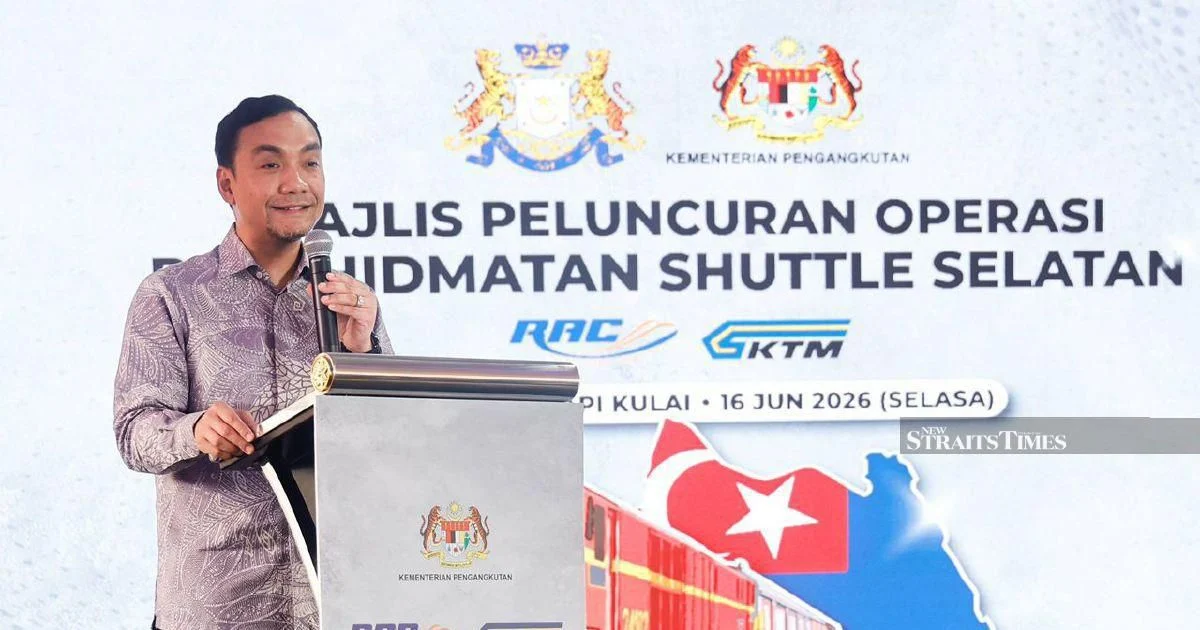
Johor's caretaker Menteri Besar Datuk Onn Hafiz Ghazi has intensified calls for the federal government to move swiftly on the Elevated Autonomous Rapid Transit (e-ART) project, pressing Putrajaya to provide clear timelines for the tender process and full implementation of the autonomous transport system. His intervention underscores mounting pressure to coordinate major transport infrastructure development in the state with the imminent arrival of the Rapid Transit System (RTS), a critical link between Johor Bahru and Singapore.
The e-ART initiative represents a transformative mobility solution designed to complement the broader regional transport ecosystem. As an autonomous rapid transit network, the system promises to enhance connectivity and alleviate congestion in Johor's urban corridors. However, the project has faced bureaucratic delays, and Onn Hafiz's public call reflects frustration over the pace of federal coordination. The timing is crucial, as operational synchronisation between e-ART and the RTS could maximise efficiency and passenger convenience across the border economic zone.
The RTS represents a watershed moment for the southern corridor of Malaysia and the broader Klang Valley-Johor Bahru economic corridor. Once operational, this high-speed rail connection will fundamentally reshape commuting patterns and commercial activity between the two neighbours, attracting thousands of cross-border workers and tourists daily. Integration with a functional e-ART system would create a seamless first-and-last-mile solution, allowing commuters to access the RTS terminal network without relying on conventional buses or private vehicles. Without such coordination, operational bottlenecks could undermine the full potential of the billion-ringgit RTS investment.
Onn Hafiz's position reflects a recurring tension between federal and state authorities over major infrastructure projects. The state government, though operating in a caretaker capacity pending electoral outcomes, retains vested interest in ensuring Johor's transport infrastructure keeps pace with regional development aspirations. By demanding federal accountability on e-ART timelines, the Menteri Besar is signalling that state-level cooperation depends on concrete federal action and transparent project schedules.
The open tender process for e-ART has emerged as a critical bottleneck. Procurement delays at the federal level often compound implementation timelines, particularly for technologically complex projects involving autonomous systems. Malaysia's experience with similar transport infrastructure projects suggests that compressed timelines frequently emerge only after sustained political pressure and clear public accountability mechanisms. Onn Hafiz's public statement serves both to document federal promises and to create political accountability should delays persist.
From a broader Malaysian perspective, the e-ART project embodies national aspirations toward smart city development and autonomous transport technology adoption. Johor, as the nation's second-most-developed economic centre, serves as a testing ground for such innovations. However, project credibility depends on demonstrable progress. Repeated delays or unclear implementation roadmaps risk undermining public confidence in Malaysia's ability to execute transformative infrastructure initiatives, particularly among regional investors assessing stability and competence.
The implications for Southeast Asian competitiveness cannot be overlooked. Singapore and other regional economies are advancing rapidly in autonomous mobility and integrated transport systems. Malaysia's ability to deploy e-ART effectively alongside the RTS would position the country as a serious regional contender in smart transport technology. Conversely, continued delays could reinforce perceptions of implementation lag and diminish investor confidence in Malaysia's capacity to execute large-scale infrastructure modernisation.
Onn Hafiz's intervention also reflects the unique dynamics of caretaker governance in Malaysia. Despite holding office in a transitional capacity, the Menteri Besar remains accountable to Johor's interests and retains sufficient institutional legitimacy to demand federal responsiveness. This leverage typically expires once electoral outcomes are determined and new administrations take office, making present advocacy efforts particularly consequential for Johor's development trajectory.
The federal government faces compounding pressures to act decisively. Beyond state-level demands, the RTS launch creates a concrete deadline that cannot be postponed. Planning authorities must coordinate transport hubs, terminal access, and last-mile connectivity solutions before the system becomes operational. Deferring e-ART decisions risks creating a scenario where the RTS operates without adequate ground-level connectivity infrastructure, immediately disappointing passengers and undermining the project's transformative potential.
Specialist observers suggest that expediting the e-ART tender and implementation requires administrative coordination across multiple federal agencies—the Ministry of Works, Ministry of Transport, federal development authorities, and potentially private sector partners. Establishing a dedicated implementation task force with clear authority and timelines could accelerate decision-making. Such mechanisms have proven effective in other jurisdictions where autonomous transit systems have reached operational status within compressed timeframes.
The broader lesson from Onn Hafiz's push concerns governance efficacy in federal systems. State governments possess legitimate interests in ensuring federal projects align with regional development priorities and timelines. When federal agencies operate without clear accountability mechanisms or transparent schedules, political pressure from elected representatives becomes an essential governance tool. This dynamic illustrates how Malaysian federalism continues to evolve, with sub-national actors exercising increasing assertiveness in demanding federal responsiveness.
Looking forward, resolution of the e-ART timeline question will signal whether Malaysian authorities can coordinate complex, multi-jurisdictional infrastructure projects effectively. Success would demonstrate institutional maturity and competence. Failure would suggest systemic gaps in federal-state coordination, with implications extending far beyond Johor to Malaysia's broader infrastructure and competitiveness agenda.