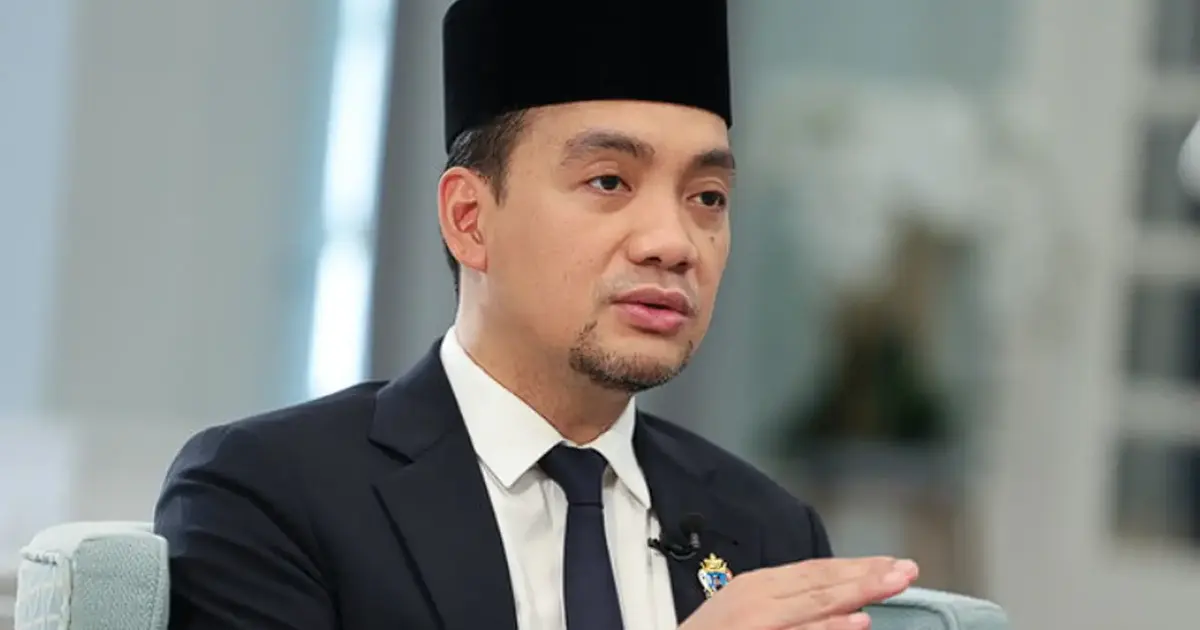
Onn Hafiz, the caretaker menteri besar of Johor, has moved to address mounting concerns about the palace's involvement in the dissolution of the state assembly, framing the sultan's approval as a routine constitutional matter rather than an incursion into the political sphere. The distinction he has drawn is significant for understanding the boundaries between the monarchy's ceremonial and institutional duties in Malaysia's system of government, where the sultan's role, though often misunderstood, is defined by constitutional parameters rather than discretionary power.
The question of what constitutes royal interference versus constitutional procedure has long been a subject of debate in Malaysian politics. When a menteri besar requests the dissolution of a state assembly—a necessary precursor to calling elections—the sultan's assent is not a matter of choice but a legal requirement embedded in the state constitution. Onn Hafiz's clarification appears designed to allay concerns that the palace had taken sides in a political dispute or used its constitutional powers to favour one faction over another. This distinction matters because it underscores the principle that while the sultan must be consulted and must formally approve such measures, the decision to dissolve the assembly originates with the elected executive, not the crown.
The Johor situation reflects broader tensions in Malaysian federalism, where state sultans retain greater constitutional authority than their counterparts in non-monarchical systems might possess. Unlike in Westminster democracies where the head of state is typically a figurehead, Malaysian sultans retain real constitutional powers that must be exercised, even if their exercise is largely procedural. The act of giving royal assent, therefore, occupies a grey zone—it is both constitutionally necessary and, if contested, potentially controversial if observers perceive the palace as making a political statement through its timing or conditions attached to approval.
Onn Hafiz's argument rests on a fundamental principle of constitutional monarchy: the sovereign acts on the advice of ministers and does not make independent political decisions. When the menteri besar, as the head of the state executive, recommends dissolution, the sultan's role is to validate that recommendation through assent, not to second-guess it or impose conditions that would constitute political interference. This separation between the constitutional act of approving a dissolution and the political decision to call for one is crucial to maintaining the apolitical status that the monarchy is meant to preserve in Malaysia's system.
The timing of the Johor assembly dissolution came amid factional tensions within the state's ruling coalition, and some observers questioned whether the speed of the process reflected palace involvement in the political calculations underlying the decision. Onn Hafiz's statement addresses this perception head-on by reframing the discussion: the palace was not making a political choice but fulfilling a constitutional obligation. Once the menteri besar had determined that dissolution was necessary—perhaps for reasons of political arithmetic or to reset the assembly's composition—the sultan had no choice but to grant assent, provided the request was made according to proper procedures.
Understanding this distinction has practical implications for how Malaysians evaluate their institutions. If every royal assent to constitutional procedures were interpreted as palace involvement in politics, then the monarchy would be tainted by association with every divisive political decision, undermining its intended role as a unifying national institution that stands above partisan competition. Conversely, if sultans were to refuse assent to constitutionally valid requests, they would themselves be making overtly political decisions, which would violate the principle of royal neutrality.
The Johor case also illuminates the challenges facing state governments in Malaysia's federal system, where the menteri besar must navigate both the state assembly and the palace's constitutional presence. Unlike a prime minister at the federal level, a state chief minister operates in a space where the sultan retains not merely ceremonial duties but genuine constitutional authority over matters such as land, Islam, and state-level legislative processes. This concentration of power in the state's traditional institution can create friction, particularly when political transitions are contentious.
Onn Hafiz's framing aligns with how Malaysia's constitutional experts have long interpreted the role of constitutional monarchs in a parliamentary system. The assent is part of the Crown's role as the formal embodiment of state authority, not an exercise of political discretion. By separating the menteri besar's political decision from the sultan's constitutional approval, Onn Hafiz has attempted to restore clarity about institutional roles—one political, one ceremonial-constitutional. Whether this explanation has satisfied public concern likely depends on how observers assessed the broader political context in which the dissolution occurred.
The episode also highlights the importance of transparent communication from both the executive and the palace when constitutional procedures intersect with political events. In Malaysia's system, where the sultan's role is more substantive than in some constitutional monarchies, public understanding of how and why the crown exercises its powers is essential for maintaining institutional legitimacy. When political actors invoke the constitution to justify their decisions, as Onn Hafiz has done, they are appealing to a principle that transcends individual political contests and anchors decisions in the broader framework of governance.
Looking forward, the Johor dissolution may serve as a case study for how Malaysian institutions balance the monarch's constitutional necessities with the imperative to maintain political neutrality. As the state prepares for fresh elections, the manner in which the campaign unfolds and the fairness of the process itself will ultimately determine whether public confidence in both the political system and the palace's role within it can be preserved or restored.

