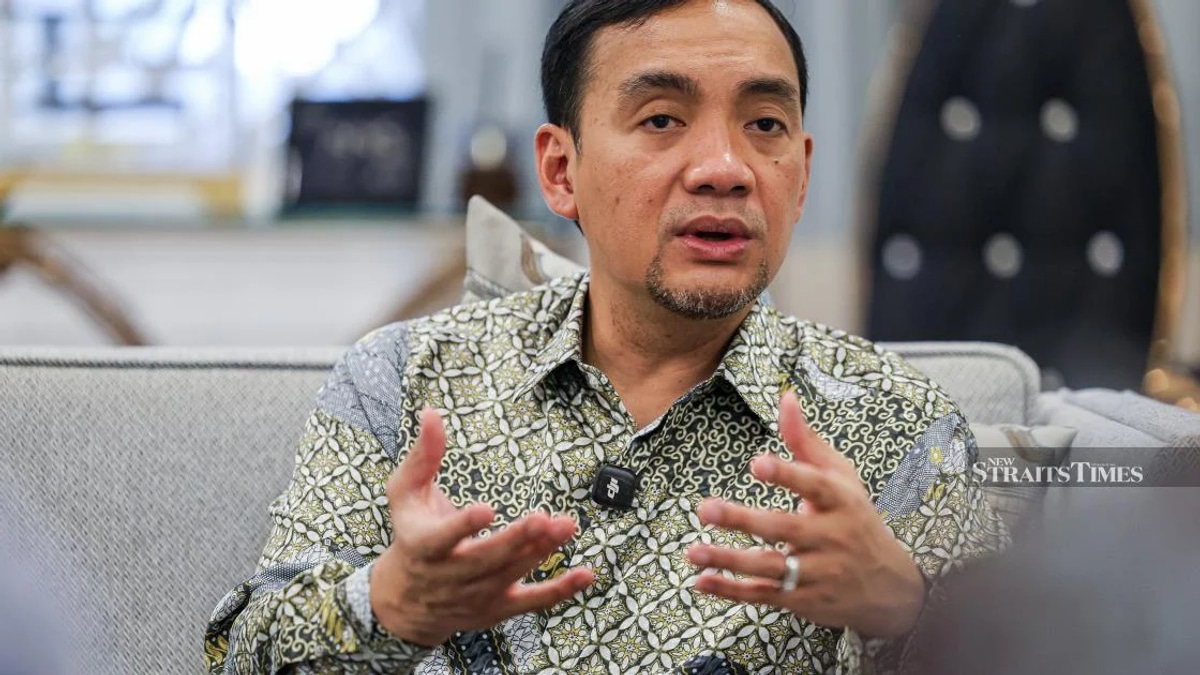
Political analysts have cautioned Johor Menteri Besar Onn Hafiz Matian against involving the royal institution when defending himself against political criticism, instead urging him to lean on his administrative track record as the primary weapon in deflecting detractors. The advice comes amid an intensifying debate about the appropriate boundaries for invoking institutional symbols in partisan political discourse, a particularly sensitive matter in a constitutional monarchy like Malaysia where the separation between state institutions and party politics remains a subject of ongoing discussion.
Onn Hafiz, who has helmed Johor's state government since 2022 under the United Malays National Organisation (UMNO), has faced mounting scrutiny from opposition figures and political commentators questioning his administration's policies and performance. Rather than responding to these criticisms by citing support from or associations with the royal institution, observers argue that the menteri besar should instead marshal concrete evidence of policy implementation and measurable outcomes that demonstrate effective governance.
The counsel reflects a broader principle in Westminster-style democracies and constitutional monarchies: that elected political leaders must ultimately justify their mandates through substantive delivery rather than institutional positioning. Malaysia's unique constitutional arrangement, which grants significant symbolic and ceremonial authority to the nine hereditary rulers, creates particular complexities when political figures reference royal institutions in party-political debates. Such references risk appearing to instrumentalise the monarchy for partisan advantage, potentially compromising the institution's intended political neutrality.
Johor's royal family holds particular prominence within Malaysia's federal structure, given the state's historical significance and the Sultan's role within the Conference of Rulers. This elevated standing makes the boundaries around appropriate royal reference especially important to maintain, as any perception of institutional politicisation could have ripple effects across Malaysia's delicate constitutional settlement. The menteri besar's office carries substantial executive authority over state matters including land administration, local government, and economic development, areas where performance metrics offer clear, defensible grounds for political justification.
Analysts point out that Onn Hafiz has been in office long enough to accumulate a substantive administrative record that can withstand scrutiny and serve as the foundation for defending his tenure. Infrastructure projects, state revenue figures, employment statistics, and policy initiatives all provide quantifiable evidence of governance outcomes that exist independently of any institutional association. By focusing debate on these concrete metrics, the menteri besar would strengthen his political position while simultaneously protecting the integrity of royal institutions from entanglement in partisan disputation.
The broader context involves Malaysia's ongoing negotiation with its constitutional identity, particularly following periods when state institutions have become flashpoints in political conflicts. Public discourse increasingly emphasises the importance of maintaining institutional integrity by keeping ceremonial and symbolic roles separate from operational political contests. When elected officials invoke institutional support or connection to address political opponents, observers worry about gradually eroding the public's confidence in those institutions' fundamental impartiality.
For Johor specifically, maintaining clear institutional boundaries carries practical governance implications. A menteri besar perceived as leveraging royal associations to deflect legitimate policy criticism may encounter resistance from opposition assemblymen, civil society organisations, and business interests when implementing state initiatives. Conversely, a leader who addresses criticism through documented achievement and transparent policy rationale tends to build broader stakeholder confidence that transcends partisan divisions.
The timing of this advisory also reflects seasonal patterns in Malaysia's political calendar, as various state governments prepare for accountability exercises and opposition figures intensify scrutiny of ruling administrations. These moments of heightened political tension often tempt executives toward institutional rhetoric as a protective mechanism. However, experienced political observers consistently counsel that such approaches ultimately backfire, as they shift focus away from substantive governance discussion and invite further questions about whether performance actually justifies the defensive posture.
Onn Hafiz's administration has introduced various initiatives including economic development programmes and infrastructure projects intended to address Johor's regional development needs. Rather than defending these policies through references to institutional support, analysts suggest the menteri besar should invest in public communication explaining project rationale, resource allocation decisions, and measurable outcomes. This approach transforms potential criticism into opportunities to demonstrate competent administration.
The analysis also carries implicit lessons for other state governments across Malaysia, suggesting that sustainable political legitimacy rests on documented performance rather than institutional positioning. As Malaysia continues evolving its political culture toward greater emphasis on executive accountability and transparency, elected leaders who stake their credibility on demonstrable achievement rather than association maintain stronger long-term positions. For Johor's menteri besar, the pathway forward involves marshalling evidence of effective governance and allowing that record to form the foundation for political self-defence, thereby safeguarding both his administrative legitimacy and the institution's constitutional standing.