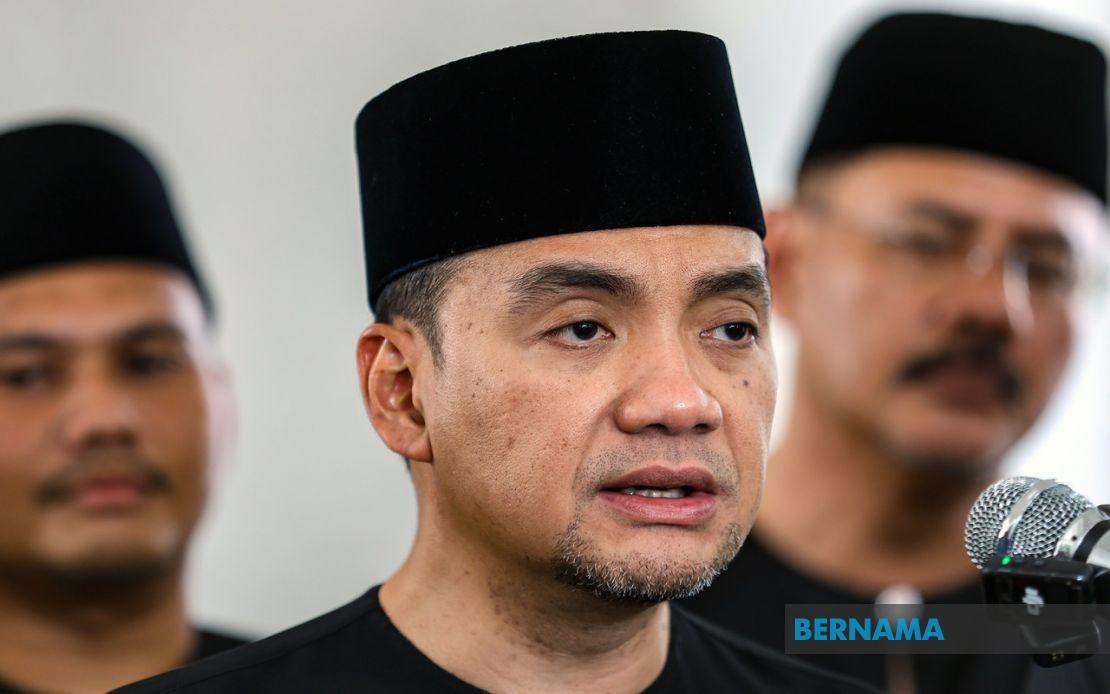
The Johor state government has unveiled a fresh initiative aimed at reinvigorating congregational prayer culture and mosque vitality across the sultanate. The Semarak Maghrib and Isyak programme represents an expansion of the state's existing commitment to promoting regular mosque attendance, building on earlier successes with congregational Subuh prayer campaigns. According to Menteri Besar Datuk Onn Hafiz Ghazi, the scheme directly addresses one of Barisan Nasional's election pledges to the people of Johor, demonstrating the government's intention to translate campaign promises into tangible community initiatives.
The programme is framed within a broader vision of strengthening Islamic institutional life in Johor. Rather than viewing mosques purely as sites of ritual prayer, the state government conceptualises them as multifunctional community hubs that facilitate worship, scholarly discourse, spiritual development, and social cohesion among the Muslim population. This holistic approach reflects evolving thinking in Malaysian Islamic governance, where state authorities increasingly recognise that mosque engagement requires programming that extends beyond the five daily prayers to encompass educational activities and religious enrichment.
Onn Hafiz emphasised that the initiative forms part of the government's strategy to build a progressive Johor anchored in Islamic principles. The framing of "progressive" alongside "guided by the Quran and the Sunnah" suggests an attempt to position Islamic values not as conservative or backward-looking but as compatible with modern development and social advancement. This messaging carries significance across Malaysia, where tensions between secular modernisation and Islamic identity frequently surface in political discourse. By presenting Islamic engagement as progressive, Johor's leadership seeks to demonstrate that religious observance and societal progress are not mutually exclusive.
The inaugural event took place at Masjid Jamek As-Syakirin in Bukit Saujana, where the programme incorporated both practical components and religious education. The inclusion of a scholarly session on forty hadith—specifically addressing the Islamic concept that intentions determine the value of actions—suggests the programme integrates contemplative spiritual learning alongside devotional practice. This educational dimension addresses concerns that mosque engagement sometimes remains superficial without deeper engagement with Islamic jurisprudence and theology. By pairing congregational worship with structured learning, the initiative targets both behavioural change and intellectual development.
The Semarak Maghrib and Isyak campaign builds logically on previous state efforts to normalise congregational Subuh attendance. Early morning prayer attendance has historically been challenging in Muslim societies, making government promotion of Subuh congregations noteworthy. The extension to evening Maghrib and Isyak prayers reflects recognition that different demographic groups face varying obstacles to mosque participation. Evening prayer times may prove more accessible to working adults and families with daytime commitments, potentially broadening the social base of regular mosque-goers across different age groups and occupational backgrounds.
For Malaysian readers and observers beyond Johor, this initiative illustrates how state governments leverage religious governance to demonstrate responsiveness to electorate concerns. The Barisan Nasional government in Johor, facing periodic electoral pressure, invests in visible religious programming that generates positive media coverage and demonstrates governmental attentiveness to Islamic institutional development. This political calculus influences which social and religious initiatives receive state resources and administrative backing, creating a dynamic where religious practice becomes partially instrumentalised within political competition.
The emphasis on strengthening "ukhuwah"—the Islamic concept of brotherhood—alongside worship and learning indicates the programme addresses social cohesion anxieties. In plural Malaysian society, where communal tensions occasionally surface, state promotion of internal Muslim solidarity through mosque-based community building serves multiple objectives simultaneously: it fulfils religious purposes, strengthens political constituencies, and contributes to interethnic stability by channelling communal identity through structured institutional frameworks.
Regionally, Johor's approach reflects broader Southeast Asian trends in state-sponsored Islamic revitalisation. Countries including Indonesia and Malaysia have witnessed governments investing substantially in mosque infrastructure, religious education, and congregational programmes as mechanisms for promoting social stability and asserting institutional authority over Islamic practice. These initiatives often reflect governmental concerns about ensuring that religious practice remains within acceptable institutional channels rather than developing through unregulated alternative pathways.
The success of such programmes ultimately depends on sustained participation and evolving community engagement patterns. While initial launches generate interest and media attention, maintaining momentum requires consistent programming, responsive community leadership, and integration of mosque activities with broader social needs. For Johor's initiative to achieve substantive outcomes beyond ceremonial launches, the state government and mosque administrators must cultivate conditions where evening congregational prayers become routine social practices rather than special promotional events.
The Semarak Maghrib and Isyak programme thus represents a multifaceted undertaking encompassing religious, social, and political dimensions. It demonstrates how Islamic institutional governance in Malaysian states continues evolving to address contemporary challenges in faith engagement, community building, and governmental legitimacy. Whether the initiative generates sustained improvements in mosque attendance and congregational vitality remains to be observed, but it underscores Johor's determination to position itself as actively supporting Islamic community life and institutional development.

