The Johor state government has unveiled an ambitious RM50 million programme to rejuvenate the physical appearance of residential complexes housing low-income families across the state. The initiative represents a significant financial commitment to what officials describe as more than merely cosmetic enhancement, instead framing apartment maintenance as a crucial element of improving living conditions and fostering community wellbeing in lower-income neighbourhoods.
The scope of this undertaking is considerable. The programme will encompass 170 housing blocks containing a combined 11,693 residential units distributed across 26 strategic locations throughout Johor. These figures underscore the breadth of the intervention, which spans multiple municipalities and population centres. The direct beneficiaries are expected to number approximately 46,772 residents, though the indirect effects—through improved neighbourhood aesthetics and community pride—may extend far beyond these households. For a state government, allocating such resources to housing maintenance represents a deliberate policy choice to prioritise the physical environment of economically vulnerable populations.
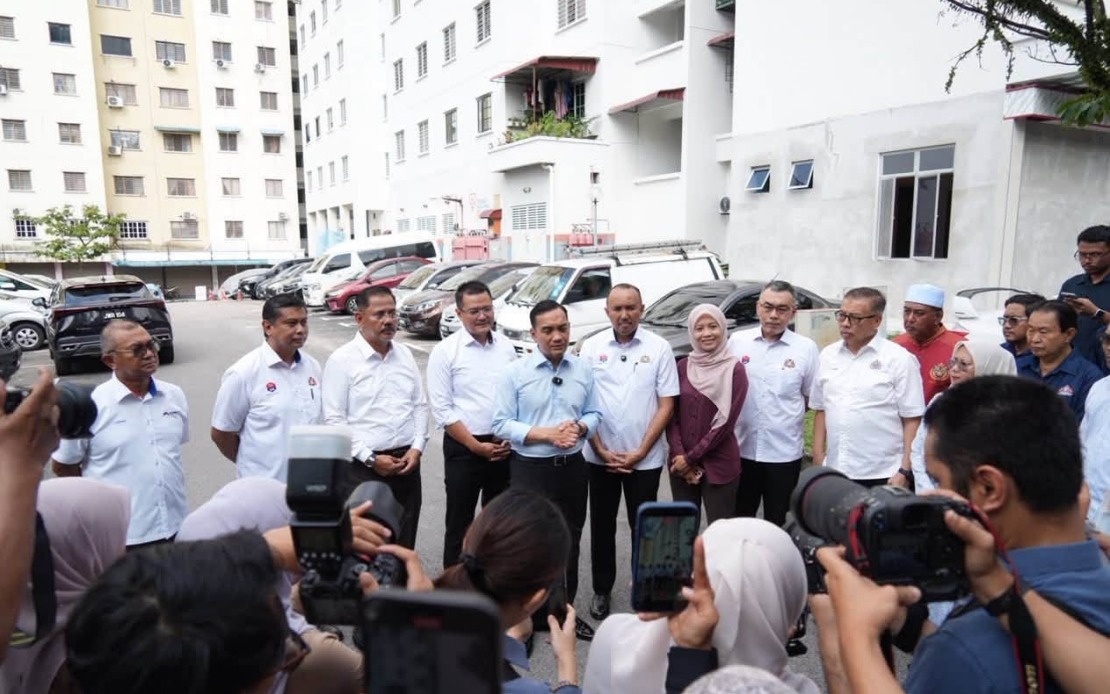
Datuk Mohd Jafni Md Shukor, the State Housing and Local Government Committee chairman, articulated the philosophical reasoning behind the initiative during an inspection of repainting works at Desa Muafakat Apartments. Rather than dismissing the initiative as superficial, he argued that a well-maintained residential environment fundamentally shapes residents' psychological relationship with their community. The provision of clean, visually pleasant surroundings, in his assessment, communicates to residents that the state government takes their wellbeing seriously. This framing acknowledges a psychological dimension often overlooked in purely utilitarian approaches to public housing—that dignity and environmental pride contribute meaningfully to residents' overall sense of security and belonging.
The implementation structure reveals a coordinated approach across multiple agencies and administrative bodies. The Johor State Housing Development Corporation (PKPJ) and the Local Government Division within the state secretary's office will lead coordination efforts, supported by city councils including Johor Bahru City Council (MBJB), Iskandar Puteri City Council (MBIP), Pasir Gudang City Council (MBPG), and Kulai Municipal Council (MPKu). This multi-agency framework reflects the reality that housing maintenance in Malaysia typically spans different levels of government authority and administrative jurisdiction. Effective implementation depends on sustained coordination between state-level policy bodies and municipal governments responsible for day-to-day service delivery.
The inspection visit by Johor Menteri Besar Datuk Onn Hafiz Ghazi alongside Mohd Jafni symbolised high-level political engagement with the programme. Beyond reviewing repainting progress, officials examined the construction site of Tabika KEMAS Bangsa Johor at the same complex, indicating that this initiative exists within a broader ecosystem of investments in public facilities and early childhood development infrastructure. The simultaneous briefing on structural issues—specifically slope subsidence near parking areas and internal road damage—reveals that housing challenges in these complexes extend beyond surface maintenance. These more serious infrastructure deficiencies require parallel remedial attention and longer-term capital investment.
Mohd Jafni placed particular emphasis on quality assurance and adherence to professional standards throughout implementation. He cautioned against projects that appear satisfactory upon completion but rapidly deteriorate, a concern rooted in the documented reality of public works in Malaysia where cost-cutting and inadequate contractor accountability have sometimes resulted in premature structural decline. His insistence that all works meet specified schedules, quality standards, and safety requirements reflects an attempt to institutionalise accountability mechanisms within the executing agencies. The explicit reminder to contractors and implementing bodies underscores that maintaining rigorous oversight during execution—rather than merely allocating funds—determines whether the investment generates lasting benefits.
For Malaysian policymakers observing this initiative, the programme offers instructive lessons about targeted interventions in public housing. The emphasis on environmental improvement as a component of poverty alleviation represents a middle-ground approach—more ambitious than minimal maintenance regimes, yet more sustainable and focused than attempting comprehensive new construction. Given Malaysia's substantial stock of aging public and low-cost housing units, scaling approaches like Johor's across other states could systematically address deferred maintenance while demonstrating governmental responsiveness to lower-income constituencies.
The regional context matters significantly. Many Southeast Asian nations grapple with the challenge of providing dignified housing for growing urban lower-income populations while managing constrained public budgets. Johor's decision to dedicate RM50 million specifically to environmental improvement suggests confidence in the state's fiscal position, though it also reflects political prioritisation—a choice to invest in existing assets rather than alternative spending categories. For residents in these 11,693 units, the programme promises immediate visible improvements to their daily environment and implicit reassurance that their communities remain within the state's policy attention.
The integration of this painting initiative with broader housing infrastructure work—including attention to structural subsidence and road maintenance—positions it as part of holistic asset management. Yet the distinction between cosmetic enhancement and structural remediation matters operationally. Residents experiencing parking area subsidence or deteriorated internal roads require attention to safety and functionality that mere aesthetic improvement cannot address. The inspection visit's inclusion of briefings on these technical issues suggests awareness of this distinction, though translating awareness into prioritised action across multiple municipalities remains an ongoing execution challenge.
Looking forward, the success of this programme will depend on several interconnected factors. Contractor capacity to execute work across 26 dispersed locations simultaneously, quality assurance protocols that prevent corner-cutting, timely fund release to prevent project stalling, and sustained political commitment across electoral cycles will all influence outcomes. For Johor residents in these housing complexes, the RM50 million investment represents tangible evidence of state responsiveness—but only if implementation delivers results that persist beyond the initial repainting ceremony.

