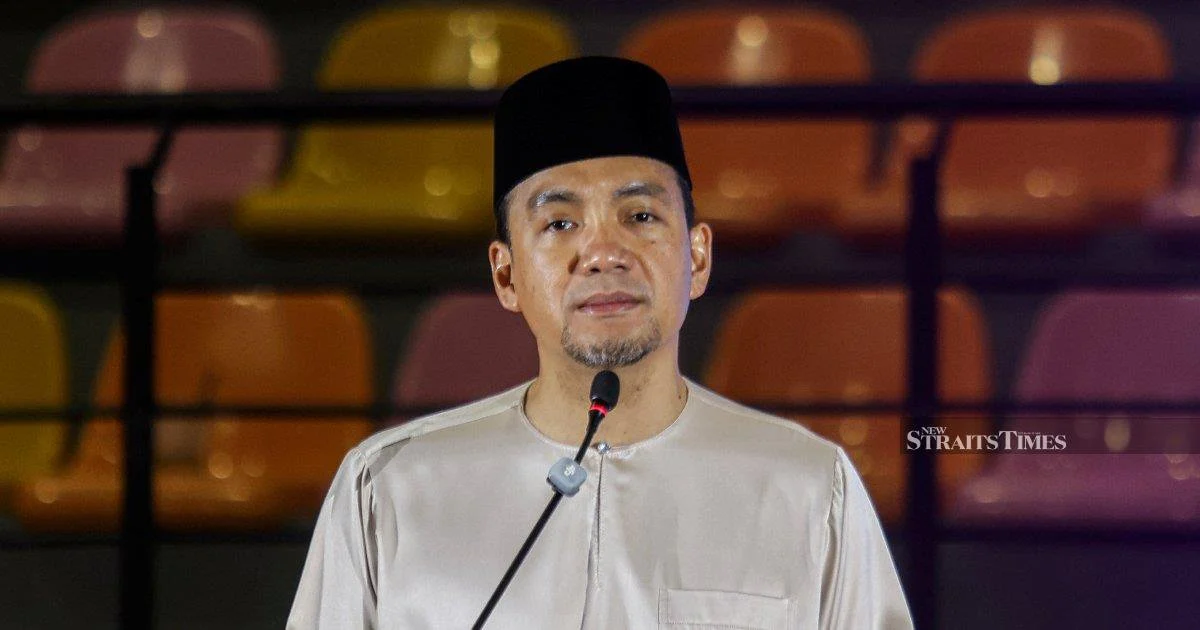
Johor's leadership has moved to scrutinise the operations of Network School, with the state government signalling its determination to prevent any institution from advancing ideologies that undermine local governance, national sovereignty, or community interests. The Menteri Besar's call for an inquiry reflects growing official concern over the school's alleged connections and the ideological positioning it may represent within the state's educational landscape.
The Johor government's stance emphasises a boundary-setting approach to civic organisations operating within its jurisdiction. Officials have indicated that while the state welcomes legitimate educational and social institutions, it will not countenance those that might compromise the state's autonomy, promote foreign interests over national ones, or introduce ideological frameworks at odds with Malaysian law and constitutional values. This position underscores tensions around institutional accountability and the oversight of schools operating beyond the conventional national education system.
Network School has become a focal point of public discussion regarding educational standards and institutional transparency in Malaysia. Questions about its governance structure, funding sources, and curriculum orientation have prompted authorities to examine how international educational models interface with local regulatory frameworks. The school's approach and any external linkages are now subject to formal scrutiny as part of broader efforts to ensure educational institutions align with national values and priorities.
The controversy highlights a recurring challenge in Malaysia's educational ecosystem: the tension between permitting diverse institutional models and maintaining national oversight. Private and alternative schools operate within Malaysia's regulatory framework, yet questions persist about whether existing mechanisms adequately monitor their operations, funding streams, and pedagogical approaches. The Johor government's intervention suggests officials believe current review processes may be insufficient.
Allegations of Israeli connections carry particular weight in Malaysia, where public sentiment on the Israeli-Palestinian conflict shapes political discourse and policy directions. Any organisation perceived as advancing Israeli interests or promoting pro-Israel perspectives risks considerable public and governmental scrutiny. This context frames the Network School case within Malaysia's broader geopolitical positioning and domestic sensitivities surrounding the Middle East.
The Menteri Besar's remarks signal that Johor intends to exercise active oversight over organisations claiming educational or social mandates within its territory. This approach reflects a pattern of state governments increasingly asserting regulatory authority over institutions, particularly when national security, ideological alignment, or sovereignty concerns arise. Such interventions can either strengthen institutional accountability or, depending on implementation, create uncertainty for organisations operating in grey regulatory areas.
For institutions operating alternative educational models or with international affiliations, the Johor inquiry serves as a cautionary indicator. Schools and organisations must demonstrate transparent governance, clear funding disclosures, and curriculum alignment with Malaysian constitutional values. The investigation may establish precedents affecting how other state governments evaluate similar institutions, particularly those with perceived foreign connections or non-traditional operating models.
The broader implications extend to Malaysia's regulatory approach toward civil society and educational institutions. As the state asserts sovereignty concerns, questions arise about how authorities distinguish between legitimate international partnerships and problematic external influence. Clarity in such distinctions becomes important for schools seeking to engage global best practices or maintain international accreditation while respecting national boundaries and sensitivities.
Network School's case will likely influence how Malaysian policymakers and state governments approach institutional oversight more broadly. If the inquiry substantiates allegations or reveals governance deficiencies, it may accelerate efforts to tighten monitoring of alternative educational providers. Conversely, if the school's operations prove compliant with regulations and unproblematic, it could clarify the boundaries of acceptable institutional independence in Malaysia's educational sector.
The investigation also intersects with ongoing conversations about religious and ideological instruction in schools. Malaysian parents and authorities maintain vigilance regarding what values and frameworks students encounter in classrooms. Schools must navigate expectations that they reinforce national identity and constitutional principles while providing quality, globally competitive education. Network School's scrutiny exemplifies how these expectations can create friction with institutions perceived as advancing non-aligned ideologies.
Governmental attention to Network School reflects Johor's approach to state security and ideological governance. Officials view certain foreign connections or ideological positions as incompatible with state interests, particularly when institutions serve young populations whose worldviews remain formative. This protective stance, while grounded in legitimate state prerogatives, also demonstrates how national security frameworks can influence educational oversight.
The outcome of the Johor government's inquiry will carry significance beyond Network School itself. It will signal to other educational and civil society organisations what standards of transparency, funding disclosure, and ideological alignment authorities expect. It may also clarify the thresholds at which state governments intervene in institutional operations, providing either reassurance or caution depending on how the process unfolds and concludes.

