Johor has announced an ambitious expansion of its education transformation agenda, bringing its Sekolah Rintis Bangsa Johor (SRBJ) initiative into the religious school sector with the establishment of the first Sekolah Agama Rintis Bangsa Johor (SARBJ) set to open this year. The move signals the state government's determination to apply proven educational innovations across institutional boundaries, extending quality improvements beyond conventional schools into the Islamic education system that serves thousands of students across the state.
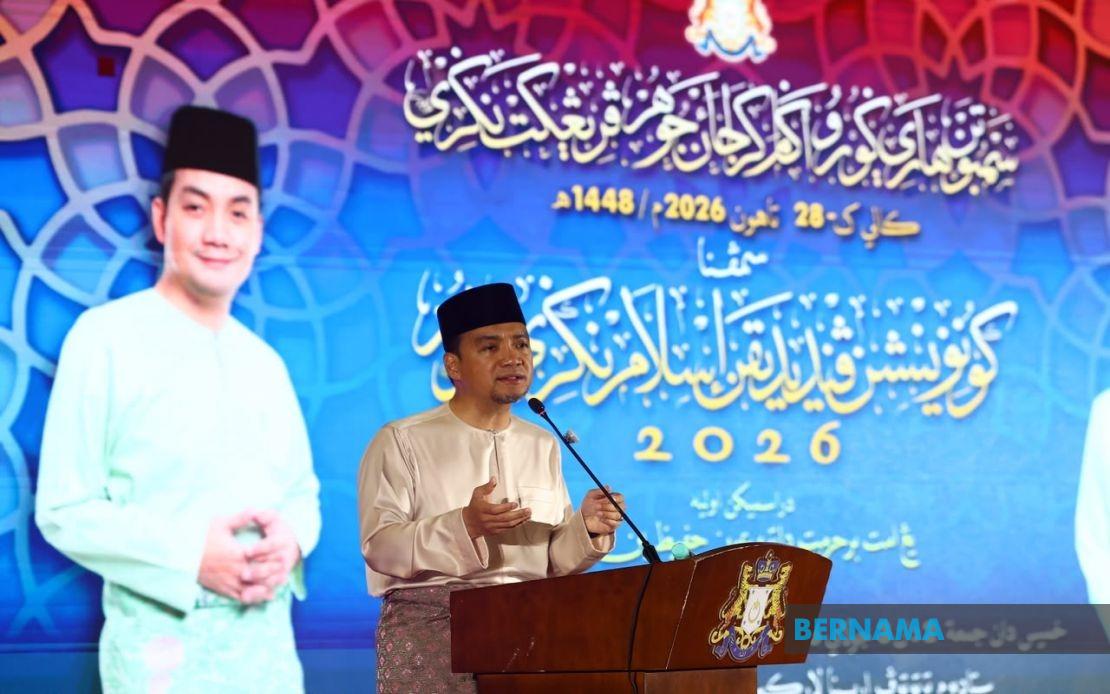
Menteri Besar Datuk Onn Hafiz Ghazi credited the initiative to Tunku Mahkota Ismail, the Regent of Johor, framing the expansion as part of a holistic strategy to reshape how the state approaches learning and development. Speaking at the 28th Johor Government Religious Teachers' Day celebration and the State Islamic Education Convention at Arena Larkin Indoor Stadium, Hafiz Ghazi indicated that the religious school variant represents a natural progression of the SRBJ model rather than a departure from established principles. The first SARBJ will be constructed in Kota Iskandar, positioning it as a flagship institution that can serve as a reference point for future developments in Islamic education across Johor.
The SRBJ initiative, which already encompasses four schools—two primary and two secondary institutions across Pasir Gudang and Johor Bahru—focuses on transforming educational delivery through digital integration, multilingual capabilities, moral character formation, and enhanced teaching capacity. The four operational schools include Sekolah Menengah Kebangsaan Seri Kota Puteri 2 and Sekolah Kebangsaan Seri Kota Puteri 4 in Pasir Gudang, alongside SMK Tasek Utara and SK Tasek Utara in Johor Bahru. By extending these methodologies to religious schools, the government aims to ensure that Islamic education—a component of the national curriculum that remains important across Malaysia—benefits from the same quality improvements and contemporary teaching approaches.
The decision to establish SARBJ comes at a moment when religious schools across Southeast Asia face mounting pressures to balance traditional curricula with modern skills development. Malaysia's Islamic education institutions have historically emphasised classical religious knowledge, yet employers and educators increasingly recognise the necessity of embedding digital literacy, critical thinking, and global communication skills within religious contexts. Johor's approach suggests a recognition that these objectives need not be mutually exclusive; indeed, properly implemented, they can reinforce each other. The state government appears to be betting that students in religious schools deserve access to the same quality facilities and contemporary pedagogical methods available in other segments of the education system.
State Islamic Religious Affairs Committee chairman Mohd Fared Mohd Khalid announced the government approval for SARBJ construction, positioning the initiative as a complement to broader efforts to strengthen religious education in Johor. The announcement reflects growing state-level engagement with Islamic education reform, a domain that traditionally remained somewhat insulated from broader education policy discussions. By bringing religious schools into the SRBJ framework, Johor is signalling that quality educational transformation is a matter of public responsibility across all school types, not simply a concern for national schools or particular socioeconomic segments.
The expansion into religious education also carries implications for how teacher preparation and professional development are conceptualised in Johor. The original SRBJ initiative emphasised teacher empowerment as a central pillar, recognising that educational transformation cannot succeed without investing in educators' skills, working conditions, and agency. Religious school teachers, who often work within distinct institutional cultures and prescribed curricula, may face particular challenges in adopting new pedagogical approaches. The government's decision to extend SRBJ principles to SARBJ suggests a commitment to supporting this transition through structured professional development that respects religious education's specific context while introducing contemporary best practices.
Johor's initiative also includes plans to establish a pilot kindergarten operating under the SRBJ approach, indicating the state's intention to intervene in early childhood education—a sector where quality variations remain particularly pronounced across Malaysia. Early childhood programmes set foundational competencies in language, numeracy, and social-emotional development; introducing systematic quality improvements at this level could have cumulative effects throughout students' educational journeys. The kindergarten pilot suggests that Johor views educational reform not as an intervention limited to primary or secondary levels but as a comprehensive commitment spanning the full educational spectrum.
The expansion into religious schools warrants attention from other Malaysian state governments and federal education policymakers. While education falls primarily within state jurisdiction in Malaysia, federal oversight of curriculum standards and teacher qualifications creates interdependencies. Should SARBJ schools demonstrate measurable improvements in student outcomes, examination results, or teacher satisfaction, the model could attract interest from other states considering similar initiatives. Islamic education represents a substantial component of Malaysia's education system, with dedicated religious schools enrolling significant numbers of students, particularly in states with larger Muslim populations or stronger religious education traditions.
For Southeast Asia more broadly, Johor's initiative responds to regional questions about how religious education can evolve to serve contemporary needs. Across the region, governments balance cultural and religious commitments with economic imperatives requiring digitally literate, globally competitive workforces. Religious schools in Indonesia, Brunei, and Thailand face analogous tensions. Johor's willingness to apply modern pedagogical innovations within Islamic education contexts could offer insights relevant to regional peers grappling with similar challenges, particularly regarding how quality improvements need not require abandoning religious or cultural distinctiveness.
The practical implementation of SARBJ will ultimately determine whether the initiative succeeds in meaningfully improving religious education in Johor. Extending methodologies designed for conventional schools into religious institutions requires careful adaptation to accommodate different curricular emphases, governance structures, and community expectations. The government's emphasis on digital learning and multilingual proficiency must be integrated thoughtfully with traditional Islamic curricula to avoid the perception that modernisation comes at the expense of religious substance. Teachers in SARBJ institutions will require training not only in new technical and pedagogical skills but in how to weave these effectively into Islamic contexts.
The initiative also raises questions about resource allocation and equity. Establishing the first SARBJ in Kota Iskandar, the state administrative capital, positions it as a prestigious institution with presumed advantages in infrastructure and resource access. Whether subsequent religious schools can access comparable support or whether SARBJ becomes an outlier remains unclear. The state government's ambition will be tested by its capacity to sustain systematic quality improvements across multiple institutions rather than creating isolated exemplars.
Johor's expansion of SRBJ into religious education represents a notable commitment to comprehensive educational transformation that transcends institutional categories. By involving the Regent in initiative sponsorship and deploying significant government resources across both conventional and religious schools, the state signals that educational quality is a unified concern rather than a fragmented set of parallel concerns. Whether this institutional integration ultimately produces meaningful improvements in learning outcomes, teacher effectiveness, and student readiness for economic participation remains a question for assessment, but the ambition itself marks a significant policy direction worth monitoring across the region.

