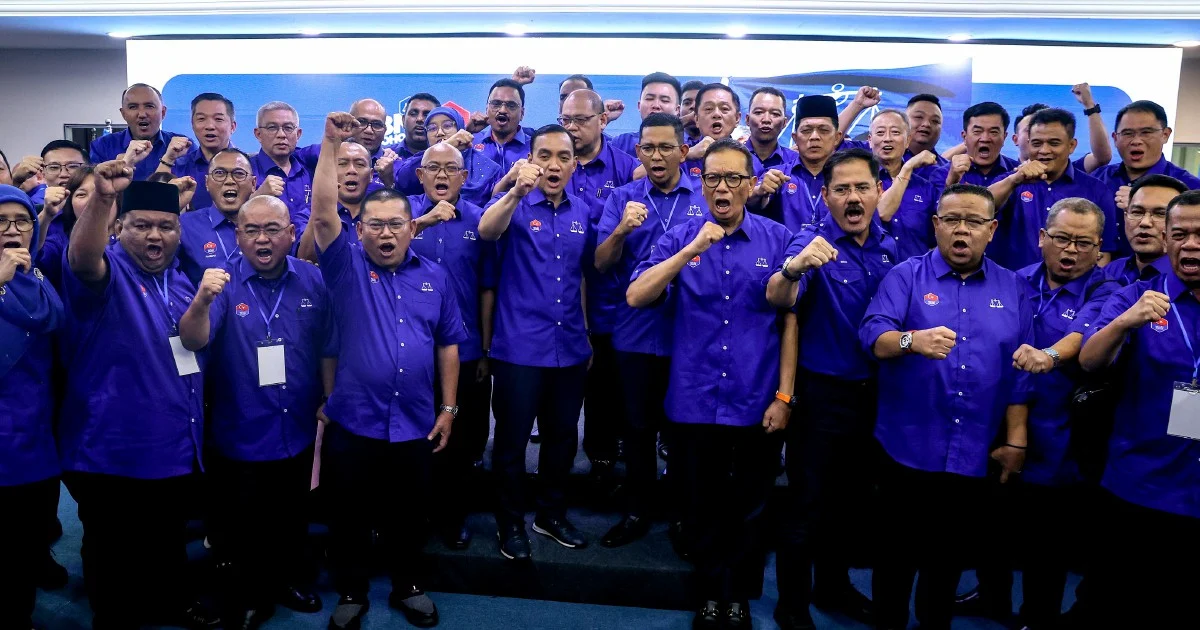
The possibility of a multi-party electoral arrangement in Johor has evaporated after Barisan Nasional revealed its full slate of candidates for the state election, with not a single member of Parti Wawasan Negara making the cut. Prior to this announcement, political observers and commentators had widely anticipated negotiations between the three coalitions—BN, the Islamist PAS party, and the newer Wawasan faction—might materialise into a unified ticket designed to maximise opposition to the incumbent Pakatan Harapan government. That speculation has now decisively ended.
The disclosure of BN's candidate lineup marks a critical juncture in Johor's political landscape, essentially foreclosing any possibility of the three-way collaboration that had been the subject of considerable discussion across Malaysian political circles in recent weeks. By proceeding with a candidate list that excludes Wawasan representatives, Barisan Nasional has signalled its preference for pursuing the election independently rather than diluting its seat allocation through formal power-sharing arrangements with smaller parties. This decision carries significant implications for how the opposition vote will be distributed across constituencies.
Wawasan, as the relative newcomer to Malaysian politics, faced considerable uncertainty regarding its electoral viability and strategic positioning heading into the Johor contest. The party's inability to secure nomination from BN—traditionally the dominant opposition force in the southern state—represents a considerable setback to its ambitions of establishing itself as a meaningful political force in the peninsula's political sphere. Without the legitimacy and electoral machinery that a BN alliance would have provided, Wawasan now confronts the formidable challenge of contesting as an independent entity against both the ruling coalition and the better-organised opposition players.
The mathematical implications of BN's decision deserve careful examination. By maintaining its traditional candidate allocation without reserved slots for Wawasan, the coalition preserves maximum flexibility in its campaign strategy and avoids the complications that coalition management typically introduces. For constituencies where both BN and Wawasan field candidates, the opposition vote will face fragmentation unless voters coordinate strategically at the grassroots level. This fragmentation could prove advantageous to Pakatan Harapan incumbents in marginal seats, particularly in urban areas where anti-establishment sentiment might otherwise have consolidated around a single opposition choice.
The PAS dimension of this collapsed arrangement warrants closer scrutiny. The Islamic party's position relative to BN and Wawasan remains undefined following BN's candidate announcement, though PAS has historically maintained complex relationships with Barisan Nasional across different state elections. Whether PAS ultimately contests in Johor, and if so, whether it does so independently or in coordination with either BN or Wawasan, will substantially reshape the competitive terrain. PAS's decision-making in the coming weeks will prove crucial for determining the ultimate distribution of anti-Pakatan votes across the state's constituencies.
For Malaysian readers observing state-level politics, the Johor election serves as a barometer for broader national political realignment. The failure to achieve a three-way opposition accommodation suggests that fundamental tactical disagreements persist among the various anti-government formations regarding coalition strategy and seat allocation principles. These disagreements reflect deeper questions about whether Malaysia's opposition is genuinely committed to coordinating against the ruling coalition or whether competitive rivalry between different opposition factions continues to dominate strategic calculations.
Wawasan's exclusion from BN's candidate slate also illuminates the challenges confronting newly-formed political entities in Southeast Asian democracies where established party machinery and networks provide enormous structural advantages. Without either name recognition comparable to century-old BN or the grassroots Islamic infrastructure that supports PAS operations, Wawasan must build electoral support largely through media exposure and intellectual positioning. Contesting as an isolated third force in a three-way or four-way contest dramatically diminishes the party's prospects of actually winning seats compared to running under established coalition umbrellas.
The strategic implications extend beyond Johor's borders. If Wawasan struggles in the southern state while running independently, the party's viability as a force in future Peninsular Malaysian elections comes into serious question. Conversely, should Wawasan unexpectedly perform well despite the disadvantage of running alone, the party might establish itself as a genuine alternative that attracts politicians and voters disaffected with both establishment BN and the Islamist-leaning PAS. The Johor election outcome will essentially determine whether Wawasan represents Malaysia's political future or merely a temporary curiosity in the nation's evolving party landscape.
Barisan Nasional's decision to proceed with its traditional candidate allocation also suggests confidence in the coalition's ability to mount a competitive challenge against Pakatan Harapan without requiring external reinforcement. The coalition's leadership evidently believes that its existing machinery and factional structure—comprising UMNO, MCA, MIC and the Sabah and Sarawak-based GPS and PBB components—provides sufficient resources to contest effectively. Whether that assessment proves accurate will depend heavily on campaign execution and voter sentiment regarding the state government's performance across economic, security and developmental metrics.
From a Malaysian electoral dynamics perspective, the absence of Wawasan from BN's candidate list represents a modest clarification rather than a dramatic revelation. Multi-party coalitions regularly renegotiate their internal seat distributions before elections, and political negotiations frequently fail to produce binding agreements. The substantive political question now shifts from whether three-way cooperation would occur to how the fragmented opposition vote will ultimately translate into parliamentary seats. Johor voters will effectively conduct an experiment in multi-candidate contests where anti-government sentiment remains substantial but irreducibly divided among competing options.

