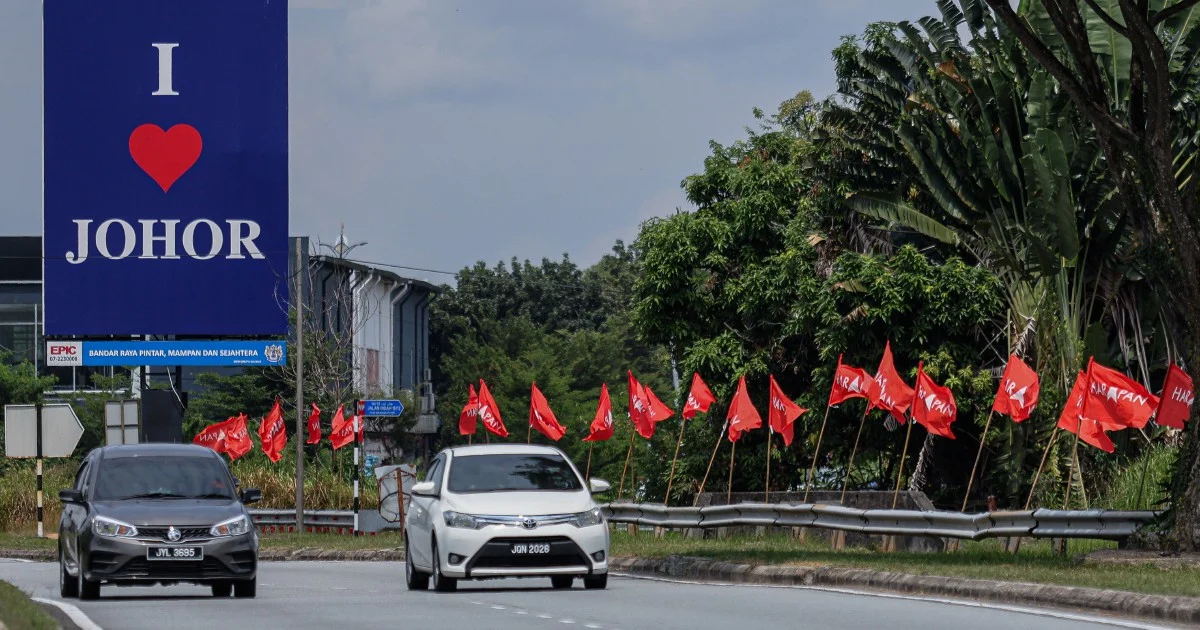
Political observers in Johor are being urged to look beyond the conventional focus on individual leadership candidates as the state prepares for elections, with PKR's youth division now stressing that voters ought to assess the broader capabilities and policy platforms of the competing coalitions. This intervention reflects growing awareness within the coalition that electoral success hinges on demonstrating institutional competence and strategic vision across multiple governance dimensions.
The reframing represents a subtle but significant shift in election narrative strategy. Rather than allowing campaigns to crystallise around personality-driven politics and individual ambitions for the menteri besar position, PKR Youth is attempting to elevate discourse toward substantive matters of state development, economic trajectory, and social welfare policy. This approach acknowledges that voter expectations in Johor extend well beyond identifying a single leader—they encompass comprehensive assessments of economic management, infrastructure development, and the integrity of institutional frameworks that deliver public services.
Johor's economic significance within Malaysia makes this strategic pivot particularly consequential. As the nation's second-largest economy and a crucial manufacturing and agricultural hub, the state's governance decisions ripple across regional supply chains and investment patterns. Potential menteri besar candidates, regardless of coalition affiliation, will inherit responsibilities for overseeing substantial budgets, managing relationships with federal authorities, and navigating complex commercial interests across both traditional and emerging sectors. A coalition-focused campaign permits deeper examination of whether frontline candidates possess adequate support networks, technical expertise, and administrative experience to execute ambitious development agendas.
The emphasis on comparing coalition teams rather than individual candidates also addresses legitimate concerns about political stability and continuity. Electoral cycles demonstrate that governments change, and chief ministers occasionally face unprecedented circumstances or shifting political configurations. Voters evaluating entire coalition structures can better anticipate how governance might adapt following leadership transitions, which economic sectors receive priority attention, and whether policy direction remains consistent or swings dramatically depending on factional preferences within the administration. This institutional thinking proves especially relevant in Johor, where manufacturing competitiveness, port operations, and tourism dynamics require sustained policy commitment across multiple election cycles.
PKR Youth's intervention equally suggests internal coalition calculation about comparative advantages when campaigns emphasise team composition over individual celebrity status. Some coalitions may field menteri besar candidates possessing impressive personal credentials but relatively sparse experience managing state administrations. Others might offer candidates with deeper track records but less charismatic public appeal. By steering discourse toward cumulative coalition strengths—including deputy chiefs, state assemblymen, experienced administrators, and policy specialists—PKR potentially neutralises certain disadvantages while illuminating areas where its coalition maintains genuine superiority in bench strength and proven execution capacity.
The economic development angle holds particular resonance for Johor's diverse constituencies. Peninsular Malaysia's southern flank encompasses industrial zones supporting automotive manufacturing, semiconductor production, and petrochemical operations that employ tens of thousands directly and sustain extensive supply chain networks. Agricultural regions depend on irrigation management, agricultural extension services, and market access facilitation. Urban centres require transport infrastructure, housing policy, and business environment stability to attract service sector investment. Rural communities need connectivity improvements and livelihood diversification initiatives. No single menteri besar candidate, regardless of personal virtues, can credibly promise expertise spanning these multifaceted demands without institutional backing from experienced colleagues and professional administrators.
Social development priorities intersect with economic strategy in ways that coalitional thinking illuminates more effectively than personality-centred analysis. Education quality, healthcare accessibility, poverty alleviation programmes, and community development initiatives require coordinated implementation across multiple government departments, statutory bodies, and potentially private sector partnerships. Voters examining coalition teams can assess whether proposed governments collectively demonstrate understanding of Johor's social challenges—including urban migration pressures, demographic shifts in rural areas, and skill requirements for workforce transitions—and whether they articulate coherent responses rather than scattered commitments.
The international investment community similarly evaluates subnational administrations through institutional lenses. Global fund managers, regional headquarters executives, and multinational corporations seeking to establish or expand operations in Johor conduct due diligence on governance stability, policy consistency, and the technical capacity of state administrations to implement commitments made during investment promotion exercises. A menteri besar backed by a competent, cohesive coalition inspires greater confidence than a strong individual candidate operating within fractious governmental structures or partnerships marked by internal tensions and conflicting priorities.
PKR Youth's intervention also reflects sophisticated understanding that personality-centric campaigns frequently prove vulnerable to unexpected developments or revelations about individual candidates that suddenly shift voter calculations. Coalition-focused strategies provide more resilience because governance capacity distributes across multiple individuals and institutional mechanisms. Should any single coalition member face difficulties or controversies, the broader administration's competence remains demonstrable through the continued functioning of government agencies and the continuation of development initiatives. This institutional perspective acknowledges political realities that pure personality politics often inadequately address.
For Malaysian voters evaluating Johor's election, the PKR Youth message merits careful consideration. Elections ultimately determine not merely which individual assumes the chief minister's office but which team, with what expertise and institutional backing, will steward state resources, make infrastructure investments, manage commercial relationships, and chart developmental priorities across four or five years. Johor's scale and complexity demand governance that transcends individual leadership capability, making serious evaluation of coalition composition and policy coherence fundamental to reasoned voting decisions.

