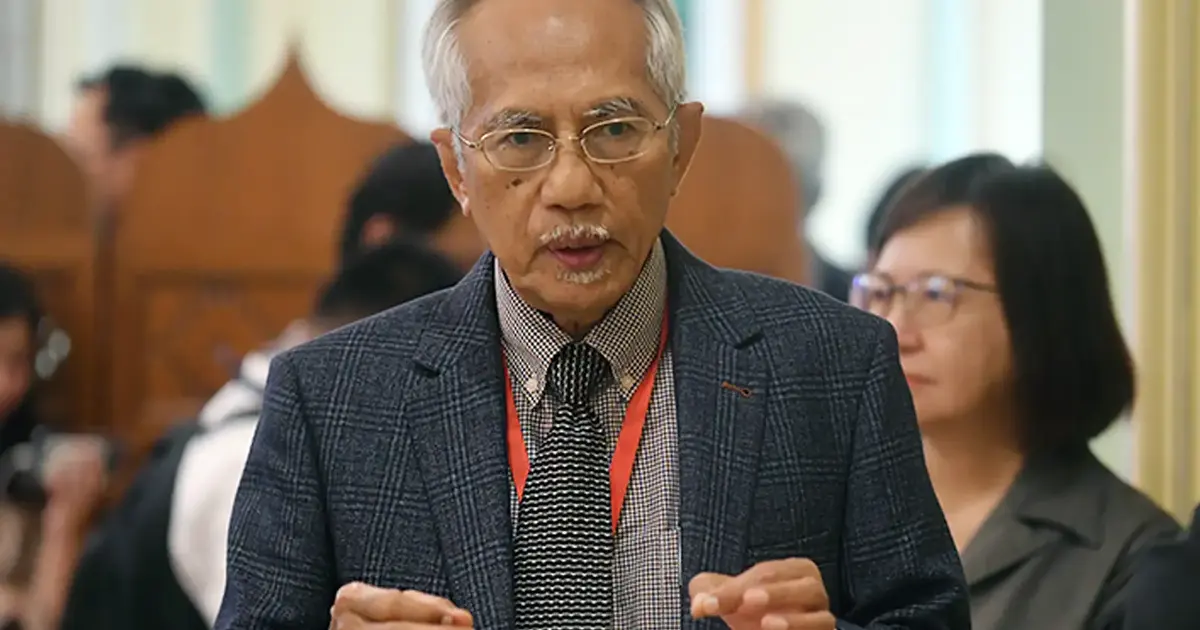
The outcome of Johor's state elections could prove decisive in determining when Prime Minister Anwar Ibrahim chooses to call the country's next general election, according to veteran political commentator A Kadir Jasin. The seasoned journalist's assessment comes amid escalating speculation about the electoral calendar, with government officials and political operatives increasingly focused on identifying the optimal moment to seek a fresh mandate from Malaysian voters.
At the centre of this political calculus sits Ahmad Zahid Hamidi, the Barisan Nasional chairman who occupies the powerful position of deputy prime minister following his appointment in November 2022. Jasin argues that the Madani administration's decision to elevate Zahid to this senior role has fundamentally transformed the political landscape and fundamentally strengthened the Umno leader's bargaining position within the coalition government. This structural advantage, the commentator suggests, will inevitably influence broader strategic decisions about election timing.
The appointment of Zahid as deputy prime minister represented a significant power shift within Malaysia's governing coalition. By granting the BN chairman this high-profile portfolio, the Madani government acknowledged the electoral influence and organisational capacity that Umno continues to wield across Malaysia's heartland constituencies. The decision effectively provided Zahid with a platform to consolidate support among party loyalists and state-level operatives, transforming what could have been a largely ceremonial role into a genuine seat at the cabinet table.
Johor's electoral dynamics carry particular weight because the state has historically served as a bellwether for national political trends. As Malaysia's second-most populous state and a traditional Umno stronghold, Johor's voting patterns frequently foreshadow broader shifts in voter sentiment. Any substantial changes in the state's political alignment would send unmistakable signals to both Anwar and his coalition partners about the trajectory of national opinion and the realistic timing for securing parliamentary renewal.
Zahid's enhanced political stature means that any discussion about dissolving parliament and calling general elections must account for his preferences and strategic interests. The Umno leader's ability to mobilise grassroots support through BN machinery has made him an indispensable component of the government's electoral prospects. Consequently, his assessment of whether electoral conditions favour an immediate election call or suggest waiting for more propitious circumstances carries substantial weight in Anwar's decision-making process.
The political mathematics underlying these calculations are complex and multifaceted. The Madani coalition currently holds a parliamentary majority, yet this advantage is not invulnerable. Economic challenges, policy disagreements among coalition partners, and shifting public sentiment could all erode government support between now and the statutory deadline for holding elections. Conversely, favourable economic data, successful policy implementations, or negative developments affecting opposition parties could create windows of opportunity that might not remain open indefinitely.
Johor's electoral contest will provide crucial empirical evidence about whether the current government enjoys sufficient voter confidence to secure a strengthened parliamentary mandate. Should BN and government-aligned parties perform robustly in the state elections, Anwar might interpret this as a sign that public opinion permits an immediate general election call. Conversely, disappointing results could suggest that additional time for the government to demonstrate its policy achievements and stabilise economic conditions would be strategically prudent.
Zahid's pivotal position within this calculation reflects the peculiar structure of Malaysian coalition politics. Umno's grassroots organisational capacity, particularly in peninsular states outside Selangor and Penang, remains unmatched by other BN components or opposition parties. This organisational advantage means that the deputy prime minister's confidence in the party's electoral prospects significantly influences whether the broader coalition can realistically expect to improve its parliamentary position through an election call.
The timing question also intersects with practical considerations affecting government stability. Malaysia's economy continues navigating post-pandemic recovery challenges, inflation management, and structural fiscal pressures. The government may calculate that allowing additional months for policy initiatives to produce tangible results would strengthen its electoral narrative and improve voter receptiveness to its development agenda.
For Malaysian observers and international commentators monitoring the country's political trajectory, Johor's electoral results will serve as a critical indicator of national political health. The state contest will reveal whether the government's popularity remains robust, whether opposition parties have successfully rebuilt voter confidence following their 2022 general election defeat, and whether any emerging political movements have gained sufficient traction to alter Malaysia's established partisan alignments.
Jasin's analysis underscores how deeply Zahid's appointment as deputy prime minister has integrated Umno's interests into the government's strategic planning. Rather than remaining a peripheral coalition partner, BN's chairman now occupies a position from which he can influence fundamental decisions about parliamentary dissolution timing. This structural reality means that any assessment of likely election timing must account for Umno's electoral calculations and Zahid's political preferences alongside broader government considerations.
As Malaysian politics enters this period of heightened electoral speculation, the interplay between Johor's state results, Ahmad Zahid Hamidi's enhanced position, and Prime Minister Anwar Ibrahim's strategic preferences will prove mutually reinforcing. Each element influences the others, creating a complex political equation whose resolution ultimately determines whether Malaysia's next general election occurs months away or further in the future.

