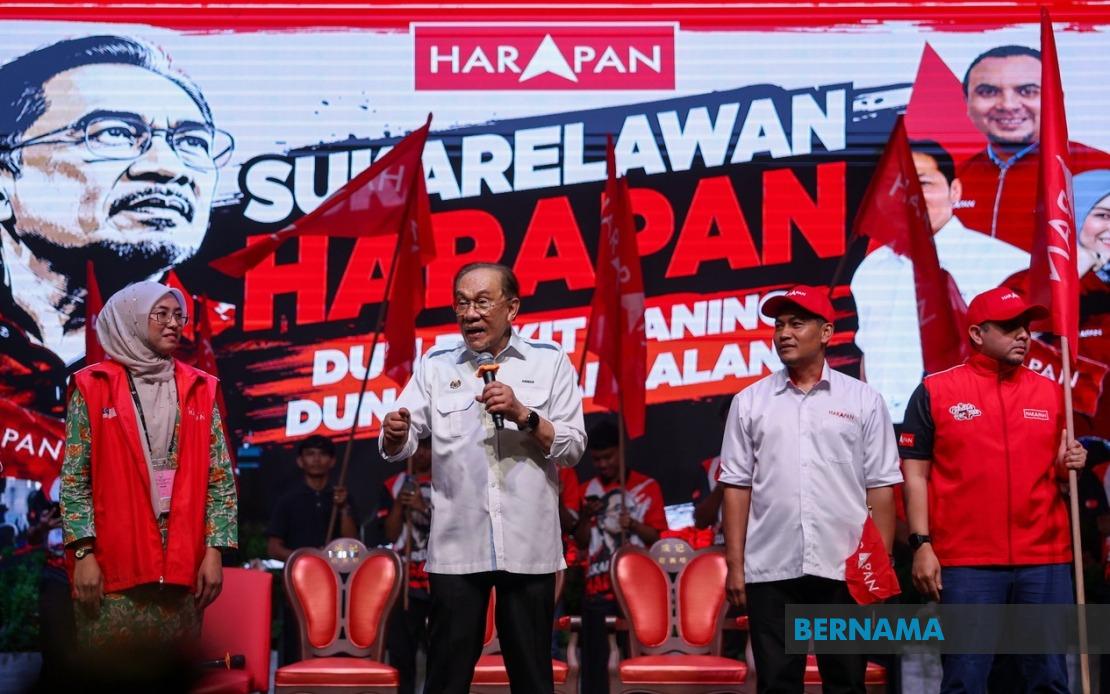
Prime Minister Datuk Seri Anwar Ibrahim has challenged Johor's young voters to reject divisive race-based politics, positioning the forthcoming state election as a defining moment for a generation determined to build an inclusive future. Speaking at campaign events in Muar on July 5, Anwar framed the electoral choice as fundamentally about selecting leaders capable of delivering tangible improvements to people's lives rather than pandering to ethnic anxieties.
The Pakatan Harapan chairman emphasised that contemporary governance ought to prioritise substantive policy outcomes over inflammatory messaging. Education quality, meaningful employment prospects, and broad-based state development represent the genuine preoccupations of voters, Anwar suggested, yet certain political actors persistently attempt to manipulate public sentiment through inflammatory narratives. He identified a pattern of cynical tactics designed to sow fear—depicting Chinese citizens as threatening, portraying Indians as untrustworthy, and amplifying perceived conflicts between Malay and Chinese communities. Anwar questioned the strategic logic of such approaches, noting that while ordinary citizens become consumed by manufactured grievances, political elites concentrate on personal enrichment removed from popular struggles.
Anwar directed his appeal particularly toward young Malays, Chinese and Indian voters, characterising the election as a pivotal opportunity for generational assertion and autonomous decision-making. The Prime Minister urged youth not to become passive victims of what he termed the country's "rotten political system," instead positioning themselves as active agents capable of determining their own collective trajectory. His framing transformed electoral participation from a routine civic duty into an act of generational self-determination and resistance against what he characterised as antiquated political manipulation.
The visible enthusiasm of younger voters at the Bukit Naning volunteer programme launch surprised even the veteran campaigner. Anwar, who has sustained political engagement for more than a decade, described the turnout as historic in character, reflecting deepening awareness among Malaysia's younger generation of their capacity to drive meaningful political change. This observation carries particular weight given ongoing concerns about youth disengagement from traditional political structures across the region. The substantial attendance suggested that messaging emphasising substantive governance over divisive rhetoric resonates powerfully with voters born after the 1998 Reformasi movement.
Anwar's broader argument positioned racial division as fundamentally incompatible with Malaysia's status as an established independent nation. He argued that attempts to deliberately ignite ethnic antagonism amount to sabotage against the national cohesion that has traditionally provided the foundation for Malaysia's relative stability. Political narratives promoting ethnic separation—discouraging friendships across communities, cultivating mutual suspicion, and fostering distrust—represent, in Anwar's characterisation, poisonous legacies of an earlier political era unsuited to contemporary Malaysia's multicultural reality.
The Prime Minister acknowledged Malaysia's demonstrated capacity for peaceful coexistence across its diverse population. Malays, Chinese, Indians and Orang Asli communities inhabit shared space, he observed, and have historically managed to maintain cooperative relationships grounded in reciprocal respect and mutual concern. Anwar's personal optimism regarding the nation's trajectory derived substantially from observing how younger Malaysians appeared to embrace this inclusive vision naturally, suggesting generational attitudes had shifted meaningfully toward pluralism.
Crucially, Anwar resisted characterising youth merely as beneficiaries of political decisions made by established elites. Instead, he positioned the younger generation as bearing direct responsibility for actively shaping Malaysia's future direction. This framing rejects passivity and implicitly criticises the tendency in Malaysian political discourse to treat young people as constituencies to be managed rather than as agents possessing both capacity and obligation to drive democratic processes. The Prime Minister explicitly encouraged youth to move beyond spectator status, distributing themselves throughout communities to articulate coherent messaging regarding the authentic possibility of political transformation.
The Johor state election scheduled for July 11 encompasses 172 candidates competing across 56 state constituencies, with early voting opportunities beginning July 7. The scale of this contest provides a significant testing ground for both established political coalitions and emerging political movements. For Pakatan Harapan specifically, Johor represents critical terrain given the state's economic importance and historical political significance within Malaysian federalism. Candidates including Nazri Abd Rahman for Simpang Jeram and Md Ysahrudin Kusni for Bukit Naning embodied PH's attempt to field competitive candidates across the state's geography.
Anwar's emphasis on youth mobilisation and generational leadership reflects broader strategic calculations within Malaysian politics. Demographic patterns indicate that younger voters increasingly constitute decisive electoral forces, yet they have historically demonstrated more volatile voting behaviour and lower consistent participation rates compared to older cohorts. By explicitly positioning youth as architects rather than merely participants in political processes, Anwar attempted to convert demographic trends into concrete electoral advantage. His messaging simultaneously challenged oppositional narratives that rely on ethnic mobilisation, suggesting that such approaches increasingly alienate younger voters orientated toward pragmatic governance criteria.
The theological reference in Anwar's remarks—invoking divine gratitude for Malaysia's continued peace—situated his political arguments within Islamic ethical frameworks familiar to Muslim Malaysian audiences. This rhetorical strategy allowed him to frame inclusive politics not merely as pragmatic governance but as religiously grounded moral imperative, potentially deflecting criticism from conservative religious constituencies that oppositional forces frequently mobilise. By anchoring pluralistic values within Islamic language and concepts, Anwar attempted to preempt objections framed around religious authenticity or cultural preservation.
The Johor campaign thus functions simultaneously as electoral competition and generational struggle over Malaysia's political future orientation. Whether youth voters ultimately embrace Anwar's vision of merit-based, development-focused governance divorced from ethnic mobilisation versus responding to alternative messaging will carry implications extending well beyond Johor's state assembly composition. The election represents a critical data point regarding whether Malaysian voters, particularly younger cohorts, have genuinely shifted toward post-ethnic political consciousness or whether established patterns of community-based political organisation retain substantial force.

