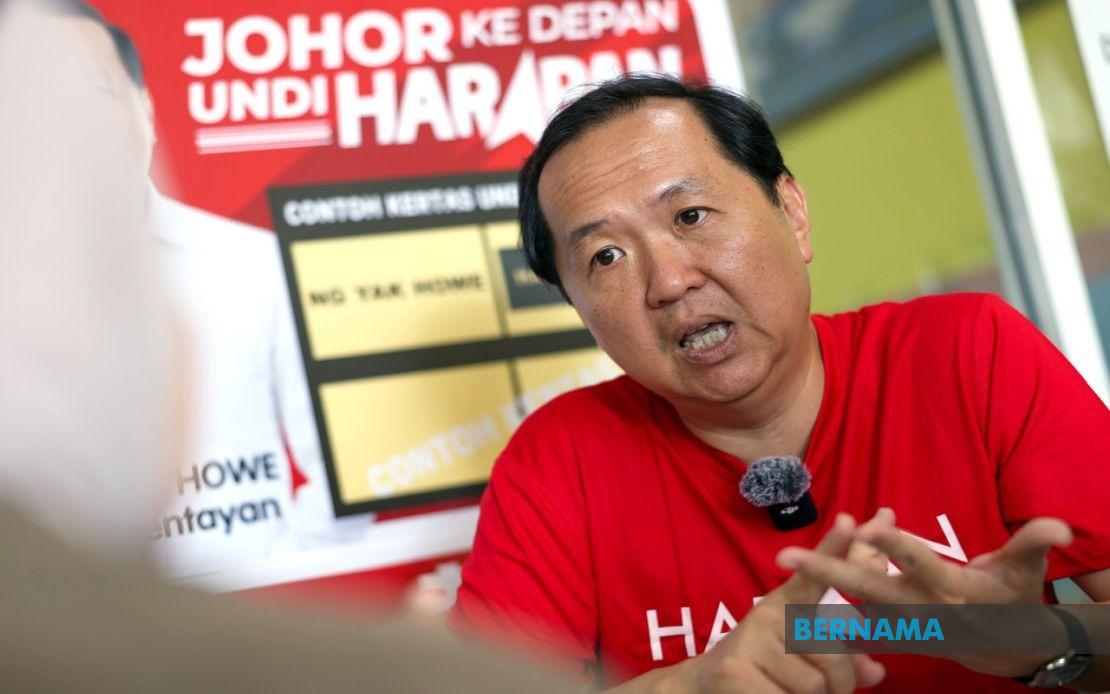
Ng Yak Howe, the Pakatan Harapan contender for the Bentayan state seat, has identified the deterioration of Muar town centre as a critical issue requiring immediate intervention ahead of Johor's upcoming polls. The incumbent assemblyman argues that reversing the trend of outward migration, which has left significant commercial spaces abandoned during non-business hours, is essential to the constituency's future prosperity and social cohesion.
The Bentayan seat encompasses more than half of Muar's traditional commercial district, a region that once bustled with activity throughout the day and evening. Today, the landscape has shifted dramatically. Premises stand empty after traders and office workers depart, their users having relocated to new suburban developments on the town's periphery. This pattern of urban decay is not unique to Muar but reflects broader demographic shifts across Malaysian towns, where newer commercial hubs and residential areas have siphoned vitality from historical city centres.
Ng's diagnosis of the problem centres on the need to make Muar town centre an appealing destination once again, particularly for younger demographics. His vision extends beyond simply maintaining existing businesses; it encompasses creating an environment where the town becomes a destination for leisure, commerce, and community engagement after traditional business hours conclude. This approach recognises that modern town centres must compete with shopping malls and suburban retail parks by offering experiences and attractions beyond routine shopping.
To translate this vision into concrete outcomes, Ng has collaborated with Tan Hong Pin, the Member of Parliament for Bakri, on economic stimulus initiatives designed to boost consumer spending in local establishments. These measures include cash voucher schemes and lucky draw campaigns, tools commonly deployed to incentivise patronage of independent retailers and small businesses. Such programmes acknowledge the precarious position of the 18 per cent of premises currently vacant in the town centre—spaces that represent lost economic opportunity and diminished urban vitality.
Ng brings a diverse professional background to his candidacy. Before entering full-time politics, he worked as a quality assurance engineer, accumulating more than a decade of industry experience that he claims equips him with practical problem-solving capabilities. His political trajectory spans over 25 years, and he currently holds a position on the Johor DAP committee, indicating his integration within the party's broader state apparatus. This experience differentiates him as an incumbent seeking his third consecutive term, suggesting continuity and established relationships with relevant government agencies and commercial stakeholders.
The electoral contest in Bentayan will be a two-way race between Ng and Chua Lee Huat, the Barisan Nasional nominee. The seat encompasses 34,205 registered voters, a constituency size typical of Malaysian state seats. This straight fight format, without a third-party challenger, simplifies the electoral calculus and may heighten the prominence of local, pocketbook issues such as town centre vitality and commercial activity—matters that directly affect residents' daily lives and economic prospects.
Muar's situation reflects challenges facing numerous Malaysian towns of historical significance. These centres developed as commercial hubs during earlier phases of urban development, often predating modern suburban expansion. When new commercial districts emerge on cheaper land at the town's edge, the original centre frequently struggles to compete, particularly when infrastructure improvements—wider roads, more parking, modern facilities—favour newer locations. Reversing such trends requires deliberate intervention, investment, and strategic vision rather than merely hoping market forces will restore former glory.
The revival narrative Ng champions carries broader implications for Johor's development strategy. As Malaysia's second-largest state continues to industrialise and urbanise, questions about maintaining liveable, vibrant towns become increasingly important. Successfully revitalising established town centres can reduce sprawl, improve resource efficiency, and preserve the social fabric of long-established communities. Conversely, allowing such decay to continue fragments urban areas into disconnected commercial zones lacking social cohesion or distinctive character.
Ng's platform demonstrates an understanding that electoral politics in Malaysia increasingly turns on practical governance matters affecting daily life. While state-level campaigns encompass broader policy frameworks, the capacity to address tangible local concerns—parking, commercial vitality, pedestrian safety, nighttime activity—resonates powerfully with voters. His engagement with traders during recent walkabouts indicates an effort to ground his campaign in direct community consultation rather than abstract promises.
The broader Johor election context matters here as well. With 172 candidates contesting across the state's 16 constituencies, voter attention remains fragmented across multiple races and personalities. Candidates who successfully localise national or state-level party platforms into specific constituency benefits gain electoral advantage. Ng's focused emphasis on Muar's particular challenges positions him as a representative concerned with his specific area's unique circumstances rather than simply a partisan functionary implementing party directives from above.
Beyond the immediate election, the Bentayan contest illustrates how Malaysian politics at the state level operates increasingly around service delivery and problem-solving. The revival of Muar town centre, should Ng return to office and pursue these initiatives, would generate either electoral credit through visible improvement or electoral blame through continued deterioration. This performance-based accountability, mediated through local media and community networks, increasingly shapes electoral outcomes in competitive constituencies.
Voters in Bentayan will render their judgment on July 11, with early polling occurring on July 7. The Bentayan race sits within the larger narrative of Johor's political direction, where Pakatan Harapan seeks to expand influence against the traditionally dominant Barisan Nasional. For Ng specifically, securing a third term will require convincing voters that his approach to town centre revival offers genuine promise and that his experience positions him to deliver results that matter to Muar's residents and business community.

