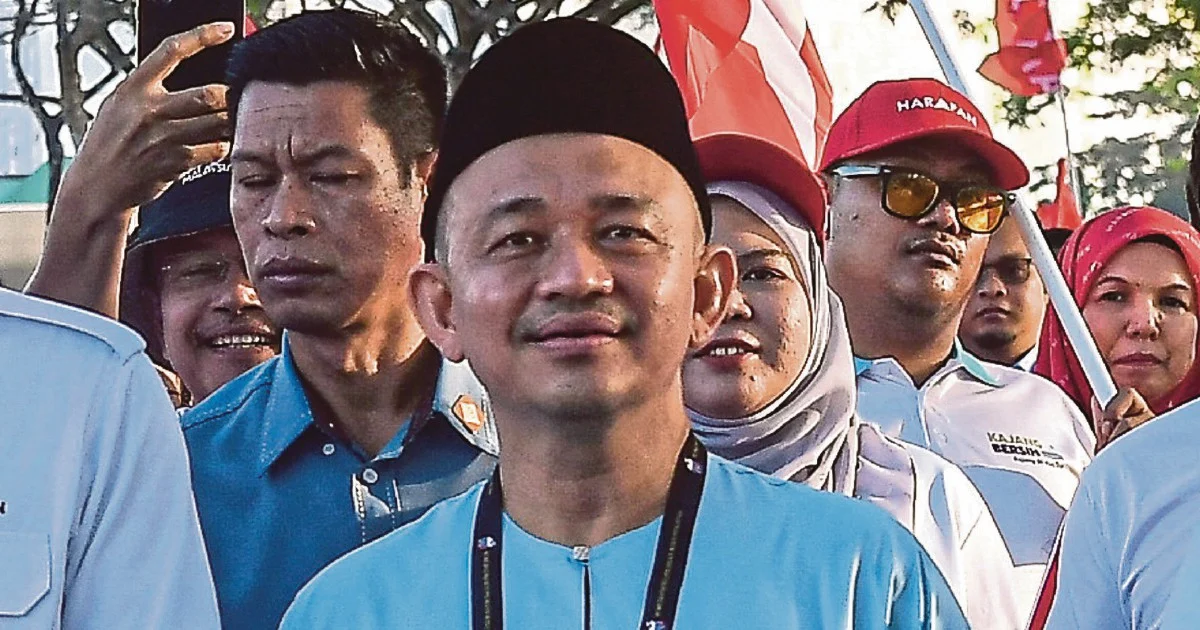
Former education minister Dr Maszlee Malik has projected that Pakatan Harapan's success across key constituencies, including Puteri Wangsa, will fundamentally reshape Johor's development agenda and signal a transformational shift in the state's governance direction. Speaking in Johor Baru, Maszlee framed the election outcome as a pivotal moment that extends beyond routine political cycles, instead presenting voters with a choice between competing visions for how Malaysia's second-largest state by population should evolve economically and socially.
The timing of this statement carries particular significance given Johor's strategic importance to Malaysia's overall economic health. The state remains one of the nation's most economically significant regions, hosting major manufacturing hubs, petrochemical facilities, and serving as a crucial trade corridor to Singapore. Any shift in state leadership therefore has ramifications that ripple beyond Johor's borders, affecting regional supply chains, foreign investor confidence, and employment patterns across Southeast Asia. Maszlee's language suggesting a "new chapter" implies that existing development priorities and resource allocation mechanisms require substantial recalibration under alternative administration.
Puteri Wangsa, singled out in Maszlee's remarks, represents a crucial battleground in Johor's electoral map. The constituency, located in Johor Baru district, encompasses both established residential areas and emerging development zones. A PH victory here would signal voter receptiveness to the coalition's policy platform, while simultaneously holding symbolic weight as a stronghold of urban, educated voters who increasingly influence state outcomes. The emphasis on this particular seat suggests it functions as a barometer for broader sentiment across Johor's more developed regions.
Packatan Harapan's positioning in this election builds upon the coalition's previous electoral successes in 2022, when it dramatically reshaped federal governance. However, state-level politics in Johor operate under different dynamics than national contests. Local issues, district-specific grievances, and the performance track records of individual assemblymen carry outsized influence. Urban constituents prioritize infrastructure quality, education facilities, and environmental management, while rural voters focus on agricultural subsidies and connectivity improvements. Maszlee's appeal to development outcomes implicitly acknowledges that PH must demonstrate competency across these diverse demands.
The claim that victory would usher in transformation warrants scrutiny within Johor's complex political landscape. The state has historically navigated multiple political transitions, each promising rejuvenation. What distinguishes Maszlee's framing is the specificity implied—rather than vague promises of improvement, the "new chapter" rhetoric suggests concrete policy reorientation. This could encompass shifting investment toward high-technology manufacturing clusters, reforming land use policies to balance development with environmental protection, or restructuring state budget allocations toward social services and education, areas where Maszlee's ministerial background lends credibility.
Malaysia's broader economic transition toward knowledge-based industries and digital transformation makes Johor's governance direction particularly consequential. As the nation seeks to reduce dependence on commodity exports and boost productivity, state governments play instrumental roles in implementing localized versions of these national strategies. A PH government in Johor could theoretically accelerate tech sector development, streamline business registration processes, and strengthen vocational training infrastructure—developments that would position the state advantageously within regional economic hierarchies dominated by Singapore and emerging Thai and Vietnamese industrial centers.
Opposition voices and incumbent administrations may counter that existing governance structures already deliver adequate development outcomes, and that leadership transitions introduce unnecessary disruption to ongoing projects and investor relationships. These arguments resonate particularly in states where incumbent parties can point to completed infrastructure works or attracted manufacturing investments. Maszlee's intervention suggests confidence that PH's platform resonates beyond incumbent achievements, appealing to voters who perceive current trajectories as insufficient or inequitably distributed.
The electoral campaign context matters significantly here. Johor has witnessed increasing political competition over recent election cycles, with voter margins narrowing in many constituencies. Declining incumbency advantages have created openings for opposition coalitions to frame themselves as vehicles for change rather than alternatives simply seeking power rotation. Maszlee's emphasis on development implications rather than partisan advantage attempts to elevate the conversation beyond tribal political competition, potentially widening PH's appeal among pragmatic voters primarily concerned with economic outcomes and service delivery quality.
For Malaysia's wider political ecosystem, Johor's election outcome will signal whether the 2022 federal realignment toward PH-led governance extends to state-level consolidation or whether voters continue compartmentalizing federal and state political preferences. Should PH substantially expand its Johor presence, it would reshape the coalition's leverage in federal-state coordination on major development initiatives, industrial policy, and resource sharing arrangements. Conversely, mixed results might indicate that local political dynamics remain sufficiently distinct from national trends to prevent sweeping realignments.
Maszlee's intervention positions him as a significant voice within PH's campaign machinery, suggesting the coalition is deploying former ministerial figures to lend policy specificity and credibility to its propositions. This strategy recognizes that development rhetoric requires grounding in substantive competency perceptions. Voters, particularly in economically sophisticated regions like Johor, increasingly demand evidence-based promises backed by demonstrable track records rather than abstract ideological commitments. Former ministers therefore serve as policy avatars, embodying claimed administrative capacity and reform commitment that generic party platforms cannot convey with equivalent force.

