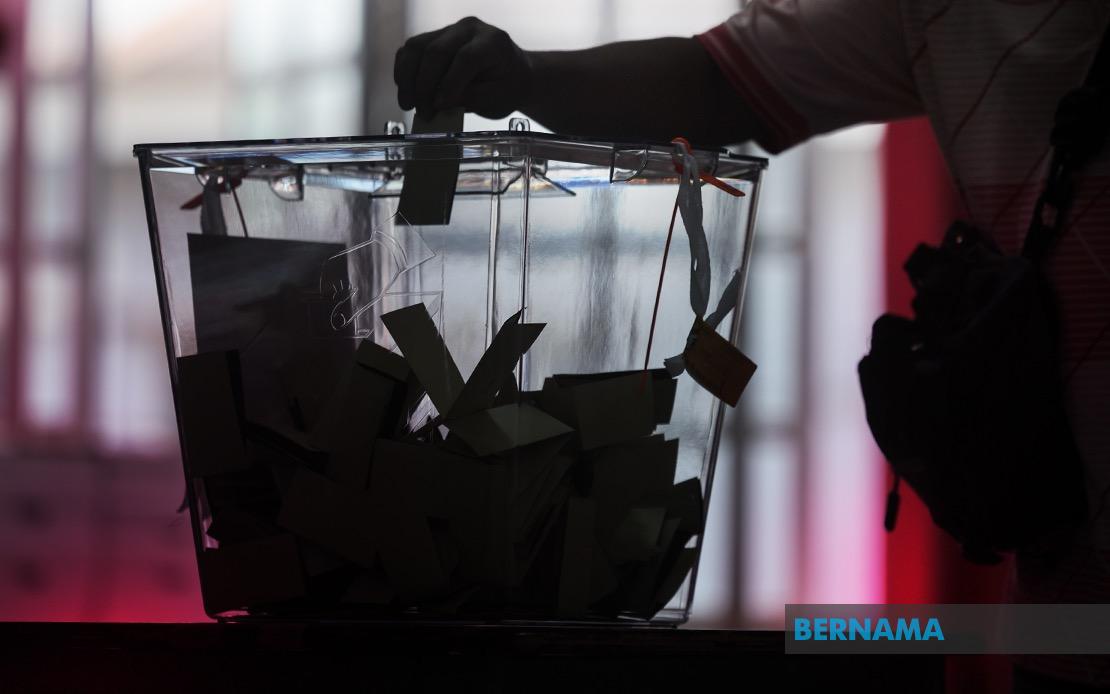
Johor's upcoming state election presents a critical variable that could reshape the political landscape in Malaysia's southern powerhouse: voter turnout. Political scientists argue that strong participation, especially among voters returning from outside the state, would substantially favour Pakatan Harapan in contests across urban and semi-urban constituencies. This dynamic reflects deeper shifts in voter behaviour and coalition strategy that extend beyond Johor itself, offering lessons for how Malaysian politics is transforming in the post-pandemic era.
Associate Professor Dr Mazlan Ali, a political analyst at Universiti Teknologi Malaysia's Kuala Lumpur Campus, contends that several factors position Pakatan Harapan to benefit from high election participation. Federal political stability, alongside measurable improvements in Malaysia's economic trajectory and tangible government assistance programmes, could motivate Pakatan supporters to prioritise voting, particularly those residing outside Johor who must travel home to cast ballots. These voters, according to Mazlan's analysis, believe their current living standards—encompassing political certainty, economic resilience, and subsidies on fuel—depend upon continuity of Pakatan administration both nationally and regionally.
The contrast between Johor's 2022 state election and the subsequent 15th General Election in the same year illuminates why turnout operates as a determinant of electoral outcomes. In the 2022 state poll, voter participation barely exceeded 50 per cent. The pandemic's lingering effects discouraged outstation residents from travelling home, creating an advantage for Barisan Nasional, whose base comprises entrenched local voters and established community networks. Barisan accordingly secured 40 state assembly seats. Yet only months later, general election turnout surged to approximately 75 per cent, fundamentally altering the arithmetic. Pakatan's popular vote exploded from roughly 350,000 votes in the state election to 830,000 in the federal contest, enabling the coalition to capture 14 parliamentary seats—representing a more than doubling of electoral support.
This historical comparison supplies the analytical foundation for current expectations. If comparable turnout patterns materialise in the present state election, the mathematical implications suggest Pakatan could substantially expand its state assembly representation. The mechanism is straightforward: outstation voters demonstrably lean toward Pakatan, and when they participate, they alter constituency-level vote tallies. Mazlan emphasises that the current election operates under markedly different conditions than 2022, with pandemic-related mobility restrictions eliminated and atmospheric indicators pointing toward greater willingness among distant voters to return home.
Urban and semi-urban constituencies emerge as the primary contest zones where turnout fluctuations will prove decisive. These areas host voter populations characterised by heightened responsiveness to governance performance, economic policy effectiveness, and broader questions of equity and institutional fairness. Voters in such constituencies—predominantly tertiary-educated, digitally engaged, socially mobile—gravitate toward Pakatan's messaging architecture, which centralises themes of justice, equitable distribution, and transparent governance. This cohort differs markedly from electorates primarily motivated by communal or religious considerations, suggesting demographic and ideological stratification in voting preferences.
Mazlan identifies outstation voters, younger electors, university-educated citizens, and those highly active across digital platforms as comprising Pakatan's core supporter base. These individuals are drawn to the coalition's narrative orientation and policy emphasis on fairness and accountability. Critically, such voters retain registration in their home constituencies despite residing elsewhere, making their turnout decision consequential. When they return to cast ballots, they frequently vote cohesively for Pakatan, potentially shifting the balance in constituencies where local support bases are divided or marginal.
The economic context underpinning these voting calculations deserves emphasis. Malaysian voters—particularly younger cohorts and professionals in urban centres—have experienced tangible benefits from federal economic stabilisation and government welfare initiatives. Fuel subsidies represent visible, regularly encountered benefits affecting household budgets. Broader macroeconomic improvements signal that political continuity delivers material advantages. These perceptions generate motivation to vote defensively, protecting the existing dispensation against perceived alternatives. For Pakatan supporters specifically, this translates into prioritising participation despite travel inconvenience.
Pakatan's strategic vulnerability lies not in policy attractiveness but in mobilisation execution. The coalition must convert potential support into actual votes, requiring sophisticated coordination to encourage outstation voters to make the journey home. Digital campaigns, community networks, and party machinery all operate to increase participation among sympathetic populations. However, logistical challenges—transportation costs, work obligations, competing demands—can suppress turnout among even motivated voters. The campaign's closing phases will test whether organisational capacity matches enthusiasm.
The regional dimensions of this Johor election extend beyond state boundaries. Malaysia's political centre of gravity has shifted toward Pakatan-governed territories, yet Barisan Nasional retains formidable organisational infrastructure and community relationships, particularly in rural and smaller urban areas. Johor, as a major economic and demographic centre, amplifies the stakes. A decisive Pakatan victory would consolidate the coalition's control over the nation's most economically significant regions, whereas Barisan success would demonstrate continued electoral competitiveness and revive its national prospects. This election therefore functions as a proxy assessment of Malaysia's evolving political settlement.
For Malaysian voters generally, the election underscores how participation itself shapes available choices and political outcomes. The 2022-to-2024 trajectory in Johor demonstrates that identical voter populations, when participating at different rates, produce radically different results. This reality emphasises that elections are not merely reflections of preferences but mechanisms through which collective preferences translate into institutional power. Higher turnout frequently amplifies the influence of more engaged, educated, and politically conscious voters—categories that in contemporary Malaysia lean progressively. Lower turnout conversely advantages entrenched, locally-rooted voter bases—traditionally benefiting conservative-leaning coalitions.
As election day approaches, Mazlan's analysis identifies the fundamental equation animating Johor's political contest: Pakatan benefits when outstation voters mobilise, Barisan benefits when they remain home. Each coalition's campaign therefore concentrates not merely on persuading undecideds but on managing turnout within populations already leaning toward them. The eventual result will reflect not only competing policy visions or candidate quality but the aggregated decision of thousands of voters about whether participating in this particular election justifies the time, cost, and effort involved. In that sense, Johor's 16th state election will ultimately be decided not only by those who vote, but by those who choose not to—and whether that choice advantages stability or change.

