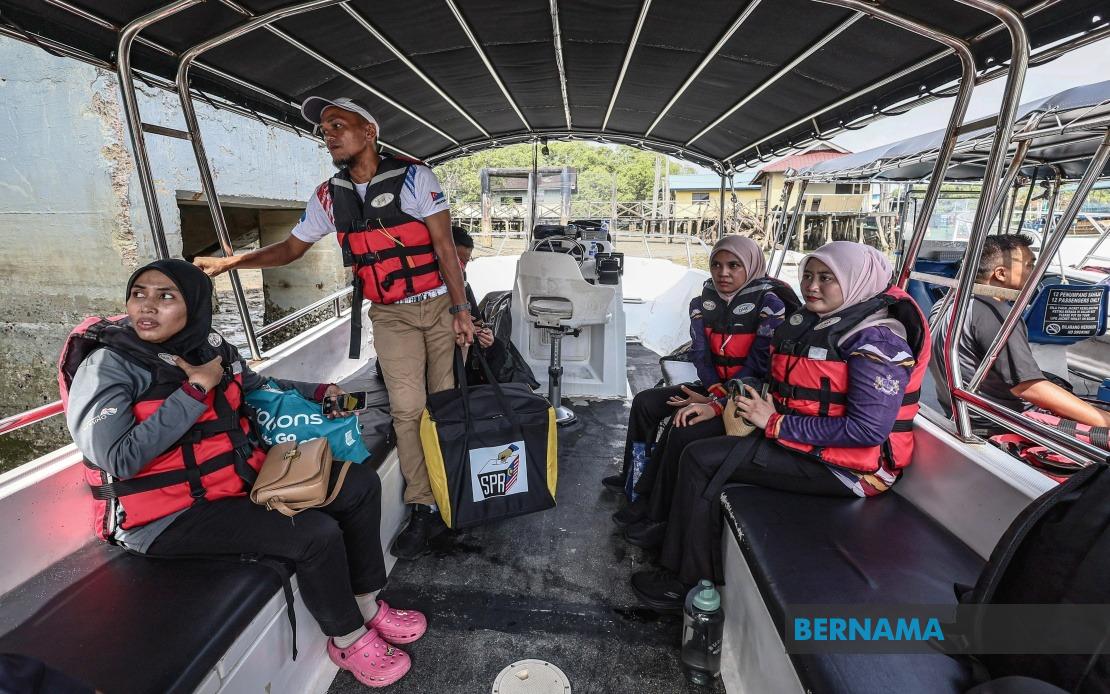
The machinery of electoral democracy proved a timely blessing for Johor's entrepreneurial class during the 16th state election, as small business operators from maritime transport to food retail discovered profitable opportunities amid the voting process. With over 2.6 million registered voters participating across the state, the surge in demand for services—both logistical and commercial—created a welcome spike in activity for operators who often navigate lean periods between electoral cycles.
Island communities presented the most obvious business opportunity, requiring specialist transport infrastructure to reach polling centres. Mustakim Shafie, who runs Island Eagle Boat Services & Island Hopping from his base in Johor Bahru, witnessed his operational capacity stretched to capacity as he balanced competing demands. His firm managed both official election commission personnel and voter transport simultaneously, handling nearly 50 islanders heading to cast ballots alongside the logistical responsibilities that electoral officials demanded. The 35-year-old proprietor, commanding a fleet of six speedboats, reported that booking volumes effectively doubled against his baseline operations—a substantial uplift in revenue that reflected the concentrated nature of election-day activity.
The economics of island transport proved substantial. Standard charter arrangements for multi-day packages ranged from RM4,000 to RM4,500 for three days and two nights of boat access, while single-journey ferry services for groups up to 18 passengers attracted fees around RM2,500. These figures underscore how maritime transport operators essentially provided critical democratic infrastructure while generating meaningful income. For operators like Mustakim, whose business model depends on tourism and occasional charter work, state elections represented concentrated periods where utilisation rates spiked dramatically and pricing power increased accordingly.
Veteran operator Hasrul Azmin Jumaat brought two decades of navigation expertise to the challenge of safe passage across the 76-kilometre, more than two-hour route to Pulau Aur. His experience managing unpredictable weather and variable sea conditions became a valuable asset when transporting voters who might prove anxious about maritime journeys. The reliability that comes from decades managing these waters—knowing seasonal patterns, understanding safety protocols, and maintaining equipment standards—transformed into a competitive advantage during periods when demand for maritime services intensified. Such specialists essentially function as custodians of electoral accessibility for dispersed communities that lack road-based alternatives.
Beyond the maritime sector, the election proved equally transformative for food service entrepreneurs positioned strategically near polling venues. The husband-and-wife partnership of Ismail Mad Hasim and Faradila Fairuz Mohd Affandi, operating a food stall beside Sekolah Kebangsaan Taman Sutera, benefited from the congregation of thousands of voters moving through their polling centre throughout the day. They reported customer arrivals commencing at 8 am, with particularly strong demand from early voters seeking refreshment before or after casting ballots. The couple drew on experience from previous general elections when they operated at the same location, suggesting that electoral events have become anticipated commercial opportunities in their annual business calendar.
The intersection of civic duty and commercial advantage created an interesting dynamic for these small operators. Despite managing brisk sales that likely extended their working hours and stretched their inventory, Ismail and Faradila committed to completing their stall operations in time to fulfil their voting obligations at the same polling centre. This pattern—vendors and operators doubling their daily income while maintaining their participation in the democratic process—illustrates how electoral events create genuinely inclusive economic activity. Unlike large-scale commercial enterprises that might monopolise such opportunities, these small businesses operated at neighbourhood scale, with proprietors remaining embedded in their communities.
The operational challenges for maritime transport operators extended beyond standard commercial considerations. Weather volatility and unpredictable sea conditions posed genuine risks to passenger safety and operational reliability during the election period. Operators bore responsibility for transporting sometimes anxious islanders unfamiliar with maritime travel, alongside election officials whose schedules proved rigid and non-negotiable. This combination required not merely commercial competence but also navigational judgement and communication skills—qualities that distinguished established operators from potential competitors.
From a broader Malaysian economic perspective, state elections demonstrate how concentrated participation events generate diffuse, small-scale commercial benefits across supply chains and service networks. Rather than concentrating wealth among large contractors, the mechanics of electoral administration and voter participation activate countless micro-entrepreneurs whose services prove essential to logistical and social functioning. Food vendors, transport operators, and accommodation providers—all experience revenue surges that may constitute meaningful portions of their annual income.
For Johor specifically, such economic stimulus carries particular relevance given the state's economic transition and reliance on diverse revenue streams. The maritime transport sector supporting island communities represents both a specialised niche and a critical service preventing geographic isolation from undermining democratic participation. Similarly, the constellation of small food businesses clustered around polling venues reflects informal economic activity that official statistics often undercount but which constitutes genuine livelihood support for thousands of households.
The scheduling of polling until 6 pm on election day compressed all voting activity into a single calendar window, intensifying demand for services during specific hours and creating the concentration that drove reported revenue increases. For small operators accustomed to more distributed customer flows, this temporary concentration represented a welcome departure from ordinary business rhythm. Yet it also underscored the vulnerability of businesses dependent on electoral cycles—operating environments where demand volatility remains structurally built into annual planning.

