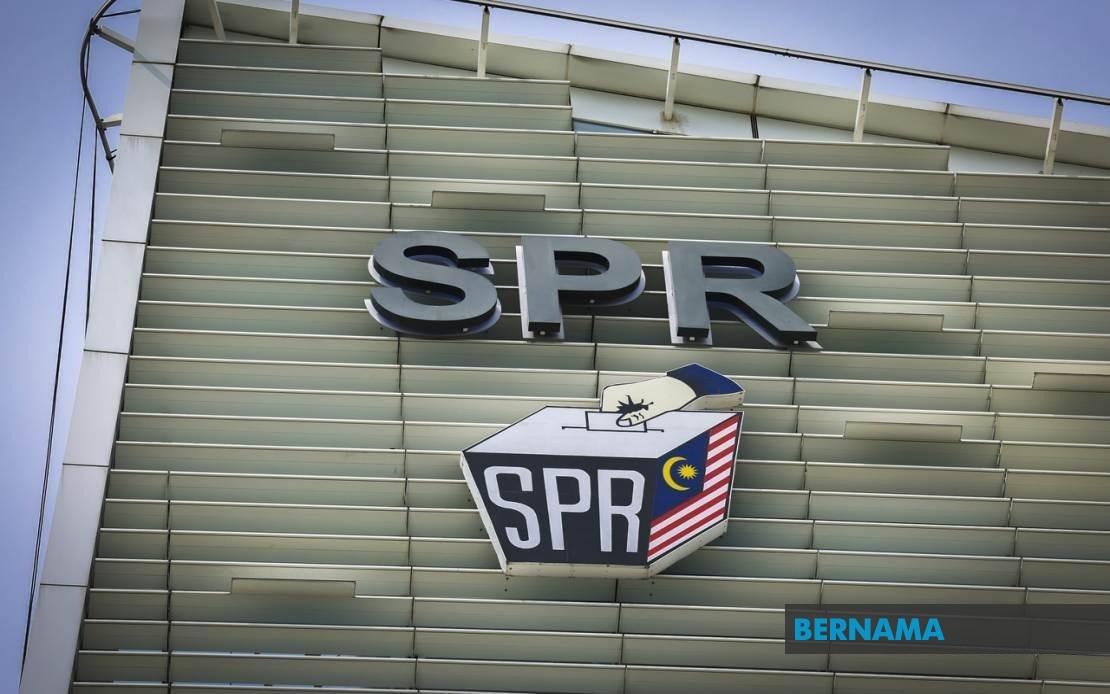
The Election Commission reported receiving 305 complaints and reports related to various campaign violations during the 16th Johor State Election campaign period through July 2, signalling sustained regulatory oversight as political parties and candidates contend for 56 state seats across the southern peninsula. The disclosures, communicated through an official statement, underscore the commission's active monitoring mechanisms and the diverse range of infractions occurring during what has proven to be a closely contested electoral exercise.
Campaign material placement emerged as the dominant source of violations, with 140 complaints centring on posters, banners, and other promotional items positioned in restricted zones designated by local authorities. This category alone accounts for roughly 46 per cent of all reported offences, reflecting persistent compliance challenges among political operatives unfamiliar with or indifferent to zoning restrictions imposed to maintain municipal aesthetics and regulatory clarity. Local government bodies have explicitly delineated these restricted areas, yet enforcement data suggests that candidates and party volunteers continue to contest or overlook these boundaries.
A further 90 complaints targeted campaign materials that obstruct drivers' sightlines or disrupt traffic flow, representing the second-largest category of violations. These infractions carry particular public safety implications, as improperly placed billboards and signage adjacent to major roadways can distract motorists and potentially contribute to accidents. The sheer volume of such complaints hints at a systemic pattern rather than isolated incidents, suggesting that traffic-related material placement requires ongoing education among campaign teams regarding road safety regulations and their integration with electoral law.
The remaining violations encompassed 27 complaints involving materials placed within the statutory 50-metre radius surrounding polling centres, a protected zone designed to preserve the neutrality of voting venues and prevent voter intimidation or undue influence. Beyond these three primary categories, an additional 48 complaints involved miscellaneous offences under the Election Offences Act 1954, capturing breaches that do not fit neatly into the established typologies but nevertheless warrant investigation and corrective action.
To manage the anticipated volume of violations, the Election Commission established 56 dedicated Election Campaign Enforcement Teams across Johor, each tasked with investigating complaints and implementing enforcement actions under the Election Offences Act 1954. The commission stated that all reports and complaints falling within the purview of these enforcement teams have received appropriate follow-up attention, though it did not specify the nature of remedial measures taken or the timeline for resolution. This assertion of responsiveness, while reassuring in principle, leaves open questions about deterrent effectiveness and whether penalties sufficiently discourage future violations.
The campaign period, which commenced on nomination day June 27 and extends until July 10 at 11:59 pm, has generated a level of violation reporting consistent with previous state elections, reflecting both the complexity of multi-party contestation and the evolving sophistication of campaign machinery that sometimes tests regulatory boundaries. The intensity of complaints underscores the competitive nature of the election, in which 172 candidates are vying across the 56 available state seats, ensuring vigorous ground-level activity and heightened visibility of campaign materials throughout Johor's urban and suburban landscapes.
Collaborative enforcement represents a cornerstone of the commission's regulatory architecture. The Election Commission has explicitly emphasised its cooperative arrangements with the Royal Malaysia Police, the Malaysian Anti-Corruption Commission, and the Malaysian Communications and Multimedia Commission, signalling a whole-of-government approach to electoral integrity. This multi-agency framework addresses not only traditional campaign offences but also digital misinformation, financial irregularities, and law-and-order concerns that might otherwise escape detection under a single regulator's remit. The inclusion of MCMC suggests heightened vigilance regarding online campaign conduct, an increasingly critical dimension of electoral management in the digital age.
The commission's public appeal to candidates and political parties to comply with electoral laws, ethical codes, and regulatory directives comes as the campaign enters its final phase. This exhortation, while routine in procedural terms, carries symbolic weight as a reminder that electoral legitimacy depends on collective adherence to established rules. Political parties operating at the federal and state levels have internal mechanisms to enforce discipline among candidates, yet grassroots volunteers and lower-tier operatives sometimes act autonomously, creating compliance gaps that formal warnings must attempt to narrow.
The election itself proceeds according to schedule, with early voting scheduled for July 7 and general polling day set for July 11. The compressed timeframe between the conclusion of the campaign period and election day leaves minimal room for last-minute violation surges, though the final days of campaigning often witness intensified material placement activities as candidates seek maximum visibility. The enforcement teams' continued vigilance during this critical window will test both their capacity and the political maturity of competing parties to respect regulatory constraints in pursuit of electoral advantage.
From a broader regional perspective, Johor's electoral conduct carries implications for Malaysian democracy and the institutional health of the Election Commission itself. As Southeast Asia's third-largest economy and a state with significant demographic diversity and political contestation, Johor serves as a barometer for electoral administration practices. The commission's willingness to publicise violation data and enforcement mechanisms transparently contributes to public confidence in the electoral process, even as the underlying frequency of violations prompts reflection on whether existing penalties and enforcement strategies sufficiently incentivise compliance among an increasingly sophisticated and competitive political class.

