The campaign machinery in Johor has shifted into overdrive as political parties across the spectrum orchestrate their closing moves ahead of the 16th Johor State Election, with the formal campaigning period ending at 11:59 pm tonight. The intensity reflects the significance of the contest, which determines control of a state that historically serves as a bellwether for national electoral trends and as a crucial economic engine for Malaysia's development agenda.
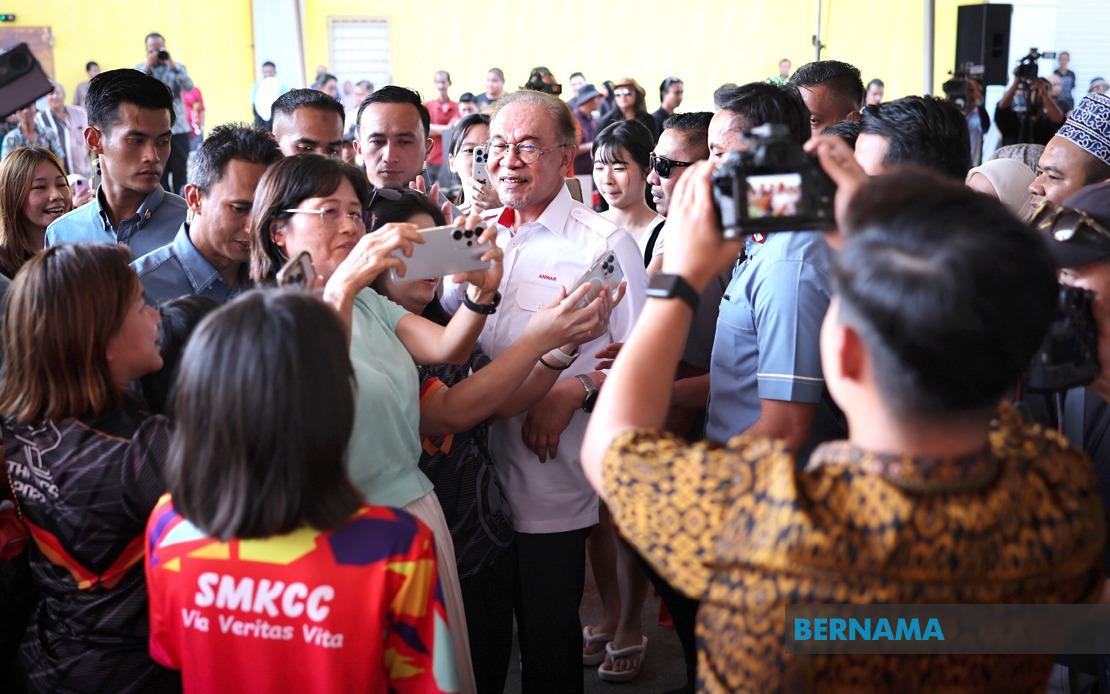
Pakatan Harapan has positioned Prime Minister Datuk Seri Anwar Ibrahim as the coalition's headline act for the final push, embarking on a targeted tour of five pivotal constituencies to energise candidates and supporters. The itinerary spans from Bukit Gambir through Bukit Batu and Layang-Layang, culminating in the 'Johor Ke Depan, Undi Harapan Grand Finale Programme' in Pasir Gudang. The choice of these constituencies underscores PH's strategic assessment of where ground support remains contested and where organisational momentum could swing outcomes. Anwar's personal involvement signals the coalition's investment in the state outcome and reflects the symbolic importance attached to retaining influence in a state that once formed part of its traditional support base.
Meanwhile, Pakatan Harapan candidates are adopting diverse tactical approaches suited to different electoral environments. In the Larkin seat, candidate Suhaizan Kaiat opted for grassroots engagement through shopping mall walkabouts alongside Parti Amanah Negara Vice President Datuk Seri Dr Dzulkefly Ahmad, attempting to create intimate voter interactions that translate campaign messaging into personal connections. Suhaizan's framing of accumulated voter feedback as a responsibility to be shouldered if elected appeals to a sense of accountability that resonates with voters increasingly attuned to questions of governmental responsiveness.
Barisan Nasional's approach has emphasised spiritual and emotional appeals to the Johor electorate. Deputy Prime Minister and BN Chairman Datuk Seri Dr Ahmad Zahid Hamidi participated in the 'BN Grand Supplication & Doa Selamat' event in Kulai, positioning the election within a spiritual framework that reinforces traditional voter alignments. The incumbent Johor Menteri Besar Datuk Onn Hafiz Ghazi took a notably introspective tone, publicly apologising through a Facebook video for any administrative shortcomings during his tenure. This approach of acknowledging imperfection rather than projecting invulnerability represents a calculated risk that aims to disarm criticism by preempting it, potentially appealing to voters fatigued by defensive political rhetoric.
Malaysia United Democratic Alliance (MUDA) and Bersama, representing newer political forces seeking to expand their foothold, concluded campaigns through high-profile finale events. Bersama mobilised the prominent alliance of Datuk Seri Rafizi Ramli and Nik Nazmi Nik Ahmad for their closing ceramah, with Rafizi promising to synthesise and counter issues raised throughout the campaign. This approach positions Bersama as an ideological alternative willing to engage directly with substantive policy debate rather than relying solely on personality politics or institutional machinery.
MUDA President Amira Aisya Abd Aziz's closing messaging focused on voter empowerment, emphasising the decisive power wielded by Johor's electorate. This rhetorical strategy appeals to voters seeking validation that their individual choices matter within Malaysia's political system, a message particularly resonant among younger demographics potentially disengaged from traditional party structures. The explicit emphasis on voter agency distinguishes MUDA's positioning from establishment players who often assume voter compliance based on party machinery or historical voting patterns.
Bersatu, competing within the broader anti-Pakatan Harapan coalition, continued its separate campaign identity through President Tan Sri Muhyiddin Yassin's final appeals. Muhyiddin's characterisation of the two-week campaign as a period for voters to gather information and make informed choices frames the election as an exercise in rational deliberation rather than tribal party loyalty. This intellectual appeal targets educated swing voters and represents an attempt to present Bersatu as a governing alternative rooted in analytical governance rather than purely factional interests.
The meteorological forecast for polling day provides an operational context for campaign planning and voter mobilisation. The Malaysian Meteorological Department's prediction of clear morning conditions with afternoon thunderstorm potential affects both campaign activities and logistical arrangements for moving voters to polling stations. Such considerations particularly impact rural and semi-urban constituencies where weather conditions may significantly influence turnout patterns.
With 172 candidates competing for 56 state legislative seats, the Johor election encompasses extraordinary complexity in terms of voter choice and party representation diversity. This candidate density reflects the state's population scale and economic importance but also illustrates the fragmentation within Malaysian politics as smaller parties and independent candidates proliferate. The concentration of resources in strategic constituencies by major coalitions highlights how political competition in Malaysia increasingly focuses on battleground seats rather than attempting comprehensive coverage across all constituencies.
The closing hours of campaigning reveal the distinct campaign philosophies now prevalent in Malaysian politics. Pakatan Harapan emphasises forward-looking governance narratives and coalition unity across diverse parties. Barisan Nasional combines spiritual and traditional appeals with acknowledgement of governance challenges. Newer players like MUDA and Bersama position themselves as alternatives offering different values or more aggressive opposition to incumbent approaches. These divergent strategies reflect not merely tactical differences but fundamental disagreements about what Malaysian voters prioritise in state-level governance and what role political institutions should occupy in democratic society. The election outcome will indicate which approach currently resonates most powerfully with Johor's electorate.

