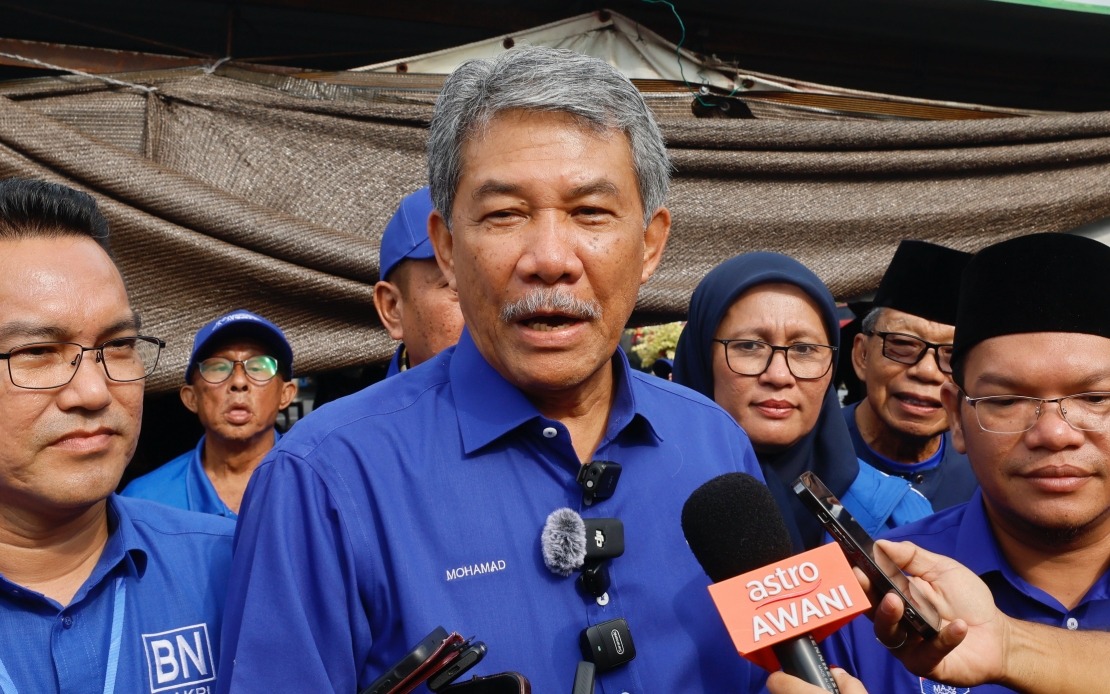
The Johor state election campaign must maintain standards of political maturity while eschewing personal attacks to safeguard national stability, according to UMNO deputy president Datuk Seri Mohamad Hasan. Speaking during an engagement with voters from the Tiram state constituency in Johor Bahru, Mohamad stressed that all contesting parties retain the freedom to articulate their policies and present their visions to the electorate, yet this liberty comes with an implicit responsibility to preserve the cooperative framework underpinning the Unity Government at federal level.
The distinction Mohamad drew between robust policy debate and corrosive personal acrimony reflects growing awareness among senior coalition figures that intense state-level contests risk fraying the delicate consensus that holds Malaysia's federal administration together. With the Pakatan Harapan-Barisan Nasional alliance navigating significant domestic and economic challenges, disruption to their working relationship could carry disproportionate consequences for Malaysia's political trajectory. His remarks underscore a particular sensitivity among UMNO leadership about maintaining both competitive credibility within their own base whilst signalling restraint to coalition partners.
Moreover, Mohamad articulated a nuanced position on the permissibility of political banter within acceptable boundaries. He indicated that good-natured ribaldry and reciprocal teasing between political actors constitute normal democratic interchange and warrant no concern. The threshold crossed only when such exchanges acquire a genuinely personal dimension that penetrates the individual character or integrity of opponents, rather than merely challenging their policy prescriptions or governing philosophies. This calibration reflects a pragmatic understanding that entirely sanitised campaigns lack credibility among voters, whilst simultaneously acknowledging that certain rhetorical escalations genuinely threaten institutional cohesion.
Particularly significant was Mohamad's direct refutation of speculation linking the Johor state election to efforts designed to secure the release of former Prime Minister Datuk Seri Najib Tun Razak. Such theories have circulated within certain political commentary circles, apparently feeding broader anxieties about institutional independence and the supremacy of law. By dismissing these allegations as unfounded, Mohamad reasserted Malaysia's commitment to legalistic governance frameworks and reaffirmed UMNO's stated deference to constitutional principles.
The structural argument underpinning Mohamad's dismissal of the Najib-liberation narrative merits careful examination. He observed that a Johor state election concerns the formation of a state-level administration possessing no direct constitutional authority over federal pardon mechanisms. The power to grant pardons derives exclusively from the Federal Government and ultimately rests as the prerogative of the Yang di-Pertuan Agong, a prerogative carefully insulated from state executive interference. This hierarchical separation of powers, Mohamad emphasised, cannot and should not be circumvented through state-level political manoeuvres. His invocation of the Agong's institutional position and constitutional authority carried unmistakable weight, reflecting the monarchy's importance as a stabilising force within Malaysia's political architecture.
For Malaysian observers and regional analysts, Mohamad's comments illuminate broader tensions within the ruling coalition as it confronts simultaneous pressures: sustaining internal competition that maintains democratic vibrancy and party discipline, whilst protecting federal institutional stability at a time when economic headwinds and policy disagreements test coalition cohesion. The Johor election, as one of Malaysia's most significant state contests and a traditional UMNO stronghold, assumes outsized importance in gauging both coalition durability and public confidence in the current federal arrangement.
The election itself encompasses substantial competitive stakes. A total of 172 candidates are contesting 56 seats in the Johor State Legislative Assembly, distributed across the state's diverse demographic and geographic constituencies. The polling is scheduled for July 11, with early voting commencing on July 7. This timeline compresses the campaign period into an intense sequence requiring disciplined party machinery and focused messaging across multiple constituencies simultaneously.
Mohamad's dual roles as UMNO deputy president and Foreign Minister situate him as a significant voice articulating how the party reconciles its electoral ambitions with broader governance responsibilities. His previous tenure as Johor Menteri Besar provided him with substantial credibility within the state's political ecosystem and granted him intimate familiarity with the constituencies and voter concerns that drive Johor elections. This background lends weight to his cautions about maintaining campaign discipline.
The appeal for prudent campaigning assumes particular relevance given Malaysia's recent political volatility. The shift from Pakatan Harapan governance following the 2018 general election to subsequent administrations, culminating in the current Unity Government arrangement, reflected considerable public disengagement and diminished confidence in political institutions. Excessive negativity or perceived bad faith during state campaigns risks accelerating such disengagement, particularly among younger voters already sceptical of traditional parties.
Conversely, the UMNO leadership's evident concern about protecting federal stability while competing vigorously at state level suggests recognition that the current coalition configuration, whilst functional, lacks the deep institutional roots and genuine ideological coherence that might weather more acute political turbulence. State elections therefore become microcosms for testing coalition resilience and coalition partners' commitment to managing competition constructively.
Mohamad's emphasis on law's supremacy and institutional propriety strikes a cautious note against the speculative narratives that have occasionally undermined public confidence in Malaysia's legal and political institutions. By explicitly rejecting the Najib-pardon nexus and grounding his argument in constitutional architecture, he attempted to signal that institutional independence and rule-based governance remain operative principles, notwithstanding occasional political pressures that might suggest otherwise.
For Southeast Asia broadly, Malaysian state elections carry relevance beyond domestic boundaries. Malaysia's federal structure and coalition-based governance model operate within a regional context where democratic consolidation remains contested and institutional stability cannot be assumed. How Malaysia manages competitive federalism—balancing vigorous state-level competition against national-level cooperation—offers lessons for neighbouring democracies navigating analogous challenges. Mohamad's articulation of this balance, though framed through immediate campaign concerns, contributes to broader regional conversations about democratic sustainability.

