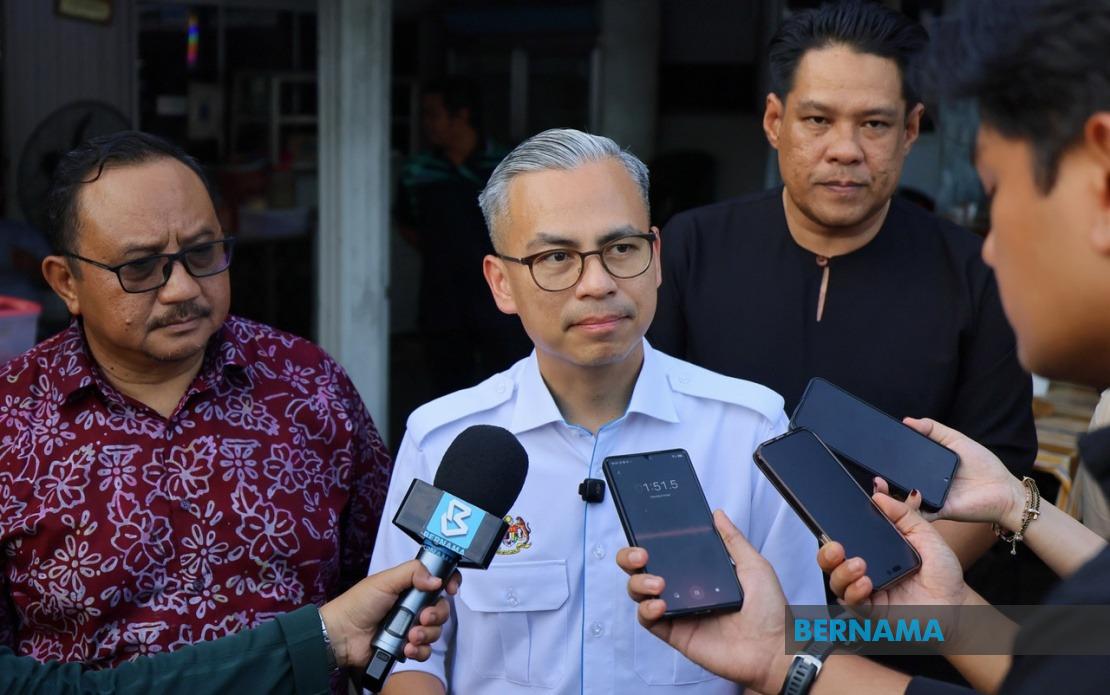
As the Johor State Election enters its decisive phase, Communications Minister Datuk Fahmi Fadzil has issued a pointed appeal to all political contestants to ground their campaigns in verifiable facts rather than resort to character assassination and unfounded accusations. Speaking in Batu Pahat on June 26, Fahmi emphasised that the electoral process depends fundamentally on maintaining democratic decorum and legal compliance, setting expectations ahead of nomination day on June 27 and polling scheduled for July 11.
The minister's message reflects deepening concerns about the tone and tactics that have characterised recent electoral contests across Malaysia. Rather than allowing campaigns to devolve into personal attacks or misinformation, Fahmi stressed that political parties, their organisational machinery, and grassroots supporters bear a collective responsibility to elevate the standards of public discourse. The Election Commission and Royal Malaysia Police stand ready to enforce the law against those who cross the line from robust political debate into unlawful conduct, signalling that enforcement mechanisms exist and will be deployed if necessary.
Fahmi's position carries particular weight given his portfolio overseeing communications policy. The government has tasked the Malaysian Communications and Multimedia Commission with strengthening its capacity to identify and suppress false narratives circulating on digital platforms, working in collaboration with major social media companies. This expanded monitoring extends explicitly to sensitive domains—matters involving the Royalty, Religion, and Race—where misinformation can inflame communal tensions and undermine social stability. The emphasis on proactive content management reflects the reality that in Malaysia's multicultural context, irresponsible campaigning carries risks that extend beyond electoral politics into broader societal cohesion.
To support journalists covering the election comprehensively, the authorities have established infrastructure designed to ease reporting logistics across the campaign period. A centralised media hub has been set up in Johor Bahru, while the National Information Dissemination Centre network—with facilities located in each State Legislative Assembly constituency—offers journalists accessible workspace and connectivity to file stories. This provision acknowledges the press's role in holding candidates and parties accountable by ensuring they possess the practical resources needed to pursue sustained, on-the-ground coverage. The availability of these facilities throughout all constituencies democratises access to reporting infrastructure and reduces logistical barriers that might otherwise limit coverage depth.
Parallel to these governance measures, Fahmi indicated responsiveness to constituency-level grievances brought to his attention. Batu Pahat Member of Parliament Onn Abu Bakar had flagged concerns about internet service disruptions and connectivity dead zones affecting residents in the area. Rather than dismissing such complaints as peripheral to electoral administration, Fahmi committed to having the communications ministry investigate these issues urgently through the MCMC. This approach reflects an understanding that functional digital infrastructure is now integral to economic opportunity and social participation, and that electoral periods provide an opportune moment to surface and address long-standing service deficiencies that might otherwise remain unattended.
Onn's characterisation of such platforms as conduits for direct constituent feedback highlights how elected representatives can leverage government engagement programs to channel local concerns through formal channels. In a political system where grievances sometimes fail to reach responsive agencies through conventional complaint mechanisms, structured forums offer an alternative pathway for issues to receive ministerial attention. For a parliamentary constituency like Batu Pahat, ensuring that internet connectivity problems are escalated and resolved carries tangible implications for voters' economic participation and access to digital services.
The Johor State Election, following the State Assembly's dissolution on June 1, will determine control of a state assembly with significant economic and political importance within Malaysia's federal structure. The campaign period—roughly two weeks from nomination to polling—represents a compressed timeframe in which candidates must build support while authorities maintain oversight of electoral conduct. Fahmi's intervention, timed to precede nomination day, establishes clear boundaries for acceptable campaign conduct and signals government commitment to protecting electoral integrity against deterioration into disinformation and personal attacks.
The distinction Fahmi draws between factual debate and slanderous campaigning acknowledges an inherent tension in democratic politics: candidates must be free to criticise opponents' records and policy positions, yet that freedom carries corresponding responsibility to remain grounded in demonstrable reality. The challenge lies in distinguishing between sharp but legitimate criticism and claims that cross into false or defamatory territory. By invoking both the Election Commission's regulatory authority and police enforcement capacity, Fahmi indicates that this line is not merely aspirational but subject to legal consequences.
For Malaysian voters in Johor and observers across the region, this election offers a case study in how established democracies attempt to maintain standards of campaign conduct while preserving genuine political competition. The integration of fact-checking infrastructure through MCMC collaboration with platforms, combined with traditional enforcement mechanisms, represents a multifaceted approach to combating misinformation. Yet such measures depend ultimately on political participants' willingness to internalise norms of factual accuracy and on the public's capacity to distinguish credible claims from baseless accusations.
The government's provision of media infrastructure and commitment to investigating service disruptions suggest an administration attempting to balance electoral oversight with responsiveness to constituent concerns. For journalists covering the campaign, access to NADI facilities and the central media hub in Johor Bahru should enable more sustained reporting from multiple constituencies, potentially deepening public understanding of local issues and candidate platforms. This infrastructure investment, while seemingly administrative, carries implications for the quality of electoral information available to voters.
As nomination day approached, Fahmi's message served as both aspiration and warning: campaigns ought to reflect Malaysian voters' diversity and democratic maturity, or legal consequences would follow breaches of electoral law. Whether political contestants will heed this guidance remains to be seen; the weeks between nomination and polling would demonstrate whether the 16th Johor State Election would set new benchmarks for decorous campaigning or repeat patterns of recent contests marked by acrimony and contested claims.

