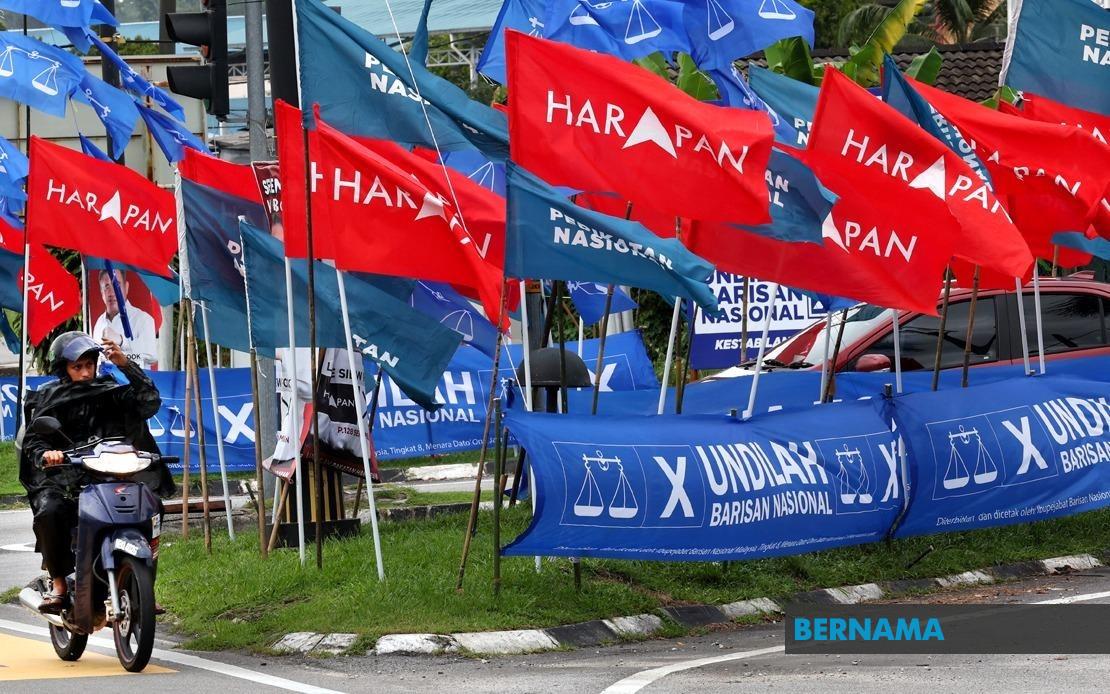
The Johor state election campaign has reached its climactic phase as the 172 candidates vying for 56 seats across the peninsula's southern state enter the closing stretch. With campaigning set to conclude at midnight on Friday, the intensity on the ground has dramatically increased, with all three major coalition blocs deploying their senior figures and executing sophisticated ground operations to maximise voter engagement. The final push reveals much about the competitive dynamics shaping Malaysian electoral politics and the strategic calculations of Pakatan Harapan, Barisan Nasional, and Perikatan Nasional as they vie for control of Johor's state assembly.
Pakatan Harapan's strategy in these closing hours centres on mobilising its grassroots machinery while leveraging the star power of Prime Minister Datuk Seri Anwar Ibrahim, whose presence on the campaign trail signals the national coalition's determination to retain influence in Johor. The scheduling of three strategic campaign appearances tonight, including a prominent stop at the Puteri Wangsa constituency, underscores the importance PH places on certain battlegrounds. Puteri Wangsa has emerged as a closely watched seat, suggesting it may be among the marginal contests where the election outcome could be decided. PH's Puteri Wangsa candidate Maszlee Malik's social media appeals for voter turnout at the "Grand Finale Harapan Johor Selatan" rally demonstrate how modern political campaigns blend traditional mass rallies with digital engagement strategies to reach multiple voter segments simultaneously.
The commitment shown by PH candidates reflects the high stakes involved. Dr A. Ruban, contesting Paloh, exemplifies this determination by returning to campaigning after only a brief pause for medical treatment, a symbolic gesture underscoring the physical and mental demands placed on candidates during election cycles. Similarly, Johor PKR chairperson Datuk Seri Dr Zaliha Mustafa's participation in a motorised convoy involving 120 motorcyclists in support of Kemelah candidate Mohd Afif Abd Hamid illustrates how parties are deploying varied campaign tactics to reach voters across different demographics and geographic settings. These activities suggest that PH remains organised and energised despite the gruelling pace of campaigning.
Barisan Nasional's approach emphasises continuity and local governance achievements as its central message. Coalition chairman Datuk Seri Dr Ahmad Zahid Hamidi's final visits to Endau and Kempas constituencies signal BN's focus on consolidating support in areas where it may face its strongest challenges. The participation of Johor Menteri Besar Datuk Onn Hafiz Ghazi, who himself is contesting Machap, provides BN with a local governance narrative to present to voters. The incumbent coalition's emphasis on development programmes, as reflected in Larkin candidate Mohd Hairi Mad Shah's "Ziarah Kasih" community engagement initiative, suggests BN is banking on appeals to continuity and proven delivery rather than transformative change. This represents a conventional electoral approach by the coalition seeking to retain state control.
Perikatan Nasional's strategy involves using its Islamic credentials and populist messaging to challenge both establishment coalitions. The arrangement of a mega rally in Endau featuring PN chairman Datuk Seri Ir Dr Ahmad Samsuri Mokhtar alongside PAS president Tan Sri Abdul Hadi Awang signals PN's effort to present itself as a cohesive alternative to the PH-BN competition. This cooperation within the PN framework, which includes significant PAS representation, allows PN to leverage religious and communal networks in its campaign. Kahang candidate Mazlan Bujang's explicit commitment to intensive door-to-door campaigning through the final hours reflects PN's reliance on sustained ground organisation to compete against better-resourced opponents.
The presence of newer entrant Parti Bersama Malaysia, conducting campaigns through innovative "Bersama Tour Truck" initiatives and community dialogue sessions, illustrates how electoral competition in Malaysia continues to evolve beyond the traditional three-coalition framework. Bersama's candidate Sahrudin Omar in Kota Iskandar and Norsinah Abu in Larkin represent attempts by smaller political entities to carve out space in a crowded political marketplace. These campaigns, while less visible than those of major coalitions, demonstrate how Malaysian electoral politics accommodates multiple political voices and strategies.
The intensity of final-stage campaigning across all parties reflects several underlying dynamics. First, the perceived competitiveness of multiple marginal seats creates genuine uncertainty about the election outcome, motivating sustained effort by all candidates. Second, the availability of national-level leaders indicates that Johor retains significant importance in the broader Malaysian political context, being Malaysia's second-largest state by population and a historically important political entity. Third, the diversity of campaign tactics employed—from large rallies to intimate community meetings to digital mobilisation—reveals how contemporary Malaysian politics operates across multiple channels simultaneously, requiring candidates to maintain presence and visibility across traditional and modern platforms.
The 13 days of campaigning leading to this final stretch have tested candidates' stamina, message discipline, and organisational capacity. The continued high energy evident across all camps suggests that Malaysian electoral campaigns, while regulated in duration, extract substantial commitment from participants. The focus on direct voter engagement through door-to-door visits, community sessions, and personal appearances indicates that despite digitalisation and media sophistication, face-to-face political interaction remains central to Malaysian electoral competition. This reflects both the importance of personal networks in Malaysian political culture and the limitations of media-driven strategies in reaching all voter segments effectively.
The implications of this election extend beyond Johor's state administration. Should PH succeed in gaining ground, it would strengthen the national coalition's position heading into potential federal-level political developments. A strong BN performance would validate the coalition's recovery narrative and suggest renewed voter confidence in the establishment coalition. Conversely, PN expansion would indicate growing space for Islamist-populist alternatives in Malaysian electoral politics. The outcome will provide crucial data points for Malaysian political analysts and party strategists regarding voter sentiment on key national issues including economic management, governance standards, and ideological orientation. For Malaysian readers and the broader Southeast Asian region observing Malaysian politics, this election represents an important democratic exercise in assessing voter preferences and coalition viability in a functioning parliamentary democracy navigating significant political transitions.

