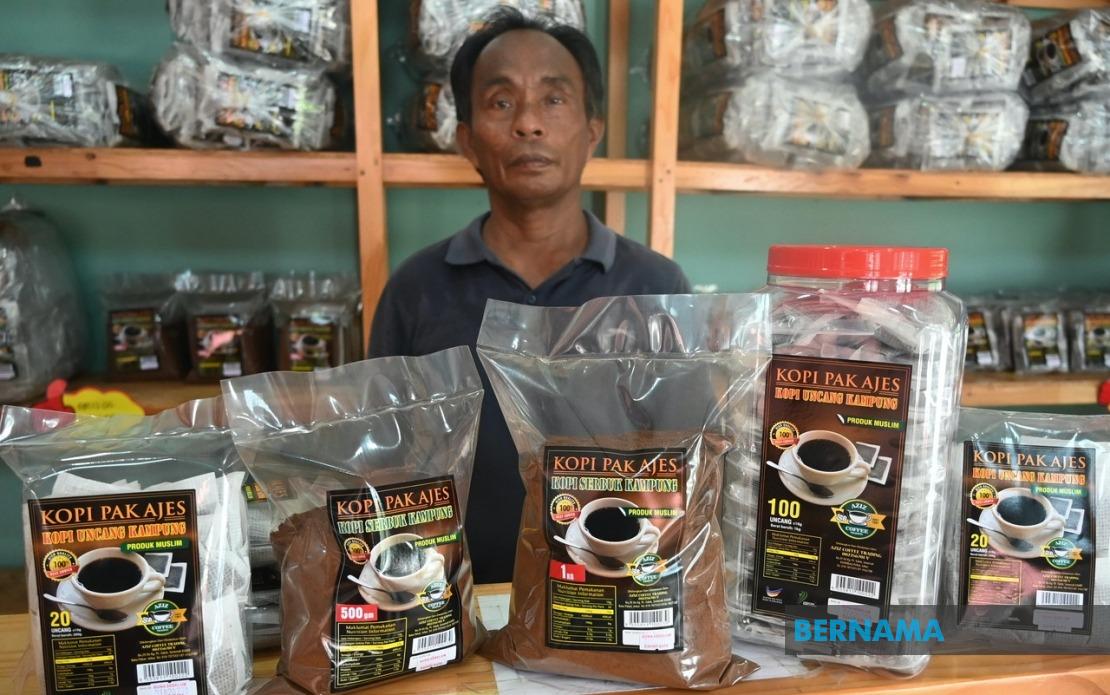
The 16th Johor state election has delivered an unexpected commercial boost to small business operators across the state, with one longstanding coffee entrepreneur experiencing a dramatic spike in orders as campaign machinery gears up for polling day. Aziz Mohd, known locally as Pak Ajes, has emerged as an unlikely beneficiary of the electoral season, with his coffee trading operation receiving orders from multiple campaign teams working across several state constituencies including Semerah, Sungai Balang and Bukit Naning.
At 65 years old, Pak Ajes has built Aziz Coffee Trading over more than three decades, establishing himself as a reliable supplier within the Muar and Batu Pahat regions. The current electoral cycle has tested both his production capacity and his commitment to meeting demand, compelling him to nearly double his output and source additional raw materials from suppliers as far afield as Rengit and Kluang. This logistics challenge represents a significant operational hurdle, yet one the entrepreneur has embraced with characteristic resilience, recognising that such electoral windfalls occur infrequently in the business calendar.
Pak Ajes's trajectory into coffee production reveals a distinctly Malaysian entrepreneurial narrative of resourcefulness and incremental scaling. Beginning his career in 1991 after observing surplus coffee beans in his locality, he initially processed the beans for personal consumption and to assist neighbouring beverage stall operators. His earlier ventures encompassed quail farming for egg production and mushroom cultivation, generating modest capital that would eventually seed his coffee business. With merely RM200 derived from selling quail eggs and mushrooms, he commenced powder production in small 100-gram packets, testing market receptivity before committing to larger-scale operations.
The evolution from hobbyist processor to established manufacturer has been gradual but deliberate. Today, Aziz Coffee Trading produces approximately 1,500 packets daily, translating to over five tonnes of coffee powder monthly, with regular supply arrangements throughout the Muar and Batu Pahat business communities. This scale of operation requires meticulous process management at every production stage, from the initial separation of beans from stems and husks through to the critical 15-day sun-drying phase, followed by roasting, grinding and packaging. Quality preservation demands considerable attention, particularly during packaging operations where the powder's vulnerability to air exposure and moisture necessitates careful handling to prevent hardening and clumping.
Recognising the broader market opportunity, Pak Ajes and his son Muhammad Fitri, aged 22, expanded the enterprise into retail operations by launching Kupi Nang Ajes Cafe in 2022 directly in front of the family residence. The cafe concept delivers affordably priced specialty coffee including Americano and latte variants, targeting price-conscious consumers seeking quality beverages. This retail initiative has catalysed further expansion aspirations, with father and son formulating plans for additional outlets strategically positioned in high-traffic commercial areas, either in Batu Pahat town or Muar proper, ultimately envisioning a multi-state franchise network.
Governmental support has played a meaningful role in legitimising and professionalising the operation. The Department of Agriculture has provided material assistance through equipment donations including a coffee grinder and bagging machinery, alongside technical training in packaging protocols and product labelling standards. Such interventions reflect recognition within agricultural development circles of the value-addition potential inherent in smallholder coffee processing, particularly within Johor's rural economic landscape. For Pak Ajes, this institutional backing has provided both practical tools and certification credibility that enhance market positioning.
The current electoral period illuminates a broader pattern of economic activation during political campaigns across Malaysia. Campaign machinery typically generates substantial ancillary demand for consumables and services, extending beyond formal campaign budgets to encompass ad hoc purchases by volunteer networks and candidate entourages. Coffee, as an affordable yet essential commodity for individuals engaged in door-to-door canvassing and coordination meetings, naturally features prominently in such election-season procurement patterns. For specialised local suppliers like Pak Ajes, the compressed timeframe of intensive campaign activity creates a concentrated demand surge that can meaningfully impact quarterly revenues and cash flow.
The 16th Johor state election encompasses 172 candidates competing across 56 state seats, with polling scheduled for a specific Saturday. This scale of electoral contest ensures sustained campaign activity across multiple constituencies over several weeks, sustaining the elevated demand environment that has benefited Aziz Coffee Trading and likely numerous other small vendors throughout the state. The concentration of campaign activity in constituencies such as Semerah and surrounding areas has provided particular commercial advantage to local entrepreneurs positioned to service these geographic zones efficiently.
Pak Ajes's experience exemplifies how electoral processes create transient but meaningful economic opportunities for rural small and medium enterprises integrated into local supply networks. The entrepreneur's willingness to invest in expanded production capacity, source additional inputs from distant suppliers, and coordinate with his son demonstrates the adaptive entrepreneurialism required to capitalise on such opportunities. His narrative also underscores how formal government support through the Department of Agriculture, combined with local market positioning and family business partnership, creates enabling conditions for gradual enterprise development.
Looking beyond the immediate electoral cycle, Pak Ajes faces the conventional challenge confronting many small processors dependent on periodic demand surges: sustaining production and employment between elections while building a stable retail customer base through his cafe operation. The ambition to establish multiple outlets and expand geographically suggests strategic thinking about smoothing revenue volatility through geographic diversification and direct consumer engagement. For the Johor business community more broadly, the current election season represents a compressed window of heightened economic activity that extracts maximum benefit for those positioned within accessible supply chains.
The coming weeks will determine whether the electoral demand surge translates into sustained consumer relationship building, particularly through the cafe outlet's brand development. Should Pak Ajes successfully convert temporary campaign-driven customers into repeat cafe patrons or regular wholesale clients, the 16th Johor state election may prove consequential for the long-term trajectory of his enterprise beyond merely providing a revenue windfall. His intergenerational partnership with Muhammad Fitri positions the business for potential continuity and expansion, conditional on whether the current growth phase establishes sufficient operational and financial foundations for the multi-state expansion ambitions articulated by both generations.

