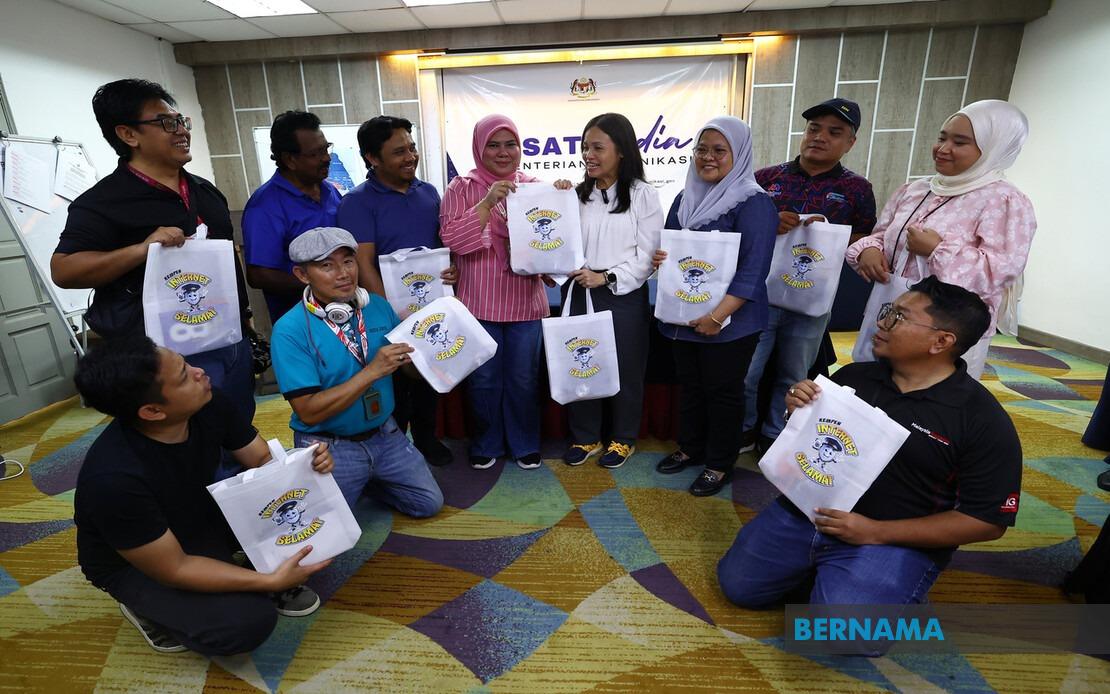
The Malaysian government has rolled out substantial infrastructure to support media operations during the 16th Johor state election, reflecting efforts to ensure comprehensive and timely coverage of the electoral campaign. Deputy Communications Minister Teo Nie Ching announced that the Communications Ministry, working alongside the Information Department, has activated a network comprising 100 National Information Dissemination Centres (NADI) distributed across the state, alongside two flagship media centres positioned in strategic locations.
The dual media hub strategy places one centre at Hotel Seri Malaysia in Johor Bahru, the state capital, with a second facility at NADI Kampung Sawah Awok in Muar, a district in the state's southern region. Both establishments operate between 9 am and 9 pm daily, commencing operations on June 26 and continuing through July 11, the scheduled polling date. The extended hours and geographic dispersal aim to accommodate journalists covering different regions and electoral dynamics across Johor's diverse constituencies.
Technical specifications for the media infrastructure prioritise connectivity reliability. Teo emphasised that internet provision at all facilities maintains minimum speeds of 100 Mbps, a threshold designed to facilitate contemporary digital journalism workflows including video and image uploads without technical bottlenecks. This bandwidth commitment addresses practical concerns that have historically constrained field reporting in Malaysia, where rural and semi-urban areas sometimes experience connectivity inconsistencies during high-demand periods.
Beyond connectivity, the centres have been equipped with computing hardware and general office amenities tailored to journalistic operations. Workstations feature both laptop and desktop computers, enabling reporters and photographers to process content, conduct research, and file stories simultaneously. Physical infrastructure includes photocopiers and printers, supporting traditional documentation needs and enabling journalists to access hard copies of official election materials, candidate manifestos, and regulatory announcements distributed by electoral authorities.
Recognising that infrastructure alone cannot guarantee service quality, the Malaysian Communications and Multimedia Commission (MCMC) has committed to active monitoring of telecommunications performance throughout the campaign period. MCMC's oversight targets the commercial telecommunications operators providing backbone connectivity to ensure that internet speeds across the state remain at optimal operational levels. This supervisory approach acknowledges that election periods often generate unusual traffic patterns, potentially straining networks if left unmonitored.
In a novel transparency initiative, Teo encouraged public participation in network monitoring through the MCMC Nexus application, which allows citizens to report real-time signal strength and connectivity conditions at specific geographic locations. This crowdsourced monitoring mechanism operates on a privacy-preserving model, where MCMC collects only technical metadata—geographic location and signal measurements—rather than personal information. Such data is subsequently shared with telecommunications providers to inform infrastructure optimisation decisions, creating a feedback loop designed to improve service delivery.
Election authorities have also recognised the challenge of information integrity during high-engagement political periods. Teo reminded political parties and their supporters of expectations regarding campaign conduct, specifically emphasising the avoidance of sensitive discourse touching on racial, religious, or monarchical matters—issues that have historically triggered communal tensions in Malaysian electoral contexts. This framing positions campaign conduct as a communications discipline extending beyond mere partisan advantage.
The regulatory response to potentially inflammatory content leverages MCMC coordination with law enforcement. The commission continues monitoring social media platforms for content deemed provocative or inciting, with protocols enabling rapid removal of such material in collaboration with police authorities. This dual-agency approach reflects recognition that digital platforms enable rapid amplification of divisive messaging, requiring immediate institutional response during electorally sensitive periods when social polarisation risks are heightened.
Concurrently, Malaysia's media sector has undertaken self-regulatory measures to counter information distortion. The Malaysian Media Council established a dedicated fact-checking platform launched during the election period, responding to growing concerns about false claims and deliberate misinformation circulating through social networks. Teo's public encouragement of fact-checking adoption represents institutional messaging aimed at normalising verification practices among ordinary citizens, positioning information verification as individual responsibility rather than solely professional expertise.
The election timeline structures participation with early voting scheduled for July 7, preceding main polling by four days. This staggered approach permits extended media access to electoral dynamics, as journalists can document early voting procedures, voter behaviour patterns, and any procedural anomalies before covering the primary election day. The extended campaign period from June 26 through July 11 thus represents a meaningful timeframe for sustained media presence and comprehensive electoral documentation.
These preparations reflect institutional awareness that electoral legitimacy increasingly depends on transparent media access and public confidence in information systems. For regional observers, the Johor election infrastructure demonstrates Malaysia's continued investment in election administration technology and communications oversight. The combination of dedicated physical facilities, high-speed connectivity standards, and multi-layered content monitoring reveals a coordinated approach to managing the intersection of democratic participation, media operations, and information integrity—concerns particularly salient in Southeast Asian electoral contexts where digital platforms have become central to political discourse.

