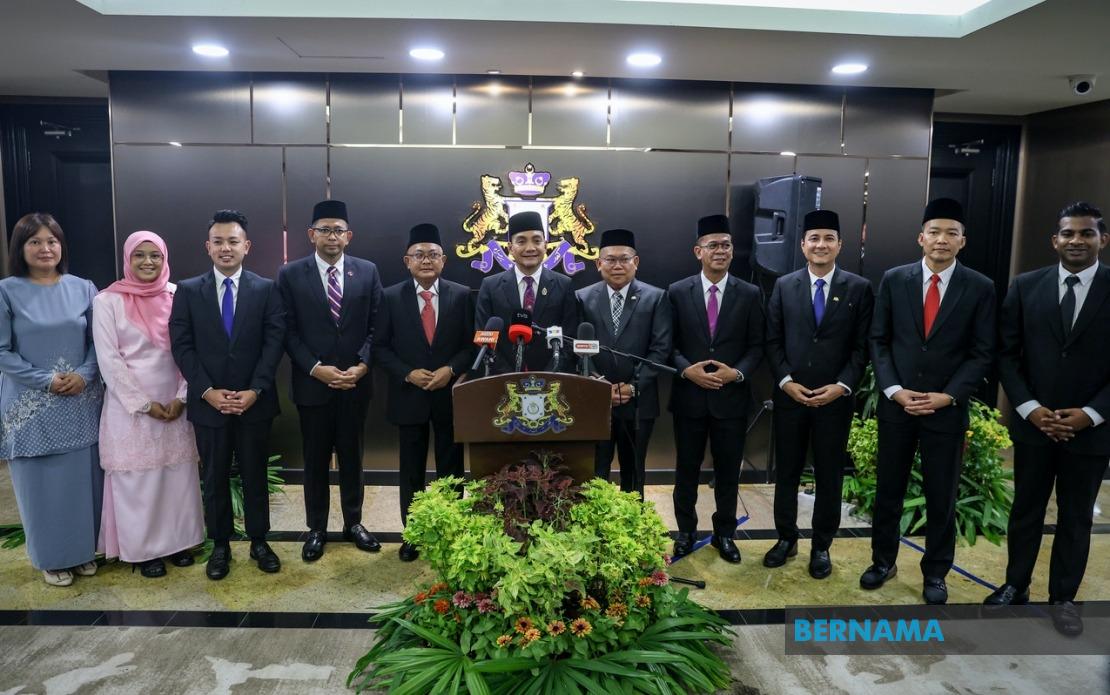
The Johor State Education and Information Committee has appointed V. Rugendran as deputy chairman, a structural move designed to enhance the committee's capacity to manage its expanding portfolio and engage more effectively with constituents. Committee chairman Dr Muhammad Naqib Md Ghazali outlined the rationale for the appointment at the committee's aspiration ceremony held at the Johor Talent Development Council office in Kota Iskandar on July 22, emphasizing that the addition of a deputy enables the administration to distribute responsibilities across a wider leadership structure whilst maintaining strategic coherence.
Dr Muhammad Naqib articulated a vision of collaborative governance wherein the new deputy role allows senior officials to focus on distinct operational areas without compromising overall coordination. By delegating specific initiatives to different leaders, the committee can simultaneously address multiple education and information programmes whilst ensuring each receives adequate attention and resources. This distributed approach reflects a broader administrative philosophy that recognises the limits of centralised decision-making and seeks to build institutional resilience through shared responsibility and specialised expertise.
The appointment coincides with Dr Muhammad Naqib's attendance at his first State Executive Council meeting, chaired by Johor Menteri Besar Datuk Onn Hafiz Ghazi. During this meeting, the Menteri Besar emphasised to all newly appointed officials that their service must transcend sectarian boundaries and remain focused on the welfare of all citizens regardless of ethnic or religious background. This message underscores the expectation that Johor's administrative leadership will operate according to principles of inclusive governance that place public interest above factional considerations.
Education has been identified as a cornerstone of Dr Muhammad Naqib's portfolio strategy. The committee intends to direct particular energy towards implementing the Sekolah Rintis Bangsa Johor initiative, a pilot programme designed to establish educational models aligned with Johor's development vision. Alongside this, the committee plans to expand the Johor Talent Development Council, an institution tasked with identifying and nurturing promising individuals within the state. These initiatives reflect a long-term investment in human capital development, recognising that sustainable progress depends on creating pathways for talent identification and skills advancement from an early age.
The broader context for these appointments extends beyond Johor's immediate administrative structure. Menteri Besar Onn Hafiz Ghazi announced the simultaneous appointment of ten state government committee deputy chairmen across various portfolios. This coordinated restructuring signals a deliberate attempt to strengthen institutional capacity across the state administration. The appointments are framed explicitly as mechanisms to accelerate issue resolution and ensure that development policies reach all districts equitably and with appropriate speed, addressing a potential criticism that centralised authority can create bottlenecks in service delivery.
For Malaysian observers, the Johor model offers insights into how state governments are adapting their administrative structures to handle complex modern governance challenges. The emphasis on task delegation and expanded leadership teams reflects recognition that contemporary policy implementation requires more sophisticated coordination mechanisms than single-leader models can provide. This represents a response to real operational pressures: education systems must balance standardised curricula with local needs, information services must reach dispersed populations, and committee work increasingly involves managing intersectoral initiatives that demand diverse expertise.
The appointment also carries political implications. By publicly emphasizing inclusive governance and merit-based administration during inaugural ceremonies, state leadership sends signals about institutional values and expected conduct from appointed officials. The Menteri Besar's reminder that service must transcend racial and religious categories carries particular weight in the Malaysian context, where communal tensions occasionally surface in state-level politics. Explicit statements reaffirming non-sectarian administrative principles help establish normative frameworks that discourage divisive governance practices.
Dr Muhammad Naqib's confidence in the experience of department heads and agency directors under his portfolio suggests he intends to leverage existing institutional expertise rather than impose top-down directives. This approach recognises that education and information systems require technical knowledge that professional bureaucrats possess. By creating space for collaborative input from experienced officials, the committee chairman positions himself as a coordinator and strategic voice rather than a micromanager, potentially improving both morale and implementation quality across his agencies.
The Sekolah Rintis Bangsa Johor programme deserves particular attention as it appears to represent more than simple educational reform. The naming convention—emphasising both pilot status and connection to Bangsa Johor—suggests these schools will embody distinctive pedagogical or cultural approaches aligned with Johor's particular identity and aspirations. This mirrors broader trends across Malaysian states, where education policy increasingly reflects attempts to cultivate state-specific identities and regional competitive advantages in attracting talent and investment.
Expansion of the Johor Talent Development Council addresses a recognised challenge across Southeast Asia: translating theoretical development strategies into practical mechanisms that identify and cultivate talent from disadvantaged backgrounds. By expanding this institution, the state commits resources to systematic talent identification beyond what schools alone typically accomplish, potentially creating alternative pathways for capable individuals who might otherwise remain invisible to educational gatekeepers. The success of such initiatives ultimately depends on institutional commitment and consistent funding, factors that will require monitoring as programmes mature.
For Malaysian readers and policymakers, the Johor initiative illustrates how state-level governments continue experimenting with administrative structures to improve service delivery. The appointment of deputy chairmen addresses a recurrent challenge: how to maintain coherent policy direction whilst distributing work across expanding portfolios. Whether this particular model proves effective will depend partly on how clearly authority and responsibility are delineated between chairman and deputies, and partly on whether the collaborative approach genuinely improves public outcomes or simply creates additional layers of bureaucracy. The commitment to systematic agency management and collaborative engagement announced at the aspiration ceremony will be tested as these initiatives progress from announcement to implementation.

