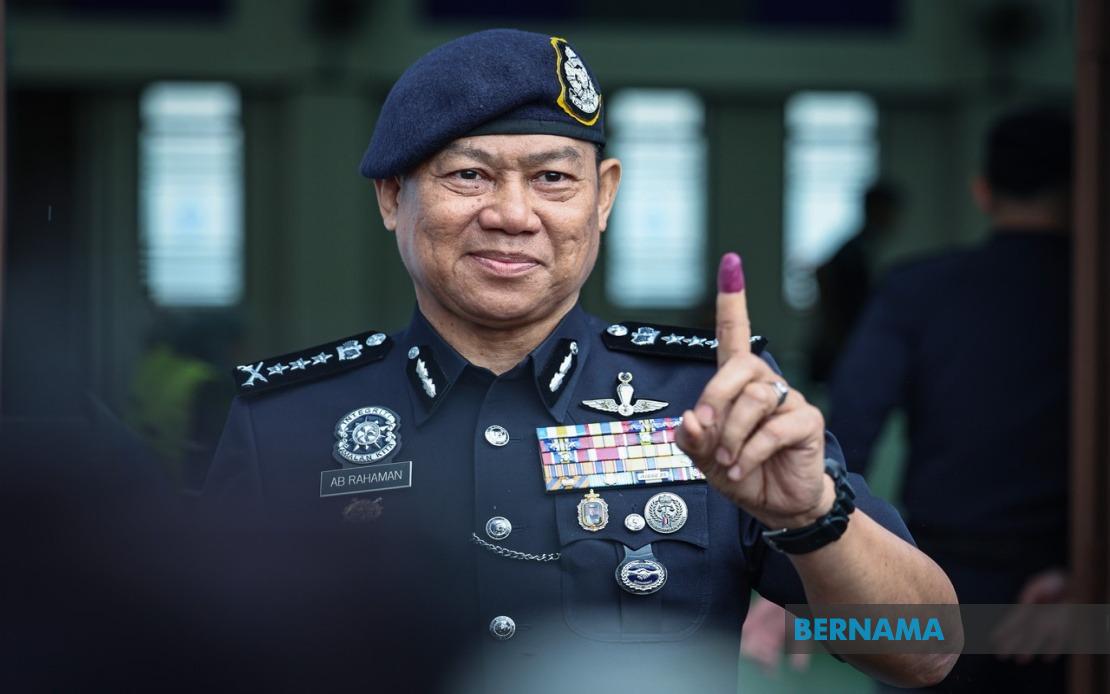
Johor's 16th state election got off to a smooth start with security personnel and military voters turning out steadily for early polling, signalling a methodical approach to the electoral process that precedes Saturday's general voting day. By 10:30 am, exactly 4,257 police officers—representing 36.3 per cent of all eligible early voters from the force—had already deposited their ballots across the state, according to Johor police chief Datuk Ab Rahaman Arsad.
The early voting framework, which allows uniformed personnel and members of the Malaysian Armed Forces to cast ballots before the general election, operated without friction or reported irregularities throughout the morning hours. Ab Rahaman told journalists that all 53 early voting centres across Johor functioned as intended, with voting staff managing the flow of officers efficiently and maintaining the integrity of the process. His assessment that no complaints or procedural breaches had emerged by that point suggested that Election Commission protocols were being observed with discipline.
In total, 64 polling stations opened their doors simultaneously at 8 am, accommodating 20,607 registered early voters from the security and defence sectors. The staggered closure schedule—with centres shutting between noon and 6 pm depending on their geographic location and voter registrations—was designed to manage congestion and allow sufficient time for ballot counting and verification. This approach reflects lessons learned from previous Malaysian elections and demonstrates the Electoral Commission's attention to logistical detail.
The broader context of Johor's electoral contest involves substantial participation, with 172 candidates vying for 56 state assembly seats. The voting public extends to more than 2.7 million registered electors across the state, meaning Saturday's general polling will represent a significant civic engagement exercise. The scale of candidates and constituencies underscores the competitive nature of Johor politics, where multiple parties and independent hopefuls seek representation and influence in the state legislature.
Beyond the mechanics of early voting, the campaign period leading to the election has generated considerable police activity. Ab Rahaman disclosed that the majority of complaints lodged during the campaign related to vandalism directed at campaign infrastructure—specifically the destruction or defacement of party flags, political banners, and promotional billboards. Such incidents, while relatively minor in nature compared to more serious electoral violations, nonetheless require documentation and investigation to maintain accountability and ensure fair competition among contesting parties.
A more substantial controversy emerged regarding former Johor State Assembly Speaker Datuk Dr Mohd Puad Zarkashi, whose statements about alleged Palace interference in the dissolution of the state legislative assembly prompted police intervention. A total of 153 reports were lodged nationwide concerning Mohd Puad's claims, though investigations remain ongoing at the state level. The matter highlights the sensitivity surrounding institutional relationships and the boundaries of permissible public discourse during electoral contests in Malaysia's constitutional monarchy framework.
For Malaysian observers, Johor's polling represents a critical political event with ramifications extending beyond the state itself. Johor remains the nation's second-largest state by population and commands significant economic influence, making its electoral outcome relevant to national coalition dynamics and power structures. The result will provide indicators of voter sentiment and may influence calculations for potential federal-level political developments.
Southeast Asian analysts watching Malaysian electoral processes often reference Johor contests as bellwethers for democratic health and institutional functionality. The orderly conduct of early voting, absent significant irregularities or security concerns, reinforces perceptions that Malaysia maintains reasonably robust electoral machinery despite occasional controversies. This matters for regional perceptions of political stability and institutional credibility in a subregion where elections carry increasing geopolitical significance.
The smooth progression of early voting also demonstrated coordination between multiple state and federal agencies—police, armed forces, and the Election Commission—operating under unified protocols. Such inter-agency coordination, while routine in operational terms, represents an important element of electoral infrastructure that often goes unnoticed but proves essential when tested. The absence of reported problems suggests that administrative preparation met the logistical demands of the exercise.
Looking toward Saturday's general polling, the early voting figures provide limited predictive value regarding ultimate turnout percentages or electoral outcomes, though they do indicate organizational readiness. The 36.3% participation rate among eligible police early voters sits within normal ranges for such exercises, neither exceptionally high nor concerning low. What matters more is that the process functioned without disruption, establishing a foundation for confidence in Saturday's broader polling.
The path from early voting to Saturday's general election will involve intense final campaign activities, media coverage, and political mobilization. Candidates will intensify their ground operations, while voters themselves will deliberate their preferences. For regional observers monitoring Malaysian democratic processes, the Johor election serves as a reminder that despite periodic controversies and institutional tensions, Malaysia maintains the capacity to conduct multi-party elections with reasonable orderliness and administrative competence—a reality that remains significant in the contemporary Southeast Asian political landscape.

