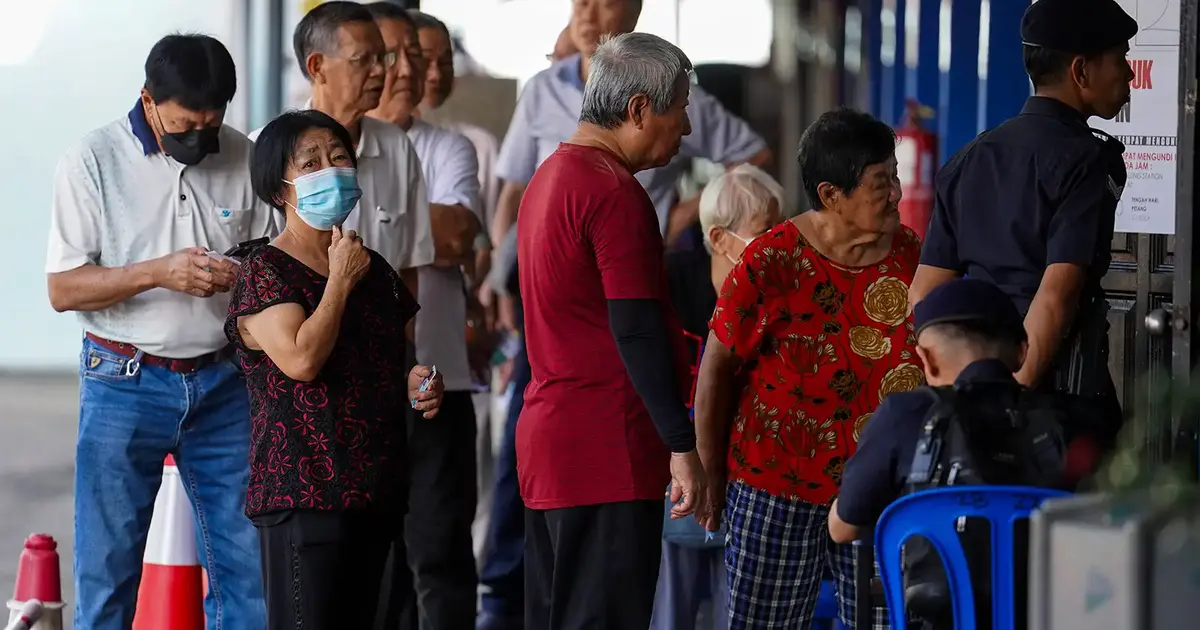
Pakatan Harapan's disappointing performance in Johor among Chinese voters reflected a turnout crisis rather than a wholesale swing to Barisan Nasional, according to former Bangi MP Ong. The assessment challenges narratives that depicted the coalition as having lost critical support among an ethnic group historically central to opposition fortunes, instead pointing to the more structural problem of Chinese voter apathy at the ballot box.
Ong's analysis suggests that understanding the mechanics of PH's decline requires distinguishing between two separate phenomena: the failure to mobilise existing supporters and active voter defection. When voter participation drops significantly within a particular demographic, an incumbent or opposition coalition can suffer pronounced electoral losses even when the underlying share of those who do cast ballots remains relatively stable. The Johor results, viewed through this lens, indicate that the coalition faced a mobilisation challenge rather than an ideological or political realignment among its traditional Chinese voter base.
This interpretation carries substantial implications for how opposition parties approach rebuilding their electoral coalition. If the problem is fundamentally one of engagement and turnout management, then the remedies differ markedly from scenarios where voters actively choose competing parties. Low turnout among Chinese voters could stem from various causes: dissatisfaction with campaign messaging, perceptions that the outcome was predetermined, distrust of political institutions more broadly, competing household demands on voting day, or simple fatigue with electoral politics. Each diagnosis suggests different strategic responses.
The Johor Chinese vote has long represented a barometer of opposition health in Malaysia. Chinese voters have constituted a demographically significant portion of PH's electoral coalition, particularly in urban and semi-urban areas where the opposition has historically performed strongest. A sustained erosion of support among this group would signal fundamental weakness in the coalition's appeal and organisational capacity. However, if the primary mechanism was low turnout rather than switched votes, PH retains greater potential to recover ground through more effective mobilisation campaigns and voter outreach efforts.
Ong's statement that only a limited number of Chinese voters shifted their support toward Barisan Nasional provides a crucial factual anchor for this debate. This claim, if substantiated through careful electoral analysis, would reframe how political observers interpret recent results across Johor's constituencies. Rather than reading the elections as evidence of realignment, one would instead diagnose a specific operational failure: the coalition's inability to translate underlying voter sympathy into actual ballots cast.
The turnout explanation also raises questions about what drove the Chinese voter disengagement specifically. National political developments, local campaign dynamics, the performance of PH-held state governments, or the positioning of component parties within the coalition could all influence whether Chinese voters felt motivated to participate. Understanding these drivers becomes essential for PH strategists seeking to reconstruct their electoral machinery and reconnect with voters who, while perhaps not actively switching camps, have drifted away from active participation.
Froma broader Malaysian political perspective, the distinction between defection and abstention carries weight for coalition stability. Barisan Nasional's hold on federal power depends significantly on maintaining advantages across multiple demographic groups. If opposition losses among Chinese voters stemmed from low turnout rather than genuine switching, Barisan could face renewed challenges if PH successfully reignites turnout in future elections. Conversely, if voters have genuinely shifted their preference, the opposition faces a longer road to recovery requiring fundamental repositioning rather than tactical campaign improvements.
The Johor results themselves occurred within a particular political context that Malaysian readers would recognise: a state election occurring against a backdrop of national coalition politics, ongoing debates about economic policy and governance, and the evolving role of ethnicity-based politics in Malaysian democracy. How voters in a predominantly Malay-majority state responded to opposition appeals, and the particular combination of issues that shaped voter choices, reflected broader tensions within Malaysian political competition.
Former opposition figures like Ong typically possess substantial knowledge of their electoral base and the mechanisms through which voters make participation decisions. His assessment warrants consideration as part of a wider evaluation of what actually happened among Johor voters. However, distinguishing between turnout effects and preference shifts requires granular electoral data, ward-by-ward voting patterns, and potentially exit polling or survey research that would provide clearer evidence. Ong's characterisation represents an important perspective but ideally would be examined alongside other evidence.
Moving forward, this interpretation suggests that Pakatan Harapan's path to electoral recovery in Johor and similar contexts involves strengthening its ground game, improving voter contact and mobilisation systems, and reestablishing emotional connection with supporters who may have grown disengaged. Rather than fundamentally rewriting the coalition's political platform or repositioning on major issues, the priority becomes activating existing sympathy and converting it into electoral participation. This distinction shapes not only how PH plans its recovery strategy but also how observers should interpret the meaning of recent electoral results for Malaysian politics more broadly.

